

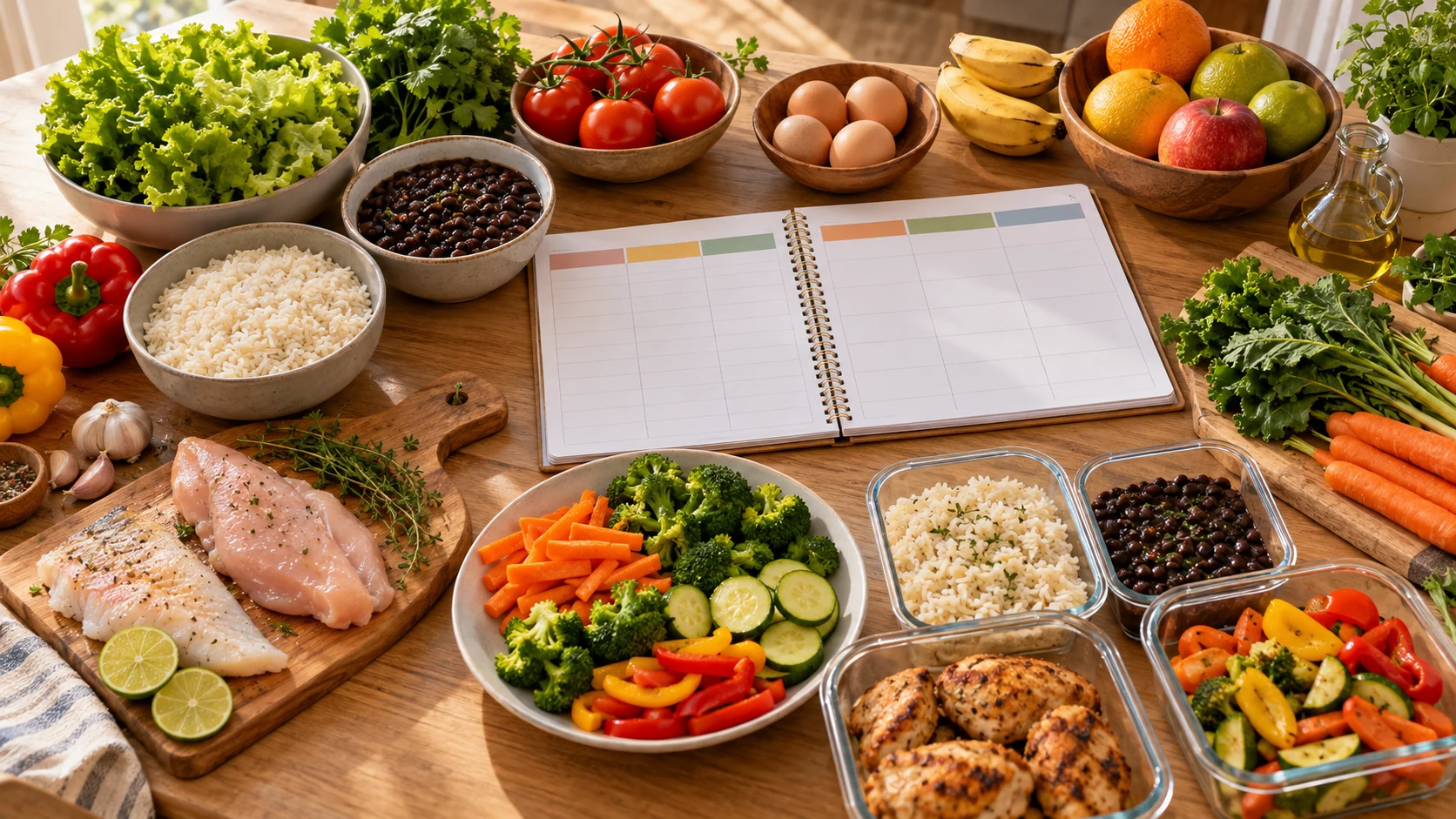
7-day menu for family of 4 people with shopping list
Organize 7 lunches and 7 dinners for four people with approximate amounts, planned reuse and shopping list per category.
Weekly menu for family of 4 people: how to organize in routine
Weekly menu for family of 4 people it is the central subject of this guide, organized to facilitate decisions of preparation, routine and shopping. Suggestions on a weekly menu for the family of 4 people can be adapted to the preferences, budget and needs of each home.
How to use this weekly menu for four people
Organize a 7-day menu for family of four people reduces improvised decisions and transforms purchases into an objective task. This planning brings together seven lunches and seven dinners with common ingredients and intentional reuse of rice, beans, chicken and vegetables. The quantities are household references, not mandatory nutritional portions. Consumption varies according to age, appetite, and meals taken away from home. Before buying, check the pantry, fridge and freezer, scratch what already exists and adjust each item to the actual routine. The plan is neither a diet nor a nutritionist orientation. Families with allergies, intolerances or clinical needs should adapt ingredients with professional guidance and carefully observe labels.
What is included and how to calculate the quantities
The proposal covers 14 main meals, equivalent to 56 individual portions: lunch and dinner for seven days for four people. Breakfast, snacks and drinks don't go into the account. The weights of rice, noodles, beans, lentils and chickpeas are indicated before cooking; meat and fish appear as an approximate buying weight. Vegetables are estimated per unit or weight. Some preparations yield a leftover for another meal, without keeping food ready all week in the fridge. What will then be used should be cooled, identified and refrigerated or frozen safely. If two people have lunch outside, cut that recipe in half. If the family usually repeats the dish, add a moderate margin. Recording leftovers will help calibrate the next list.
Overview of the 14 meals of the week
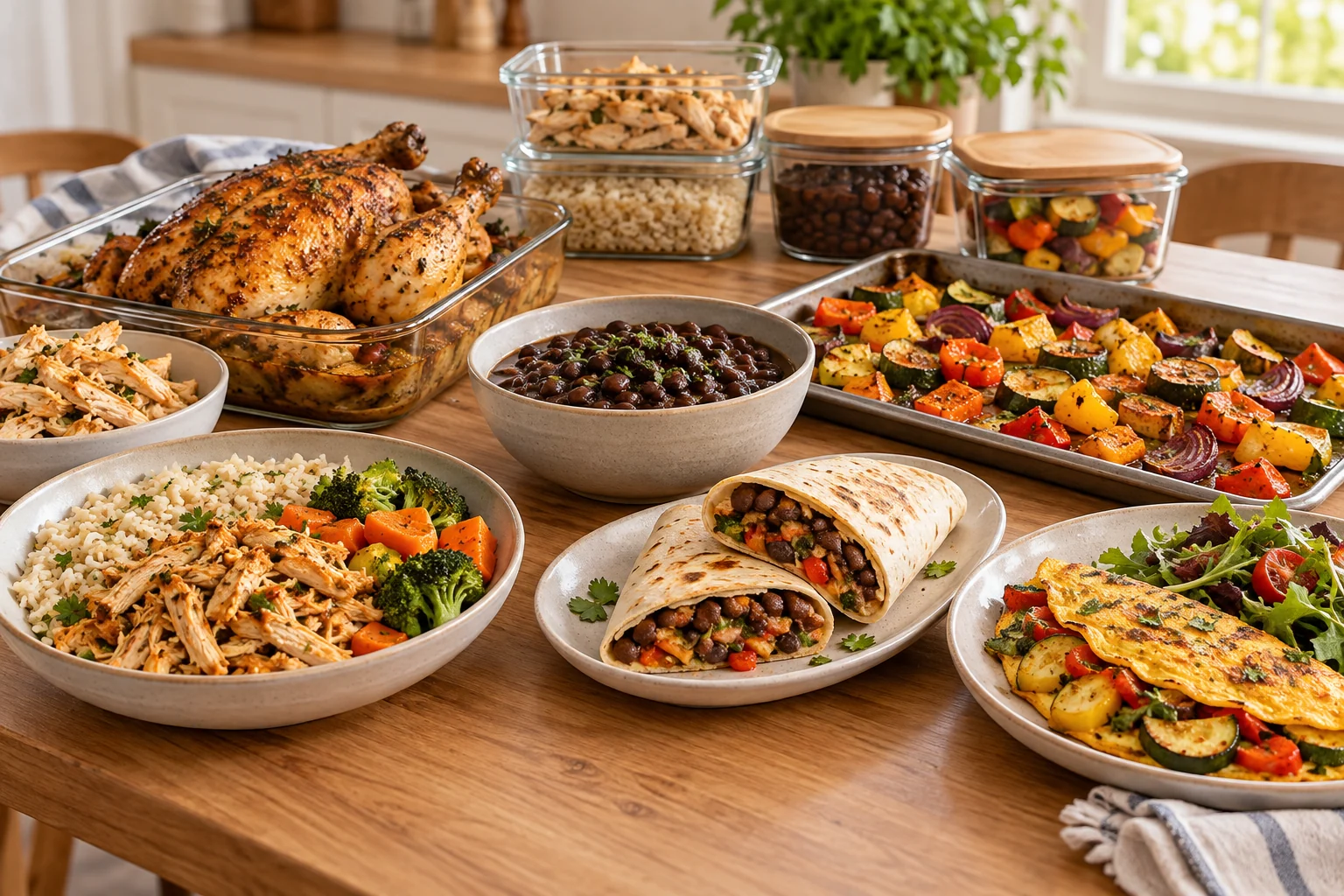
On Monday, lunch combines rice, beans, grilled chicken and salad; dinner is vegetable soup with toast. On Tuesday, there is ground meat with pumpkin, rice and cabbage at lunch; at night, oven omelet with tomato and carrot. Wednesday brings roasted fish with potatoes and broccoli; at dinner, rice with lentil and vegetables. Quinta uses shredded chicken for lunch with beans and salad and reuses part of the chicken in hot sandwiches for dinner. Friday has macaroni with meat and carrot sauce; at night, pumpkin cream with chickpeas. Saturday offers rice, beans, eggs and vegetables sautéed for lunch; at dinner, chicken pie and salad. Sunday closes with chicken roast, potato and carrot for lunch and bean broth with cabbage for dinner. The repetition of ingredients is planned, but presentations change to avoid monotony.
Monday: Start with simple and versatile bases
For lunch, prepare approximately 300 g of raw rice and 250 g of raw beans, which will also yield for other meals. Serve part with about 700 g of chicken breast or overcoat, seasoned with garlic, lemon and herbs, as well as lettuce and two tomatoes. Cook the chicken completely and reserve only the amount of rice and beans scheduled for the following days, using clean and identified containers. At dinner, make a soup with about 600 g of potato, three carrots, one zucchini, onion and garlic. Add water little by little, cook until the vegetables are soft and crush a body part. Serve with eight slices of toasted bread. Starting with basic preparations creates a kitchen base useful without requiring that the whole week be prepared at once. If the day is up, leave the vegetables washed and separated the night before.
Tuesday: ground meat at lunch and omelet at dinner
At lunch, saute approximately 600 g of ground meat with onion, garlic and 500 g of pumpkin cubes. Cook until the meat completely loses its raw appearance and the pumpkin becomes soft. Serve with prepared rice and a small pack of sautéed cabbage. For dinner, beat eight eggs with two tomatoes without excess liquid, two carrots grated and herbs. Put on a greased baking pan and bake until the center is firm and completely cooked. Follow with leaves or bread, according to the stock. This combination uses vegetables in different formats and keeps the number of ingredients under control. If there are children in the family, the adult can adjust the texture and seasonings to the development phase, without turning the example into a child's prescription. The goal is to offer a shared meal and adapt the dish with common sense to individual needs.
Wednesday: Roasted fish and lentils with vegetables
For lunch, use about 800 g of fish fillet, 1 kg of potato and 400 g of broccoli. Season the fish with lemon, garlic and herbs. Start cooking the potatoes first, as they usually take longer, and add fish and broccoli at the appropriate time for cutting and equipment. The food should reach the centre completely cooked. If the fish was purchased early this week, keep it frozen and do the defrosting under refrigerationFollowing the label. At dinner, cook 300 g of dry lentil and combine with rice already prepared, one zucchini and two sauteed carrots. Lentil and rice form a simple preparation, and vegetables can be replaced by those suitable for consumption. This meal also takes advantage of small portions of vegetables before they lose quality, provided they show no signs of deterioration.
Thursday: shredded chicken in two preparations
Cook approximately 1.2 kg of chicken with onion, garlic and herbs until completely cooked. Defy and divide immediately: one part goes to lunch, one at dinner and about 350 g will be frozen for Saturday's pie. At lunch, serve the chicken with rice, beans and lettuce salad, tomato and cucumber. For dinner, mix approximately 400 g of chicken shredded with grated carrots and 200 g of ricotta or other stuffing chosen by the family. Set up eight sandwiches with bread and warm up just before serving. The advantage of this method is to prepare a protein once and turn it into different meals. The essential care is not to leave the pan at room temperature for hours. Separate portions as soon as possible, use shallow containers and lead to cooling or freezing as needed. O planned reuse You need to walk along with safe conservation.
Friday: pasta with meat and pumpkin cream
At lunch, cook about 500 g of dry pasta. Prepare a sauce with 500 g of ground beef, 500 g of tomato pulp, a grated carrot, onion and garlic. Cook the meat well before finishing the sauce and adjust the consistency with little water from the pasta if necessary. A simple salad can accompany the meal. At dinner, cook approximately 700 g of pumpkin with enough onion and water to form a cream. Tap or knead carefully, return to the fire and add 300 g of cooked and drained chickpeas. Heat completely and finish with green smell. If you buy ready chickpeas, compare the net weight and drained weight on the label. If you use the dry grain, plan the ream and cooking in advance. A list of purchases by category avoids forgetting precisely these items that depend on previous preparation.
Saturday: fast lunch and pie to share
For lunch, use rice and beans already prepared within the safe storage period or thaw reserved portions. Cook eight eggs completely and serve with sautéed vegetables: two carrots, one zucchini and part of broccoli, for example. At dinner, use the 500 pounds of shredded chicken that was frozen on Thursday. Disengelle in the fridge and prepare a pie with simple homemade pasta or other base that the family already knows how to make, adding tomatoes, onions and corn, if desired. Bake until the dough and stuffing are completely cooked. Follow with cabbage salad and carrot. This is a good day for check the actual leftovers before opening new packaging. If there are still vegetables in good condition, use them in the pie; if the remaining rice is larger than expected, reduce the preparation of lunch. The menu should guide, not prevent responsible adjustments.
Sunday: family roast and broth to close the week
At lunch, bake about 1.2 kg of chicken with 1 kg of potatoes, four carrots, onions, garlic and herbs. Organize the ingredients in the baking pan according to the cooking time so that the chicken is completely ready and the vegetables do not burn. Serve with rice and a fresh salad. At dinner, turn a portion of baked beans into broth: beat part of the grains with water, heat and add sliced kale. Adjust the texture with whole beans and serve with bread or toast. Do not use leftovers that have remained without temperature control or whose origin and date are uncertain. The last meal is also the time to note which products remain closed, which vegetables need to be used soon and what will not be necessary to buy the following week. This simple review makes the next planning start with a updated inventory, reducing duplicity and waste.
How to divide purchase by sectors and reduce forgetfulness
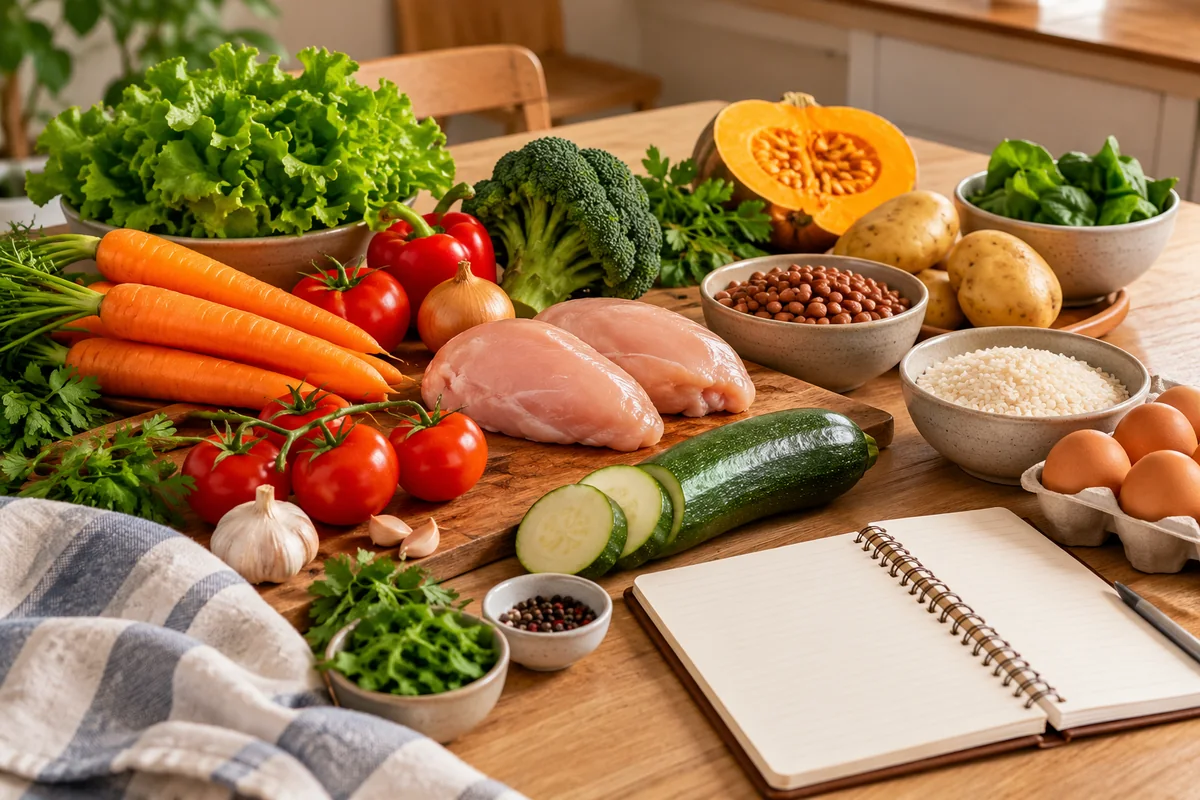
Organize your trip to the market in the same sequence as the products appear in the shop sections. Start with pantry and grocery store: rice, beans, lentils, pasta, chickpeas, tomato pulp, bread and spices. Then pass by hortifruti, choosing leaves, tomato, potato, carrot, pumpkin, zucchini, broccoli, cabbage, cabbage, cucumber, lemon, garlic and onion. Leave meats, fish, eggs and refrigerated items to the end, reducing time out of the proper temperature. At home, store refrigerated and frozen first. Separating the list by sector decreases round trips and facilitates the conference. It also helps to compare price per kilogram or litrewithout automatically concluding that the largest packaging is the best purchase. Observe validity, drained weight, available space and the real possibility of use. Economic packaging that spoils before consumption ceases to be economy.
Efficient pre-preparation without cooking all week
A useful pre-preparation can fit in about an hour: review the list, divide meats into portions, identify containers, wash hands and surfaces, separate vegetables and program thawing. It is also possible to cook beans and freeze them in smaller portions, besides preparing rice for the first days. It is not mandatory to leave 14 meals ready. Some dishes, such as omelet, fish and salads, gain texture when prepared near consumption. Distribute tasks among residents according to age and safety: someone confers the pantry, another person sanitizes utensils and another records what is missing. The Food Guide for the Brazilian Population recognizes that acquisition, preparation and cleaning require time and that these responsibilities can be shared. One realistic schedule It works better than a hard to repeat culinary marathon. Plan only what the family can safely store and execute.
Storage and thawing: indispensable care
Preparing in advance requires attention. Cooked and perishable foods should not remain for long periods at room temperature. Anvisa advises you to store refrigerated preparations below 5 °C and thaw in the refrigerator or microwave when the food is cooked immediately. Don't thaw meat over the sink. Use capped containers and identify content and date. In the refrigerator, keep ready foods protected from contact with raw meats and liquids that can flow. For end-of-week preparations, freezing is usually more appropriate than keeping everything refrigerated from day one. When reheating, completely heat the portion that will be consumed. Do not use smell and appearance as the only safety criteria and follow the manufacturer's instructions. O safe food planning considers not only the recipe, but also time, temperature, hygiene and real capacity of the refrigerator.
Practical replacements for price, preference and availability
The menu accepts substitutions as long as the list is updated. If the fish is expensive or unavailable, switch to another option the family already consumes and adjust the preparation method. Pumpkin can give way to chuchu, pods or other appropriate vegetable; broccoli can be replaced by cauliflower; ricotta can be replaced by a filling suitable for the household preferences and restrictions. Beans and lentils can alternate between meals, preserving the logic of using legumes. Station products may have better availability, but this varies according to region and season. Don't buy a replacement just because you're on sale: define first where he'll get into the plan. For allergies, intolerances or celiac disease, read labels and avoid improvised exchanges with risk of contamination. One well-planned replacement maintains yield and avoids adding ingredients that will be unused.
How to avoid waste during and after the week
Waste usually starts before the stove: duplicate purchases, untargeted portions and forgotten products at the bottom of the fridge. Make a quick inventory before the market and place the older items in visible position. During the week, register changes to the menu. If the family ordered food on Thursday, freeze the perishable ingredient that will not be used or reposition the recipe, always respecting safety. Transform splints and usable parts only when they are fit for consumption and when there is a clear recipe; taking advantage does not mean using deteriorated food. Freeze in portions compatible with a meal and label. On Sunday, compare the planned list with actual consumption. If there's always rice left, reduce the next amount. If you lack vegetables to keep up with the last few days, increase moderately. This one. observation and adjustment cycle makes planning more efficient every week.
Frequently asked questions on menu for family of four
How much to buy for four people? There is no universal number: age, appetite, routine and meals outside the home change consumption. Use the quantities of this example as a starting point and register leftovers. Do you have to cook everything on Sunday? Nope. Parting meats, cooking beans and organizing vegetables already reduces work. Is the menu for children? He's a general family example, not a child plan. Consistency, allergies and individual needs require responsible adaptation. Can I repeat my lunch for dinner? Yes; in this case, increase the recipe and reduce the ingredients of the replaced meal. How to save money? Check stock, plan the use of each product, compare price per unit of measurement and avoid buying perishables without destination. Is the menu healthy? It was structured with variety and homemade preparations, but does not evaluate clinical conditions or individual needs. For personalized guidance, seek qualified professional.
Turn planning into a list that the family follows
After adapting meals, review the list by category and share responsibilities. NoAnota na Lista, mark what already exists at home, follow the items during purchase and avoid scattered notes. One person can check the pantry, another review hortifruti and another check refrigerated products. During the week, use your own list to record what ended before expected. When exchanging a recipe, also remove the unique ingredients from it; otherwise, the cart will remain larger than necessary. Save the adjusted version as a reference, but do not repeat it automatically: stock, prices and commitments change. The value of weekly menu with shopping list it is in connecting three decisions — what will be served, what already exists and what really needs to be bought. When this information is in the same place, the routine becomes more predictable and the next planning requires less effort.
Consulted sources and editorial responsibility
This menu was originally written for theAnota na Lista. The organization of meals and preference for culinary preparations based on natural or minimally processed foods were guided by the Brazilian Population Food Guide of the Ministry of Health. The document also addresses obstacles such as time, cost, culinary skills and division of household chores. The cooling care below 5 °C, storage of prepared food and thawing under refrigeration or microwave with immediate cooking were provided in public guidelines of Anvisa. The quantities and combinations presented are examples of household use, not nutritional prescription. Consult the official sources in gov.br/saude and gov.br/anvisa, follow the product labels and seek professional guidance when there are allergies, restrictions or specific clinical needs.
Shopping list
Mark the products you already put in the cart.
Community
Comments
Create an account or do login for favorite and leave your comment.
Loading comments...