

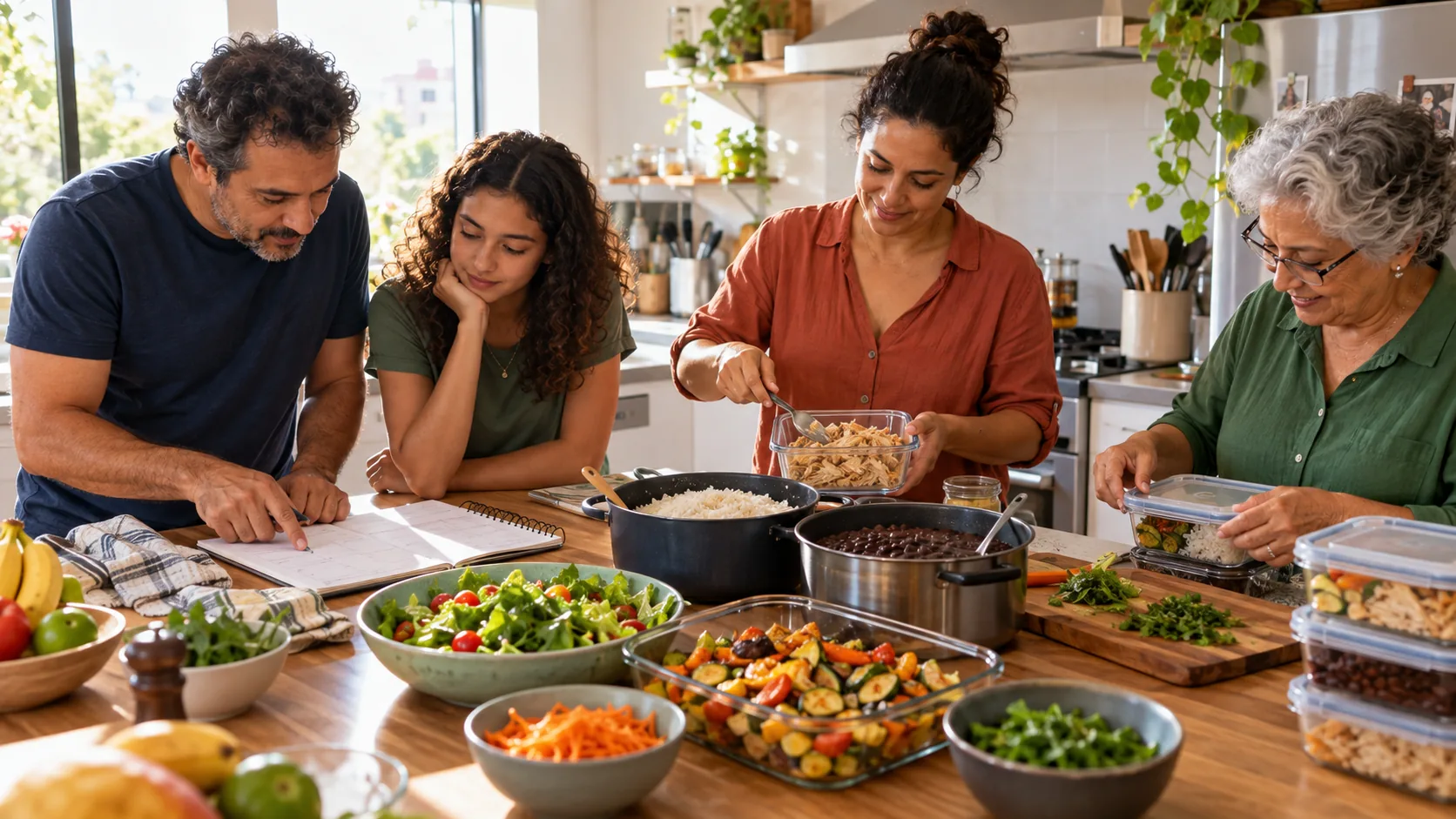
Flexible menu for families with different routines
Organize a weekly family menu that follows different times, reuse components, and keep simple options for unforeseen events.
Map the week before choosing the dishes
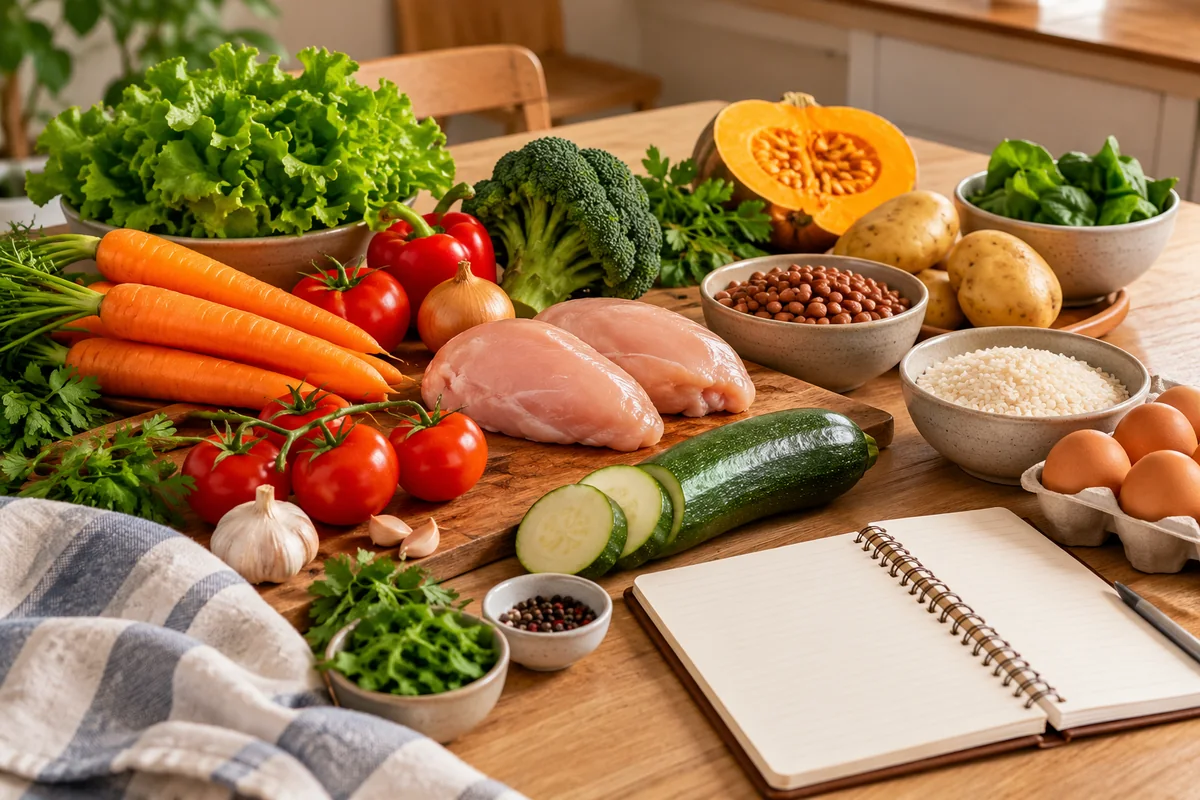
A weekly family menu works better when it starts with the schedule, not with a list of recipes. Write down who has lunch and dinner at home each day, what meals need to be taken and when someone will arrive later. A Monday with four people at the table requires more than a fourth on which two eat outside. This initial account avoids cooking for an imaginary family and helps protect the perishable ingredients. Make a simple picture with days, meals and probable number of people. Use signs for three situations: all together, separate schedules and meal away from home. Do not try to guess every detail; only record known commitments and leave room for change. This one. presence map per meal is the basis for deciding quantity, preparation order and need for individual portions. Then check refrigerator, freezer and pantry. List ready preparations, open packaging and food to be used first. If there are already frozen beans, ripe vegetables or cooked chicken, these items enter the plan before purchase. The schedule shows when they will be consumed; the inventory shows what to start with. Together, they prevent the menu from becoming just a collection of ideas. Also set the actual limits of the week: available time, storage space, equipment and cooking arrangement. A night with ten minutes free should not receive a dish that requires many stages. A lunch taken to a place without fridge or microwave needs another solution. The goal is to build a possible plan without turning domestic organization into a rigid obligation. If there are allergies, restrictions or specific needs, clearly separate the necessary utensils and ingredients and seek professional guidance when applicable. Examples of this content are references of cooking organization, not universal portions or individual prescription. Each family can adapt food, schedules, and quantities to their own habits.
Choose anchor meals and adaptation spaces
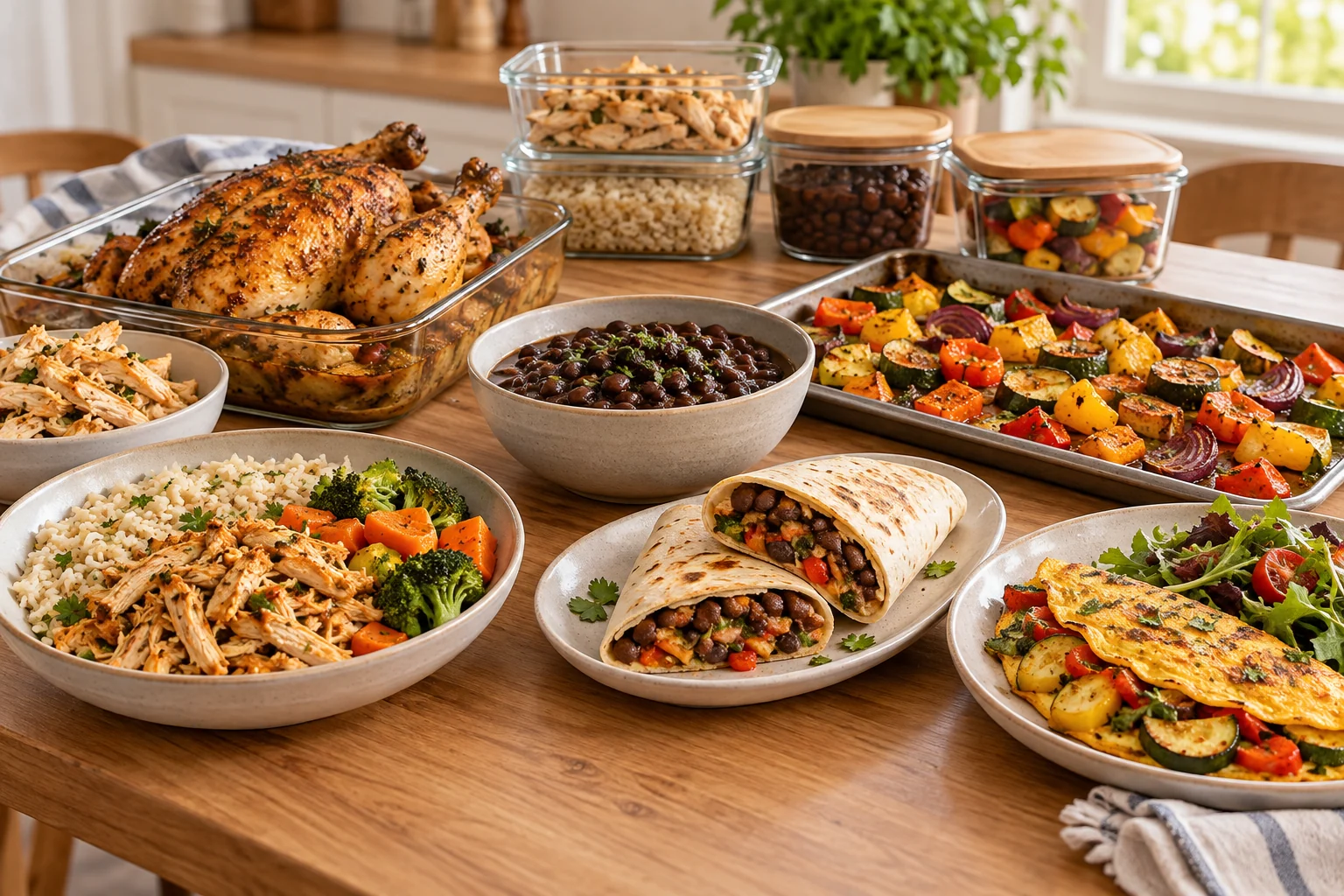
Instead of filling all the calendar houses, choose three or four anchor meals. They are the moments with the greatest chance to reunite the family or to allow a complete preparation. It could be Monday dinner, Wednesday lunch, Friday night and a weekend meal. On these occasions, prepare components that also help in the missed times of the following days. An anchor can gather rice, beans, roasted chicken, vegetables and salad. The next day, rice and beans accompany egg and leaves; chicken can go into sandwich, pasta or stuffing; vegetables can be served cold or heated. This one. anchor meal structure creates continuity without forcing everyone to eat the same dish at the same time. Leave at least two open spaces: one for leftovers and one for unforeseen events. Open space does not mean lack of planning. It prevents an invitation, delay, or change of appetite from pushing seven meals forward. When nothing changes, the family uses the components already prepared or a joker option of few steps. Avoid choosing an unprecedented recipe for each day. In addition to increasing purchase, this multiplies pots, open packaging and leftovers without connection. Choose dishes that share ingredients and have different finishes. A vegetable roaster can accompany rice and beans, become filled with omelet or supplement a pasta. To expand this reasoning with repeated-use ingredients, see the economical weekly menu with different combinations. The idea is not to copy another menu, but to observe how the same purchase can form distinct meals according to the day.
Mount shared modules instead of parallel menus
When times do not coincide, cooking a complete dish for each person is rarely sustainable. An alternative is to separate the meal into modules: base, legume, vegetable, main complement and finishing. Rice, beans or other usual combination form the base; roasted vegetables, sautés or salad bring variation; eggs, chicken, fish, meat or vegetable alternative complete the assembly according to the household’s choices. The modules don't all need to be ready at the same time. Prepare what takes more time and leave quick components for the time to serve. Rice and beans may be portioned, while omelet, salad and a simple saute are made near consumption. This one. assembly by shared components reduces effort without requiring everyone to have identical preferences. Keep spices and sauces separate whenever this helps. A more neutral component accepts lemon, herbs, tomato sauce or other known finishing. Thus, one person may prefer vegetables without sauce and another may mix them to the dish. Separating does not mean producing infinite choices; two endings already create enough autonomy for many homes. Also define which exchanges are equivalent only to the culinary routine, without turning them into a nutritional rule. If someone does not want the planned chicken, an egg, a legume or other option already used by the family can occupy that space. The exchange should be provided for in the purchase and respect allergies and restrictions. Improvising with products no one consumes usually increases waste. Identify the containers by content and date, especially when different people take the meal at different times. Leave in front what should be used first and group matching components. This visual organization reduces questions, avoids opening various packages, and helps each person set up a meal without losing the fate of the rest.
Use a weekly example that accepts changes
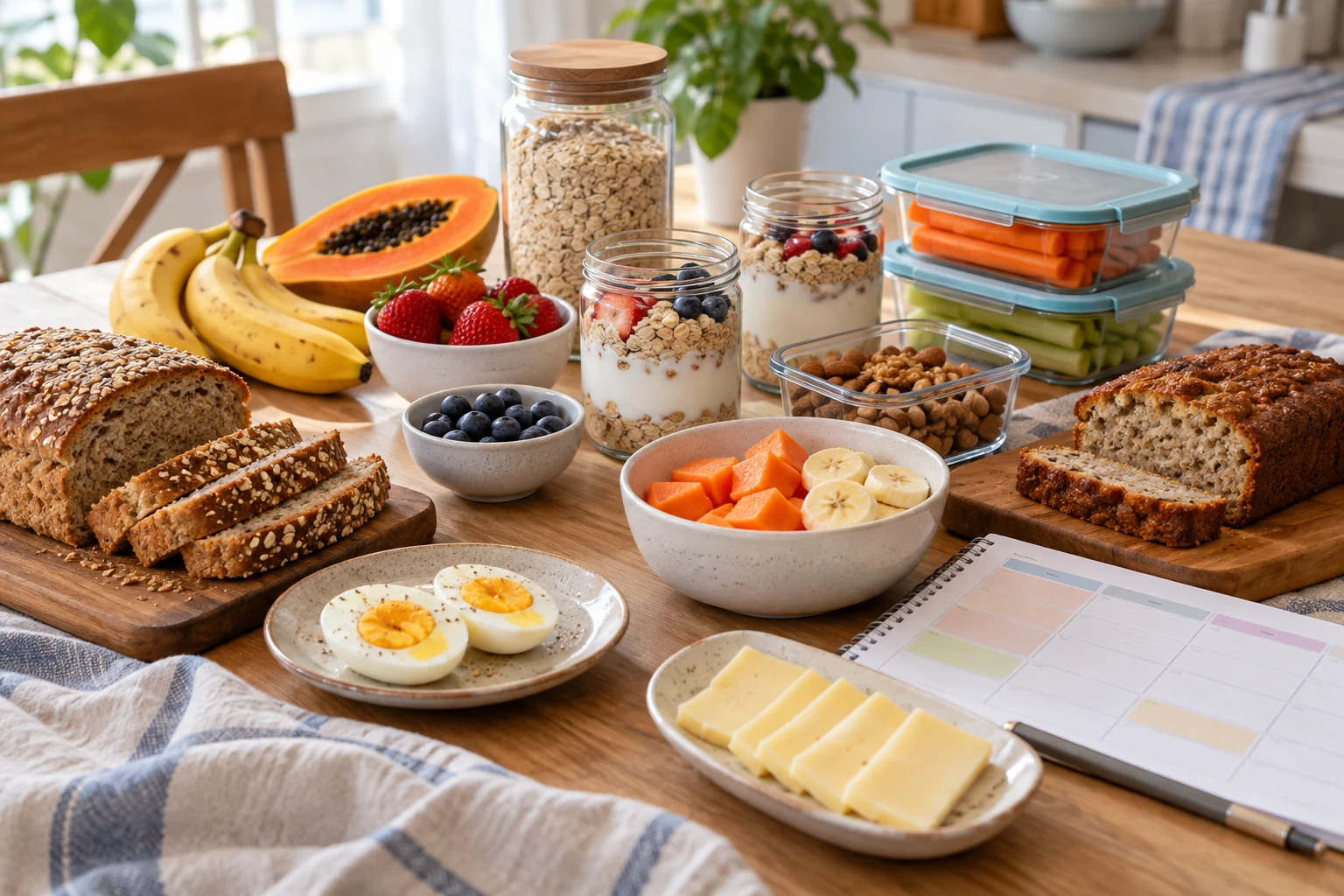
On Monday, an anchor meal can have rice, beans, roasted chicken, carrots and zucchini. Whoever arrives later finds the separate components and warms only the portion itself. On Tuesday, lunch takes advantage of rice, beans and vegetables, with egg or other quick option; at night, part of the chicken goes into a sandwich, tapioca or filling with salad. On Wednesday, prepare pasta with tomato sauce and use remaining vegetables as a follow-up. Anyone who needs a meal can combine the bases already ready in a suitable container. On Thursday, save the space for leftovers: turn rice into scrambled rice, add chicken and vegetables into a simple pie or just repeat the assembly that worked. On Friday, use the second anchor meal, chosen according to time and stock. This one. interchangeable weekly itinerary does not depend on fixed days. If the fourth runs, use the Thursday meal and move the larger preparation. If three people eat out, freeze proper portions before they lose quality. If the chicken is finished before, it is not necessary to redo the whole table; just resort to a quick supplement. Smaller families or families with very variable presence can work three days at a time. Plan an anchor, a transformation, and a joker meal; then review the stock. This short cycle reduces the chance to buy for a scenario that has already changed. Larger families can use the same logic, adjusting pots and number of portions by the observed consumption. There is no need to plan breakfast, lunch, lunch and dinner with the same level of detail. Start with the meals that most generate doubts or last - minute spending. When the method is stable, add other times. A partial plan that is used is worth more than a complete table abandoned on Tuesday.
Turn leftovers into target components
Planned leftover is different from over functionless. Before cooking, define what will be used second. If the roast chicken should yield a filling, separate the corresponding part as soon as the meal is finished. If the vegetables will serve in an omelet, store them without mixing with the sauce that would prevent this use. To give destination before storing prevents anonymous containers from piling up. Create a small visible list with three columns: what's left, even when you want to use and what's next. This one. early destination of leftovers turns reuse into part of the menu. Do not use smell or appearance as the only safety criterion; respect appropriate conditions of preparation, cooling, storage and disposal when in doubt. Rice can move or follow another combination; beans can remain as a follow-up or form broth, according to recipe and conservation; vegetables can become soup, pie or stuffing. These possibilities should be compatible with what the family likes. Planning a sophisticated transformation that nobody wants to eat just postpones waste. Separate smaller portions when the times are different. Repeatedly opening and heating a large container makes it difficult to use and can compromise the organization. Simple labels help distinguish between preparation, date and destination. Put in sight what will be consumed first and freeze early only what is suitable for freezing, rather than waiting until the limit. When a leftover has no destination, reduce the amount next week. Register useful household measures, such as a pan, a baking pan or four containers, without treating these values as standard for other families. The review of actual consumption is what makes the menu progressively more accurate.
Adjust preferences without cooking a meal for each person
Different Preferences need not result in four menus. Start with the common points: a base accepted by all, two known-use vegetables and supplements that can be served separately. One person can ride rice, beans and chicken; another uses rice, beans, vegetables and egg; another prefers chicken with salad. The kitchen produces components, and each dish receives only small final decisions. Ask each person to choose an anchor meal or a follow-up next week. This participation distributes responsibility and shows real preferences before purchase. Children and adolescents can help in tasks compatible with age and safety, such as checking items, washing food under supervision or organizing the table. The menu is no longer a silent expectation of a single person. Use the rule of a common base and at most two simple paths. This one. flexibility with clear limit prevents customization from multiplying work and cost. Sauces, herbs, cheese, seeds or other usual supplements can be kept separate. If an adaptation requires completely separate preparation for health or allergy, treat it as a safety requirement, with adequate guidance and prevention of cross contact. Do not hide ingredients to win resistance or turn the meal into dispute. Register what was well accepted, which may appear with another preparation and what is not worth buying now. Experience something new may be a gradual choice, but planning should continue to be supported by foods that are likely to be used. In houses where each person arrives at a time, combine practical rules: which container can be used, what needs to stay for the next day and who records when a portion ends. This simple arrangement prevents the last to arrive from finding only disconnected parts or consuming a component reserved for another meal.
Prepare in short and distributed blocks
Preparing the whole week in a single session may work for some homes, but it shouldn't be the only strategy. Split the work into blocks: cook beans or other legumes at a time, bake vegetables while the oven is on and leave salads and quick preparations for close to consumption. Two blocks of forty minutes can be more viable than a full afternoon. Start with what has more waiting time and organize parallel tasks without losing control. While a pot cooks, cut the vegetables; while the baking pan is in the oven, wash containers and review the schedule. This one. preparation distributed by priority Enjoys breaks without requiring an industrial kitchen at home. Just mount the portions that really need to be ready. For meals consumed at home, separate components preserve possibilities. For those who take lunch, assemble the container considering transportation, refrigeration and heating available. The content about homemade lunches for work deepens these decisions. Keep a joker option of few steps: frozen portions of the bases, simple vegetables, eggs when appropriate, pasta with sauce already prepared or other usual combination. The joker must be rotating and consumed, not a forgotten stock. When used, write down the replacement only if it really solved an unforeseen. Close each block by making the next action evident. Wash the main utensils, put in front of the ingredients of the next day and write down what remains to be prepared. This organized exit reduces the barrier to resume the plan and allows another person in the house to participate without having to rebuild all decisions.
Review the plan with simple home data
At the end of the week, don't just evaluate whether the menu was followed. Observe how many meals have changed, which components have been most useful and where there has been lack or excess. If rice and vegetables have met various times, keep logic. If a recipe requires a lot of work and remains, reduce the frequency or book it for a really quiet day. Use three decisions: repeat, adjust and withdraw. Repeat is valid for accepted and practical combinations. Adjusting serves for quantity, seasoning, day or storage form. Retreat avoids insisting on items without destination. This one. review based on real routine produces a more efficient menu than copying a new model every week. Also register who participated and where communication failed. Perhaps a reserved portion was consumed, a meal outside the house did not enter the board or anyone knew that there were ready vegetables. Fixing the label and warning system can solve more than swap all recipes. Change only one or two variables per week. If you change bases, quantity, days of preparation and all recipes at the same time, it will be difficult to understand what has improved. Preserve what worked, test a new combination and continue recording consumption. Within a few weeks, the family will have their own references of quantity and effort. A flexible menu is not a loose plan: it sets priorities and accepts changes without losing control. Anchor meals give direction, shared modules accommodate schedules, separate complements respect preferences and leftovers with destination reduce unnecessary purchases. The best result is a system that the house can repeat, review and simplify.
Shopping list
Mark the products you already put in the cart.
Community
Comments
Create an account or do login for favorite and leave your comment.
Loading comments...