

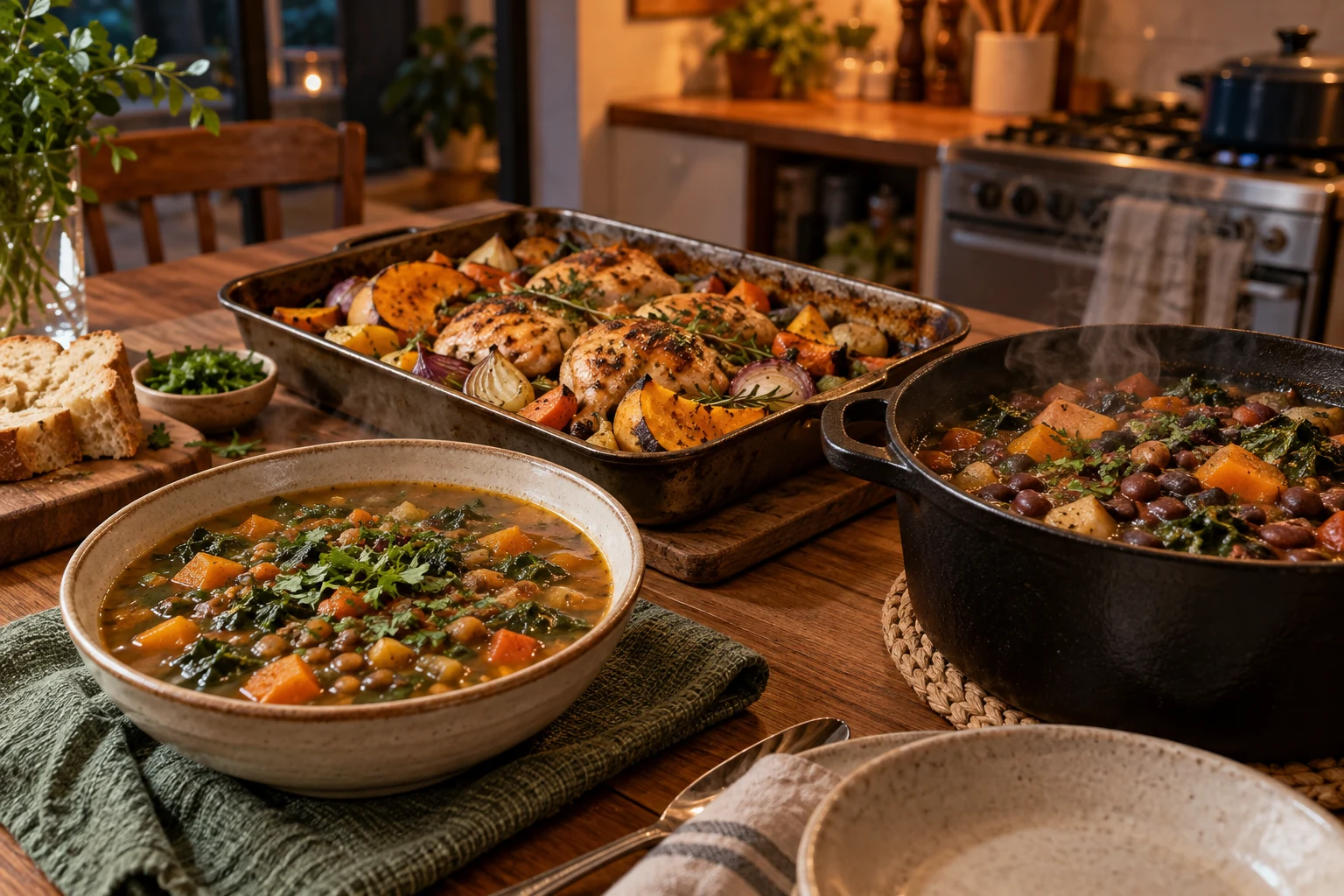
Winter menu with soups, roasts and pan dishes
Organize a week of hot meals with complete soup, baking and pan dish, sharing ingredients without repeating the same combination.
How to organize
Winter menu becomes more practical when a soup, a baking dish and a pan dish share ingredients and take on different destinations throughout the week.
In this guide
- Start the winter menu by routine and not just by cold - Choose a complete soup and components that reappear - What? Use a baking machine to prepare various destinations - Plan a pan dish that rents new combinations - What? Ride a model week without repeating the same meal - Balance texture, vegetables and fresh finishing - Organize preparation, cooling and storage - What? Make a shopping list linked to the three methods - Review the menu according to weather, schedule and consumption - Shopping list
Start the winter menu by routine and not just by cold
One winter menu Useful needs to combine comfort, variety and work possible. The lowest temperature may increase the will to eat hot preparations, but this does not require cooking a different heavy recipe every day. Before choosing dishes, watch how many people will eat at home, which nights allow cooking, when there will be leftovers and which equipment can work at the same time. This reading avoids a beautiful planning that does not fit in the real week. Divide the next few days into three situations: meals made soon after preparation, meals assembled with ready components and a reservation option. Make appointments, lunches outside and days when you will need to warm up quickly. Planning begins with consumption occasions, not with an extensive list of wishes. A soup dinner may be suitable for a running night, while the roast can enjoy the oven on for the weekend. Choose three central preparations: a complete soup, a baking pan and a pan dish. Each must offer more than one use without requiring the family to repeat exactly the same dish. Roast vegetables can accompany rice, enter the soup or complete a bowl. A stew can be served with a base on the first day and receive another garrison afterwards. A structure of three preparations simplifies purchases, cooking and storage. Keep fruits, vegetables and vegetables present even when the preference is for hot food. The Paraná Department of Health recommends that food on cold days continue including these groups and remembers that soups can gather vegetables, vegetables, cereals and tubers. Use this orientation as a balance point: the heat comes from the preparation method, not from the automatic withdrawal of fresh foods. Start with four or five meals planned and save room for adjustments. One night you can order a sandwich, another you can enjoy it, and a commitment can change. O menu with decision margin it reduces waste and prevents food purchased for seven independent recipes from going out of business.
Choose a complete soup and components that reappear
The main soup should work as a meal, not just as an entrance. Combine an aromatic base, two or three vegetables, a legume or other usual component of the house and, if desired, a protein chosen by the family. Pumpkin, carrot, potato, cassava, beans, lentil, shredded chicken and leaves allow many combinations. It is not necessary to use all: few well-coordinated ingredients make it easy to recognize taste and texture. Set consistency before cooking. Beat soups are uniform, but they can hide the texture of all ingredients; soups with pieces help to vary each spoonful. An intermediate solution is to hit only one part and return to the broth. This creates body without relying on large amounts of cream. Book herbs, lemon, seeds or other suitable finish to add to the dish, preserving aroma and contrast. Plan ingredients that will have a second destination. The baked pumpkin can thicken the soup; the baked beans can enter a pan preparation; leaves can finish the bowl or accompany the roast. This connection must be decided before purchase. The cooking guide for the week with a simple menu helps distribute the work into blocks without turning a single day into a marathon. Prepare the soup in quantity compatible with consumption and the containers available. If part will be stored, separate the portion that will not go to the table early, identify and conduct cooling and storage properly. Avoid keeping a large pan repeatedly going through heating and cooling. A already defined portion facilitates preserving quality and reduces manipulation. To vary the second meal, change the assembly, not all the recipe. Serve soup with roasted vegetable cubes in one day and with herbs or a small trim in another. If the base is thick, adjust the consistency when reheating. Register whether the preparation has thickened, lost fluid or become too soft to correct next time.
Use a baking machine to prepare various destinations
The baking pan is the part that creates components, not just a closed dish. Choose vegetables with close cooking times or cut them in different sizes to balance. Pumpkin, onion, carrot, sweet potato, cauliflower and other items available may occupy separate areas. Season in a simple way and make sauces or finishes more striking for the time of serving. If there is chicken, fish, meat or an alternative vegetable, consider your own space, temperature and time. Not everything needs to go in together. An ingredient that releases too much liquid can prevent the gold of others; a delicate item can finish first. Use two roasters when this improves the result without overloading the oven. A time cooker It produces more predictable components. In the first use, serve the roast as a complete meal with a base and a fresh or cooked accompaniment. In the second, cut some of the vegetables and add to the soup. On the third, mount a bowl with grain, leaves and the main component. The transformation should be noticeable so that the menu does not look like a sequence of equal leftovers. Avoid roasting all vegetables until they are too soft. As some will be heated again, remove them when they are cooked and still maintain structure. Also separate portions that will receive another destination before taking the tray to the table. This reduces repeated contact and helps control what will be available for the next few days. Enjoy the oven on only when there is real capacity to store and consume the components. Producing two extra non-target roasters is no economy. To adapt ingredients to the period, consult the menu planning with food from the season and choose what is available, in good condition and with defined use.
Plan a pan dish that rents new combinations
The pan dish should bring a different profile of the soup. If the soup is delicate and vegetable, the stew may taste more concentrated; if the soup brings beans, the pot may use lentils, chickpeas, meat, chicken or other usual combination. Onions, garlic, tomatoes, herbs and vegetables create a flexible base, but the selection needs to respect home preferences and restrictions. Choose a cut and a method that works with wet cooking. Ingredients of different times enter stages so that carrots, potatoes, leaves and protein do not end with the same texture. Add liquid gradually and watch the reduction. An excessively thin stew limits later use; a dry preparation may lose quality when reheating. A pot with balanced broth Takes better new garrisons. Serve the first portion with rice, couscous, polenta, puree or other base. On another day, use a smaller amount on roasted vegetables or next to sauteed leaves. If there is enough broth, turn part into a lighter preparation by adding already cooked vegetable. Make the change only in the portion of the day, keeping the remainder in the original form. Do not mix the whole base in advance to the stew. Rice, pasta or mashed matter stored separately allow you to adjust portion and texture. They also offer a way out when one person prefers more broth and another wants the firmer dish. A separation of the main components expands combinations without increasing the number of recipes. Before storing, check how much is left and indicate the next use. Write “fourth: stewed with rice” or “fifth: bowl with vegetables” instead of just the name of the dish. A container without destination is usually forgotten; a component associated with a meal enters the planning.
Ride a model week without repeating the same meal
A model week can start on Sunday with vegetable baking and main component, accompanied by rice and salad. On Monday, serve the complete soup finished with part of the roasted vegetables. On Tuesday, prepare or heat the pan plate with the chosen base. On Wednesday, turn the roast into a bowl with grain, leaves and separate sauce. On Thursday, use the second portion of the stew with another garrison. Friday can be a night of review. Collect only what remained well stored and with known history, or use the scheduled reserve meal. Don't create an indiscriminate mix of little leftovers. Evaluate each item, discard what does not provide security and mount a coherent combination. A Friday without mandatory revenue gives flexibility to the menu. Toggle sensations: broth, roasted, creamy, firm, fresh and crispy. Even repeated ingredients seem different when they change cutting, temperature and tracking. Roasted carrot has distinct behavior from the carrot cooked in broth; sauteed leaves do not automatically replace a salad. The goal is to use the ingredients well without erasing their characteristics. Distribute the dishes according to the schedule. Put the fastest preparation on the day with little time, the newly made meal when available and the frozen portion validated at a time of less margin. If a meal needs to travel, use the method described in meals to carry that remain tasty after heated, separating delicate components. The sequence is an example, not a universal rule. Reverse the days, reduce the number of meals, or change bases according to consumption. Preserve only logic: three central preparations, components with destination, assembly variety and a free night. This drawing makes the weekly winter planning more resistant to change.
Balanced texture, vegetables and fresh finishings
Hot preparations need not have uniform texture. Use a soft component, another firm component and a finish added later. In the soup, keep some of the vegetables in pieces; in the roast, avoid stacking the baking dish; in the stew, put delicate ingredients near the end. These simple decisions preserve identity and make the meal more interesting. Include vegetables in different forms during the week. Leaves can enter the soup near the end, be braised quickly or appear fresh when routine and conservation allow. Vegetables can be roasted, steamed or incorporated into the pot. Variing the method helps to take advantage of the same group of purchases without relying on isolated revenues. Prepare small finishes: chopped herbs, lemon, seeds, yogurt or other option compatible with the meal and household preferences. Store separately and use only on the plate. They do not correct flavorless food, but add aroma, acidity or contrast. A planned completion avoids excess sauces and keeps the base versatile. Keep offering water throughout the day. In the cold, thirst can be perceived differently, but hydration is still part of the routine. Soups and drinks should not be used as justification for abandoning water or making health promises. Individual adjustments may depend on professional guidance when there is clinical condition. Review salt and seasonings after reheating, not before concentrating broths and sauces. Reduced preparations can intensify flavors. Use herbs, spices and aromatics according to the dish, without trying to create the same combination at all. The variety is also born from seasoning, provided the ingredients can still be recognized.
Organize preparation, cooling and storage
Plan a work order: sanitize what will be used, heat the oven, start the pot longer and leave the soup to enjoy separate ingredients. While the cooker cooks, prepare the aromatic base and portion accompaniments. A short list of steps prevents all utensils from being used at the same time and reduces waiting periods. Separate boards, knives and containers according to the food handled and keep surfaces clean. Do not use the same board without adequate hygiene between raw food and ready item. Follow sanitary guidance and equipment instructions. The Health Department of São Paulo brings together general rules for the purchase, hygiene, preparation and conservation of food, useful as a reference for the domestic routine. At the end, do not leave large pots forgotten on the bench. Separate portions and conduct cooling, cooling or freezing according to the type of food and applicable guidance. Identify content and date. Appearance and smell do not guarantee security when the storage history is unknown. Choose containers compatible with volume and destination. Huge pots encourage repeatedly opening and heating all preparation; very small pots multiply pieces and occupy space. Prefer portions connected to real consumption. Leave cold sauces, herbs and crispy items in your own containers. Book ten minutes after preparation to update the plan. Mark what was frozen, what should be consumed first and which component was smaller than expected. A calendar linked tag It's more useful than just stacking pots. If the amount has changed, adjust the following meals before buying or cooking again.
Review the menu according to weather, schedule and consumption
At the end of the week, evaluate three points: what was consumed, what was hard work and what maintained good quality. Register whether the soup yielded the expected quantity, whether the baking machine had sufficient variety and whether the pan dish accepted two assemblies. These responses form a repertoire of their own, more useful than repeating a generic plan. Rate each preparation as repeat, adjust or withdraw. Adjusting can mean reducing volume, changing a vegetable, using fewer containers or distributing the preparation in two days. Retreating is not a waste of learning; it just indicates that that combination did not serve the current routine. Preserve the parts that worked. Note also the real climate. A more mild week may require fewer soups and more assembled meals; a cold front may increase the use of the pan. Don't try to predict everything in the purchase. Keep versatile components and a reservation option to respond without abandoning planning. A flexibility with clear limits avoids total improvisation. The following week, change only one of the three central preparations. Maintain the method of organization, but change the soup, roast or stew. Thus it is possible to compare income, acceptance and work. Change everything at the same time erases the reference and can repeat the same problems with other ingredients. To start today, choose a soup, a baking pan and a pan, distribute four or five meals, write the second destination of the components and assemble the list. After the first cycle, correct quantities and order. A winter menu works when it heats the routine without overloading who cooks.
Shopping list
Mark the products you already put in the cart.
Community
Comments
Create an account or do login for favorite and leave your comment.
Loading comments...