

Practical vegetarian menu for a week race
Organize a vegetarian week with versatile bases, simple combinations, step preparation and an adjustable shopping list.
Weekly vegetarian menu: how to organize in routine
Weekly vegetarian menu it is the central subject of this guide, organized to facilitate decisions of preparation, routine and shopping. Suggestions on a weekly vegetarian menu can be adapted to the preferences, budget and needs of each home.
Plan the real week before choosing the dishes
A practical vegetarian menu begins with the agenda, not with a perfect list of recipes. Count how many lunches and dinners will be made at home, which days end later and when a meal needs to be taken. If Wednesday is always a race, leave for that day a quick assembly with components already ready. If the weekend usually changes, do not buy delicate ingredients for meals that may not happen. This one. real week map It reduces last-minute decisions and helps scale the purchase. The goal is to build a flexible reference, not a nutritional prescription. Preferences, individual needs, allergies and restrictions require adjustments and, when necessary, professional guidance. The Food Guide for the Brazilian Population recommends valuing natural or minimally processed foods and culinary preparations; this direction can guide vegetarian choices without turning the routine into a rigid rule. Split a leaf in five business days and schedule three situations: quiet meal, take-out meal and emergency meal. Then check appointments, displacement time and equipment available. A lunch that will be heated allows different choices of a snack consumed outside the home. This simple reading avoids planning a lengthy preparation just for the day when there will be less time. Also book a space for unforeseen events. Instead of filling all meals, keep a wild combination with long-lasting ingredients. Frozen rice and beans in portions, noodles, cooked lentils or bread with vegetable paste can fulfill this function. Free space does not represent a lack of organization: it protects planning when routine changes and helps consume what is already open.
Choose bases that work in more than one meal
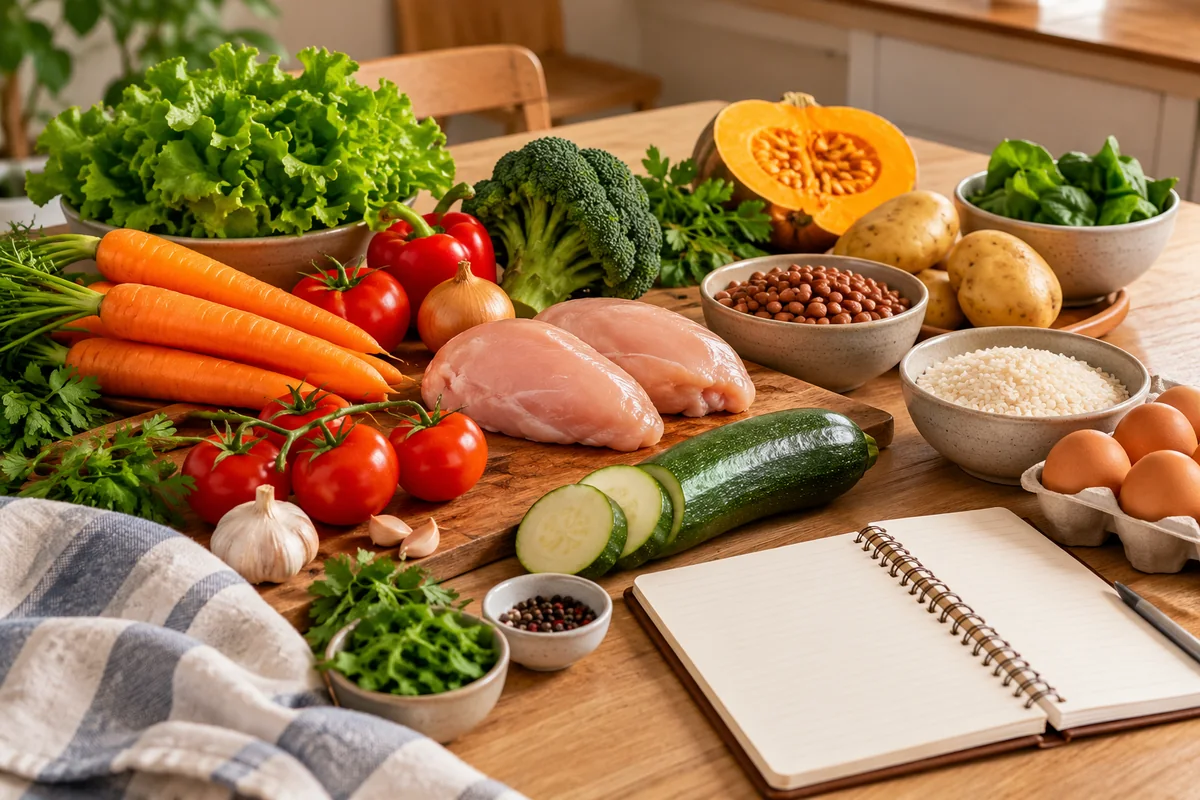
In one week, preparing seven totally different dishes usually increases work, dishes and waste. It is more efficient to choose components that change function: rice can accompany beans in one day and turn rice with vegetables in another; lentil can be served hot, enter a salad or stuff a bread; baked pumpkin can accompany lunch and then form a cream. Mount one Reusable base structure with a cereal, two legumes, three or four vegetables, leaves and a simple sauce. Those who consume eggs or dairy can include them according to their choices; those who do not consume need to plan substitutions compatible with their diet. To broaden this reuse reasoning, see the economical weekly menu with versatile ingredients. Think of the bases as assembly pieces. A rice pot, a bean pot and a vegetable cooker don't have to show up together every day. On Monday, they form a full plate with kale. On Tuesday, part of the vegetables accompanies pasta. On Wednesday, rice, chickpeas and vegetables saw a cold or warm bowl. Format change keeps the variety with fewer tasks. When selecting the bases, observe duration, refrigerator space and possibility of freezing. Leaves and tomatoes demand faster consumption; dry grains, roots and frozen vegetables offer greater margin. Combine delicate items with other resistant ones instead of concentrating all purchase on foods that need to be used in the first few days. This allows you to adjust the menu order without losing ingredients.
A flexible suggestion for five business days
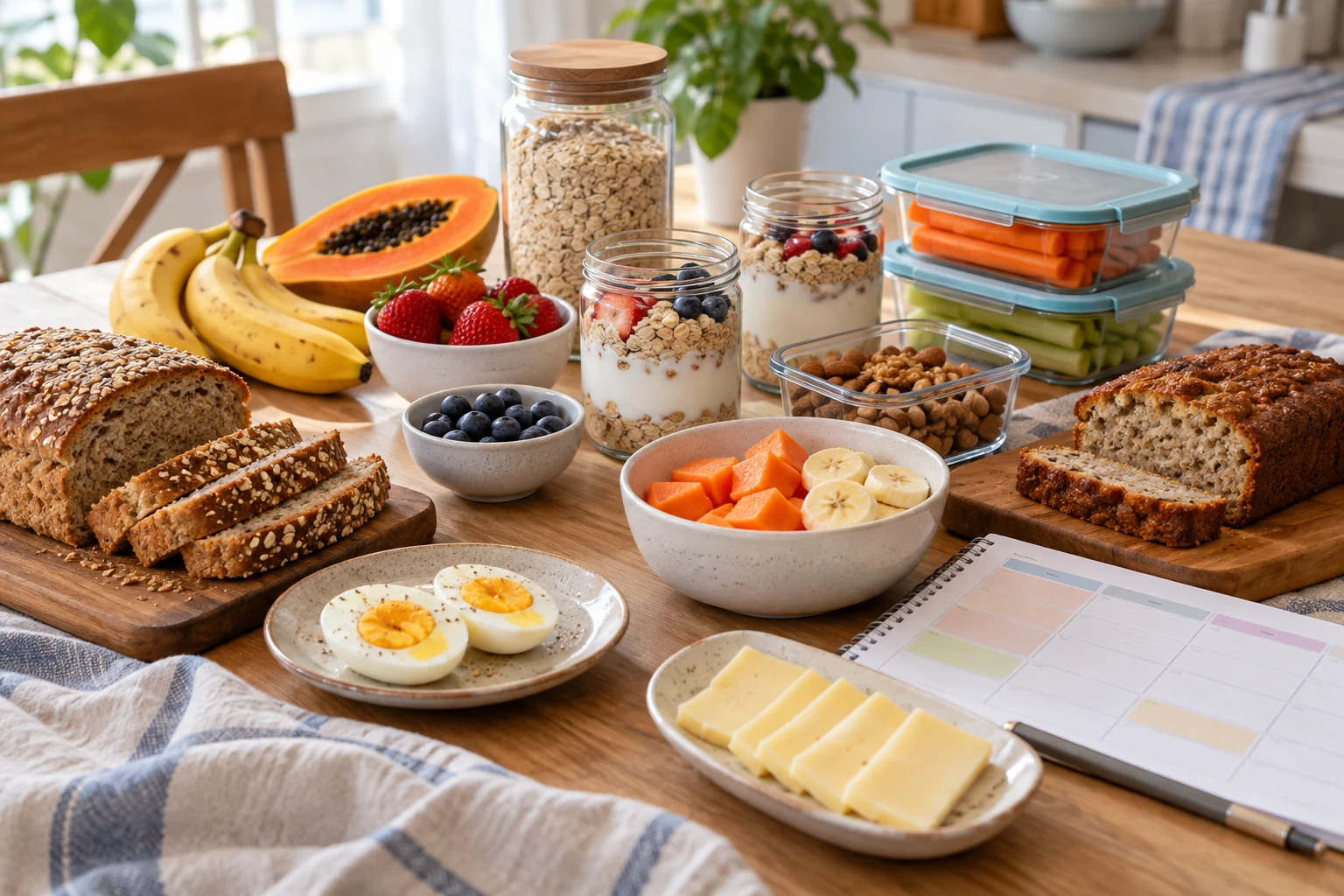
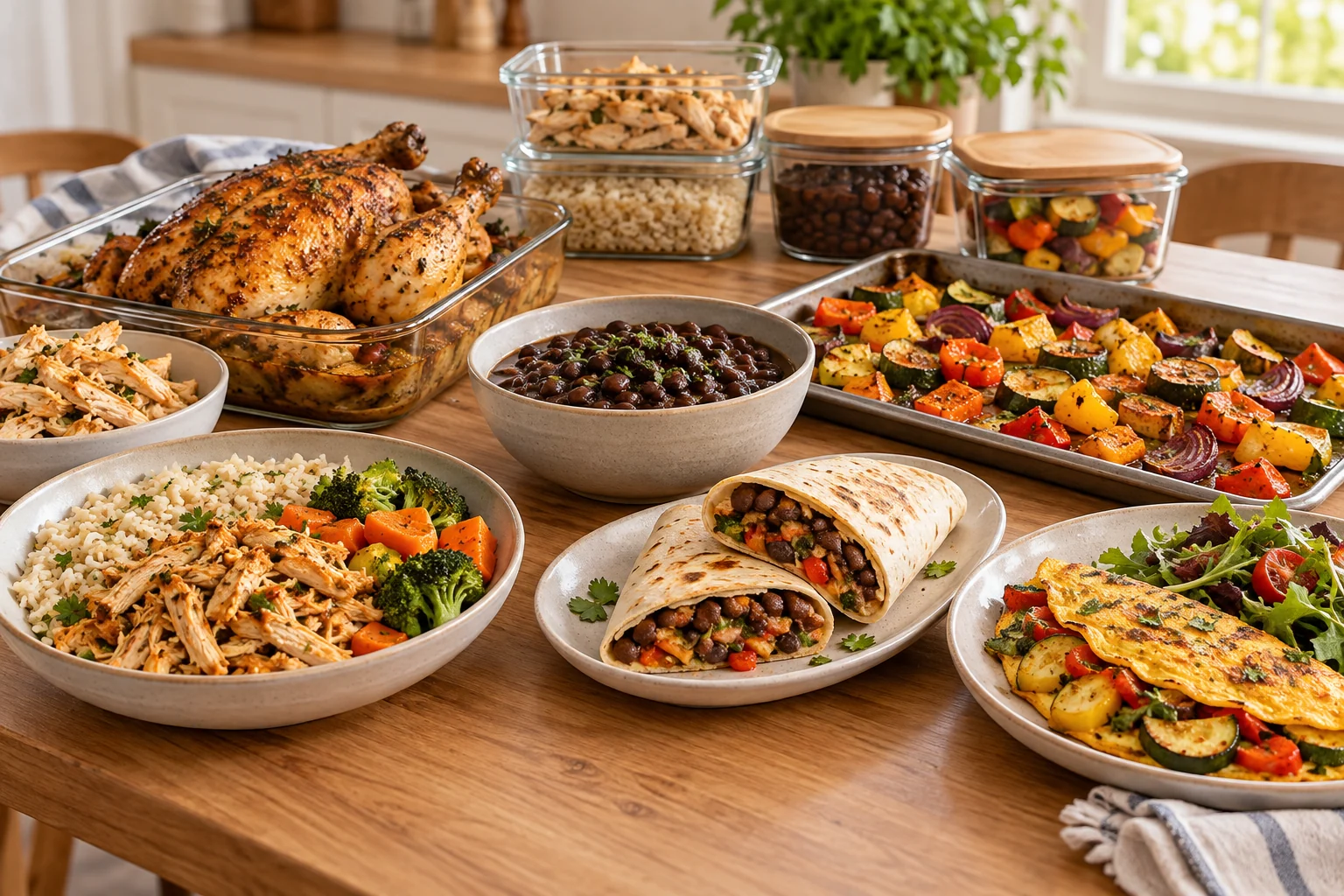
Use the example as a starting point. Monday: rice, beans, baked pumpkin and sautéed cabbage. Tuesday: pasta with tomato sauce, seasoned lentil and broccoli. Wednesday: bowl of rice, chickpeas, carrots, tomatoes and leaves with lemon sauce. Thursday: rice with vegetables, beans and omelet, when eggs are part of the diet. Friday: sandwich or wrap with chickpea paste, vegetables and a portion of pumpkin soup. This one. adaptable vegetarian sequence repeats ingredients without repeating exactly the same dish. Change the days according to the schedule and first use the most sensitive vegetables. If any preparation yields more, freeze a portion when this is appropriate or reduce the amount next week. The menu serves the routine; the routine should not be stuck to the menu. For dinners, it is not necessary to create another complete planning. Invert combinations and decrease the number of components when hunger or time is shorter. Pumpkin soup can receive lentils; rice with vegetables can enjoy broccoli and carrots; the chickpea paste can accompany bread, tomato and leaves. Well stored remains enter first, as long as they are within the safe period of conservation. Breakfast and snacks can be planned with the same logic, without forcing everyone to eat the same. Fruit, oats, bread, coffee, yogurt or vegetable alternatives come in as individual habits and choices. The main point is to check before purchase what will actually be consumed. Adding many options just to make the menu seemingly complete can increase cost and waste.
Distribute preparation in an order that saves time
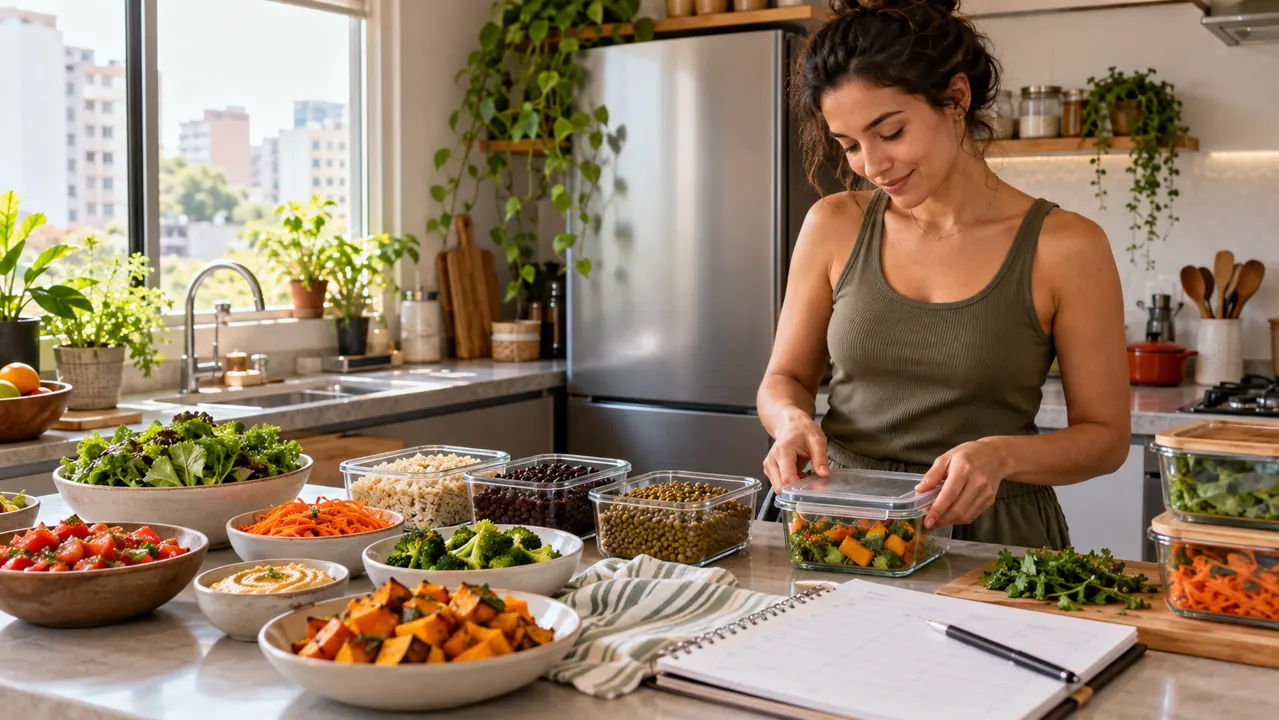
Start with the items that require more time. Cook the beans or lentils, heat the oven and cut pumpkin, carrot, onion and broccoli. While the vegetables bake, prepare the rice and a simple tomato sauce. Then sanitize the foods that will be consumed raw as recommended by the product used and separate leaves, tomatoes and herbs into suitable containers. This one. preparation in coordinated steps avoids trying to finish everything at the same time. You don't have to leave every meal fully assembled. Cooked bases can be portioned, while salads, sauces and supplements are separated to preserve texture. For those who bring lunch, the guidelines for organizing homemade lunches for work help adapt transportation and storage. Before starting, release the countertop, separate containers and check if there is room to store what will be produced. This small preparation avoids finishing with ready pans and no packaging available. Identify portions intended for the next few days and those to be frozen. When there is doubt about time or safe conservation, follow the applicable sanitary guidance and do not use appearance or smell as the only criteria. A practical session may last less if each step has a limit. First make two bases and a vegetable cooker; then decide if there is time for sauce or paste. It is not mandatory to complete everything in a single day. Cooking chickpeas on the eve, cutting vegetables in the morning or preparing sauce while dinner cooks distributes effort and makes the system more realistic.
Create shortcuts without depending on ready dishes
Routine running doesn't mean cooking everything from scratch every day. Vegetables already cooked, frozen vegetables without sauces, tomato canned with few ingredients and previously sanitized leaves can shorten steps. Read the labels and choose the options that make sense for budget and routine. A pot of cooked chickpeas can become salad, paste or filling; a portion of lentil can accompany rice or enter a sauce. Keep one rapid emergency plan for the day that comes out of the forecast: pasta with sauce and lentil, omelet with vegetables, rice with frozen beans or bread with chickpea paste and salad. These shortcuts do not need to replace all meals; they prevent a change of schedule from falling apart all week. Set up a small reserve consistent with the house, without hoarding products. Two frozen portions, a ready legume and a fast-prepared vegetable already offer alternatives. Check the dates weekly and put in front what should be used first. The emergency stock only works when the ingredients are known, accepted by the people of the house and actually enter the meals. Useful shortcut is the one that eliminates a specific step. Frozen vegetables reduce washing and cutting; baked beans reduce pot time; prepared sauce reduces assembly. Compare price per usable quantity and list of ingredients, not just packaging. In some cases preparing at home will be more convenient; in others, buying a simple ready basis will avoid waste and make the plan executable.
Adjust quantities for observed consumption
There is no universal quantity for a weekly menu. Number of people, appetite, meals away from home and size of packages change purchase. In the first week, use measures close to usual consumption and record what is left. If the lentil has yielded too much, freeze part or buy less. If the leaves are over early, just increase this item. For one person, one Consumer-driven purchase it is especially important, because large packaging can seem economical and still generate loss. The content on meals of the week for those living alone shows how to plan smaller amounts. Prefer to buy fresh food again to carry a quantity that will hardly be used. Use three signs to adjust the list: missing food, leftover food, and food that has changed destination. If the broccoli is over sooner than anticipated, maybe he's a frequent choice of the house. If the cabbage remained intact, reduce or replace. If the pumpkin planned for lunch became soup, register the change; it shows versatility, not necessarily excess. Avoid turning estimates into mandatory portions. Different people consume different amounts, and the same person may vary throughout the week. Plan simple extra components to complement a meal, such as rice, beans or vegetables already prepared. In the review, first adjust the most expensive and perishable items, because small corrections in them usually have a greater impact on budget and waste.
Varie texture and spice with the same ingredients
The feeling of repetition often comes from the way of preparation, not from the ingredient. The carrot can be roasted, grated or sautéed. The chickpea may appear whole, lightly toasted or as paste. The pumpkin can be served in cubes, crushed or transformed into soup. Lemon, garlic, herbs, paprika, cumin and seeds change the meal profile without requiring a new shopping list. Use this. texture and seasoning variation in moderation and according to the household preferences. Leave separate sauces and supplements when the meal is stored. Thus, a small set of bases form dishes with different appearances and sensations, reducing the desire to abandon planning in the middle of the week. Create two spice combinations for the week instead of opening many pots. One can use garlic, lemon and herbs; the other, onion, paprika and cumin. Apply at different times and taste before correcting. Very strong or mixed sauces in advance can dominate all components, while simple finishes let each person adjust their own dish. Contrast also temperatures and consistency. Roast vegetables can accompany fresh leaves; a creamy soup can receive whole chickpeas; soft rice can be served with still firm vegetables. When the base is dull, check acidity, aroma and texture before increasing salt. These changes increase the possibilities of the menu without requiring special ingredients or a new recipe per day.
Review the menu before repeating the purchase
At the end of the week, observe which combinations worked, which preparations took longer than they should and what was not consumed. Perhaps five planned dinners are too much; it may be helpful to keep an open meal to enjoy leftovers. Also note which components were most versatile and which lost quality after storage. This one. short and objective review turns the menu into a system that improves with use. In the next purchase, keep what worked, adjust only two or three decisions and test a new preparation. A sustainable vegetarian planning for routine is one that fits in the time available, respects individual choices and manages to absorb changes without producing waste. Make the review before writing the following list. Open refrigerator, freezer and pantry, confirm leftovers and choose a meal to use. Then mark each item on the menu as repeat, adjust or withdraw. This quick classification produces clear decisions: repeat rice with vegetables, prepare less lentils or exchange a leaf that has not been well accepted. Avoid changing all meals at once. Keeping three or four known combinations and testing only one novelty reduces the risk of buying ingredients without destination. After a few weeks, you will have a list of reliable bases, real preparation times and quantities closer to consumption. The result is not a fixed menu, but a personal method of organization that can follow changes in schedule, budget and preference.
Adapt the plan without losing the logic of the week
Changes are part of the routine. If a lunch is cancelled, do not try to push all meals into the next day. Check which components are ready, prioritize the most sensitive and freeze what can be stored in this way. A portion of rice and beans can occupy the space of another meal; roasted vegetables can enter a soup, sandwich or pasta. The adjustment should preserve the ingredients, not the order written on paper. When an item is missing, replace it with the function he performed. One legume can give way to another already available; a fresh vegetable can be exchanged for a frozen option without sauce; rice can be alternated with another cereal used by the house. The exchange doesn't need to exactly mimic the original flavor. It needs to allow a coherent and practical combination, respecting individual preferences and needs. It is also useful to separate what is essential from what is optional. Rice, beans, lentils, vegetables and leaves support various assemblies. Seeds, specific herbs or ingredients used only in a recipe can stay as a complement. If the budget tightens or the market does not have a product, first remove the optional one. This hierarchy makes the list more resistant to price and availability variations. In especially full weeks, reduce the amount of preparations without abandoning the plan. Choose a legume, a cereal, two vegetables and two forms of assembly. One meal can be a hot dish; another a bowl; another a soup or a sandwich. Repeating a base for a few days is different from always eating the same dish, especially when texture, accompaniment and seasoning change. If there is more time on the weekend, use it to advance tasks that really weigh on business days. Cooking beans, baking vegetables and separating portions usually brings more results than setting up five full meals. If there is little time, make only one base and leave the rest for short steps. A viable planning can be simple; it does not need to reproduce photographs of perfect menus. Finally, keep the shopping list connected to the menu. Each food must appear in at least one intended preparation, and the most perishable items must have defined priority. Before leaving, check the pantry, fridge and freezer, scratch what already exists and avoid buying by habit. This conference closes the cycle between planning, buying, preparing and reviewing, making the vegetarian week more organized without promising results that depend on individual evaluation.
Shopping list
Mark the products you already put in the cart.
Community
Comments
Create an account or do login for favorite and leave your comment.
Loading comments...