

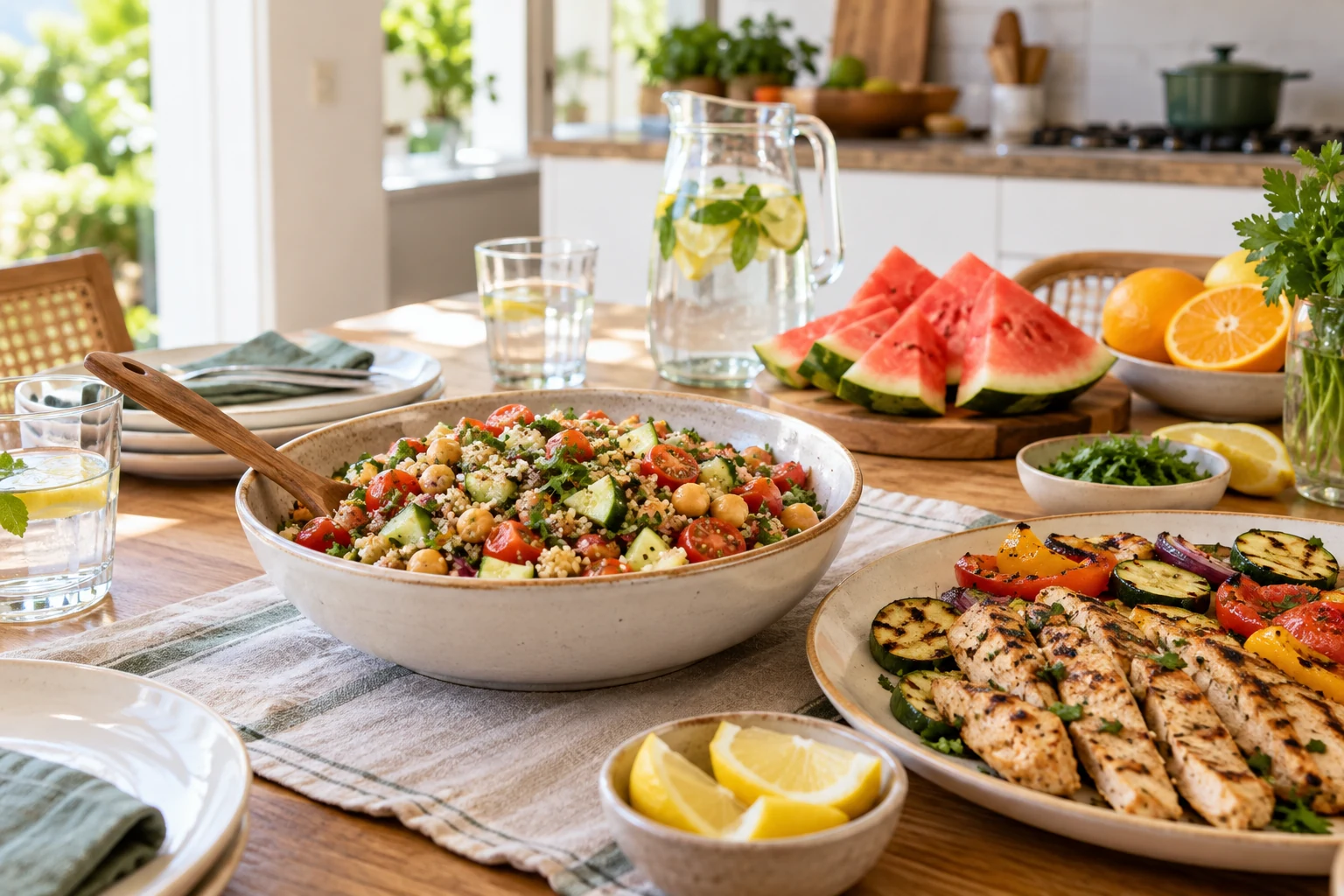
Summer menu with fresh meals and simple preparation
Organize hot-day meals with fresh components, short cuts, separate sauces and combinations assembled throughout the week.
How to organize
Summer menu becomes more practical when fresh components, a short cooking, separate sauces and hydration enter the same weekly planning.
In this guide
- Plan the summer menu from the hottest days - What? Build a structure based on freshness and completion - Concentrate the cooking on a short and well-ordered block - Prepare vegetables to maintain texture and reduce losses - What? Use grains, legumes and proteins in different combinations - Distribute a model week with varied assemblies - Include hydration in planning without promises or rigidity - Reinforce cooling, cooling and heat transport - Review purchases, acceptance and effort before next week - Adapt the plan to the space and preferences of the house - Shopping list
Plan the summer menu from the hottest days
One Summer menu works best when considering temperature, schedule and structure available to conserve food. Instead of choosing seven independent cold recipes, observe which meals will be made at home, which will need to travel and at which times the heat is usually more intense. This reading defines what can be mounted on time, what needs to be refrigerated and which preparations should be consumed first. Divide the week into four types of meal: fresh assembly, fast dish made at the moment, combination of cooked components and reserve meal. Make appointments and days without time to cook. A complete salad can work at home, but require separate containers when transported. A pan dish can be more practical at night than a delicate set prepared many days earlier. Choose a cooked base, a legume, two groups of vegetables, one or two main sources and two finishes. Rice, couscous, short-mass, lentil, peas or chickpeas can form different combinations. Leaves, cucumbers, tomatoes, carrots, zucchini, herbs and fruits add texture and freshness, provided they have defined use and proper conservation. Plan less ready food and more components to go. Leave cooked and chilled grains, roasted or grilled vegetables, a prepared protein and fresh vegetables sanitized according to the house routine. Sauces stay separate. A assembly near consumption preserves better contrasts and allows adjusting portions without mixing all production. Start with four or five meals and keep a night free. Heat, an invitation or a change of schedule can change consumption. The margin prevents fresh ingredients from being forgotten. The goal is not to fulfill a rigid grid, but to reduce improvised decisions without producing beyond what is necessary.
Build a structure based on freshness and completion
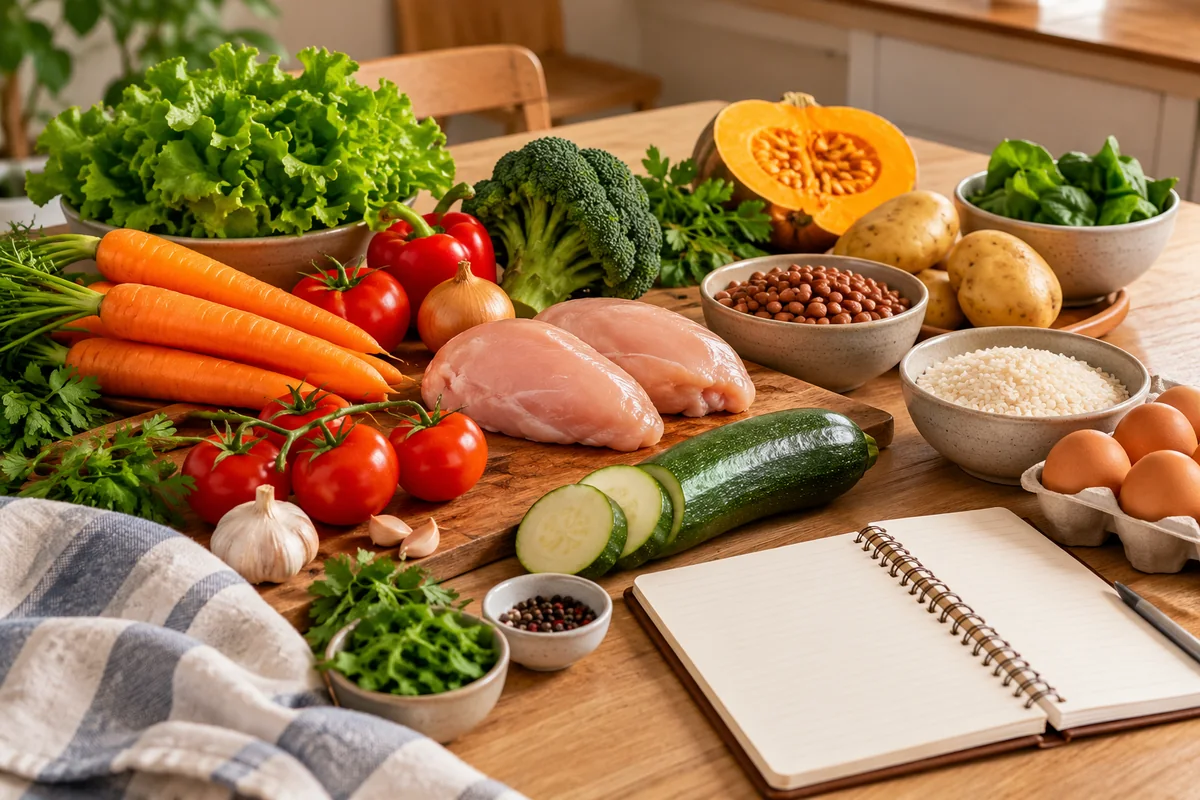
Use a four-part structure: base, main component, vegetables and completion. The base may be rice, couscous, pasta, potatoes or a common grain. The main component may come from legume, egg, chicken, fish, cheese or vegetable alternative chosen by the house. Vegetables bring volume and texture; finishing adds acidity, herbs or crocance. The same structure accepts cold temperature, warm or controlled environment. Freshly prepared rice can accompany grilled chicken and salad; after cooling properly, another grain can enter a cold assembly with vegetables. Do not treat “cold” as a synonym for insurance outside the refrigerator. The consumption temperature does not eliminate the need for conservation. Choose available ingredients at the time and in good condition. The menu planning with season food helps to evaluate appearance, use and substitutions without depending on a specific product. In summer, availability and price change between regions; keep alternatives for leaves, fruits and vegetables. Prepare two simple sauces, not many. A combination of lemon, herbs and olive oil can serve grains and vegetables. Another finish can use yogurt, tahine, vinaigrette or usual ingredient, respecting preferences and conservation. Avoid seasoning the whole salad in advance, as salt and acidity can release water and modify leaves, cucumber and tomato. Register the function of each purchase. Tomato enters the salad and fast dish; carrot appears raw and sautéed; herbs serve sauce and finishing. A list organized by function reduces single-use ingredients and creates variety by combination, not by excess products.
Concentrate the cooking on a short and well-ordered block
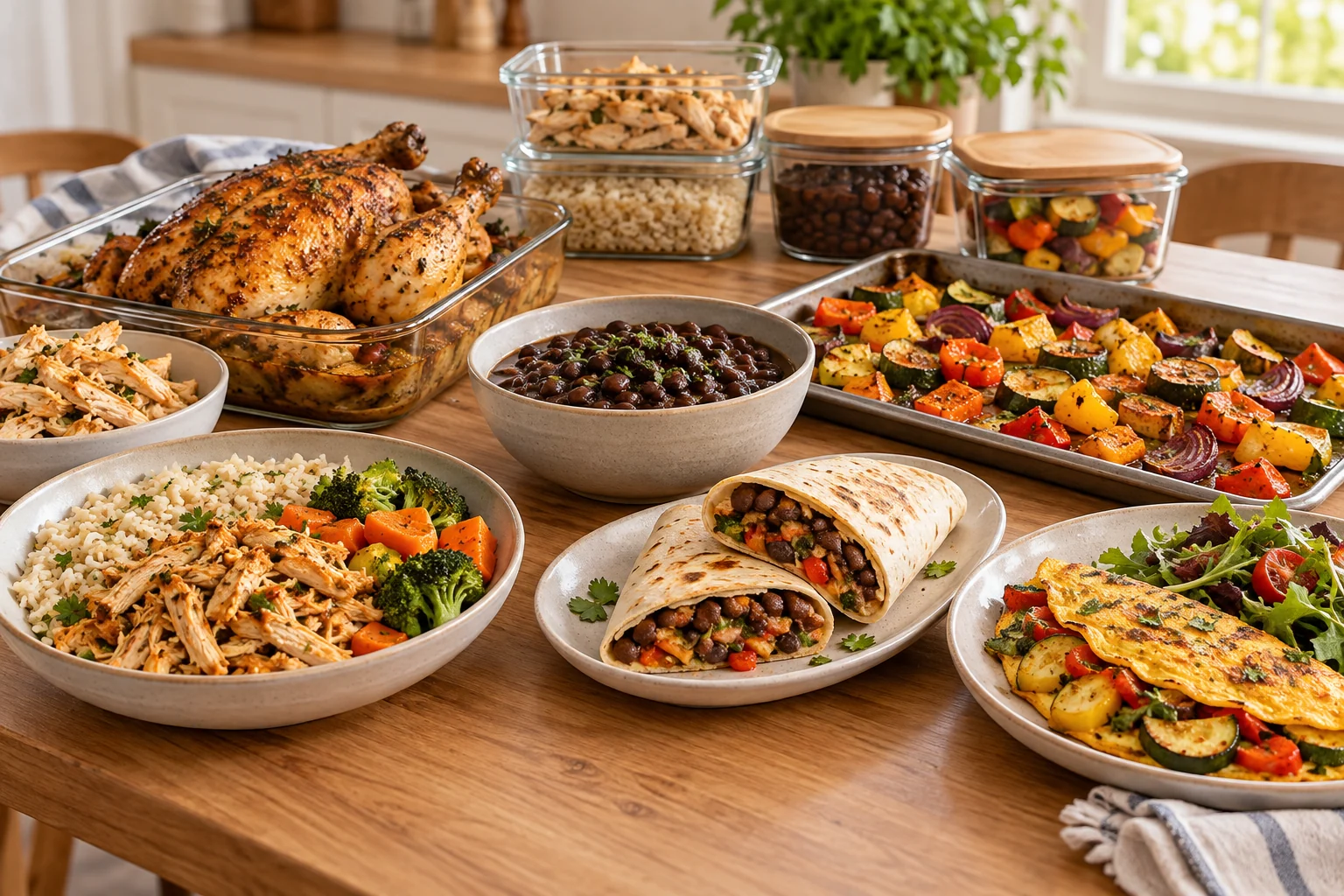
Choose a less hot or more convenient time for the main cooking. Start with the longer-lasting item, such as grain or legume, and use pot time to cut vegetables and prepare containers. A skillet or baking pan can receive vegetables in stages. The block does not need to produce all meals; it should solve only the components that will really save time. Avoid connecting various equipment without need. If the oven will be used, gather vegetables and a compatible main component, respecting times and separation. If the option is stove, make a base and then enjoy the frying pan to grill or skip. A Coordinated and short cooking reduces heat accumulated in the kitchen and decreases dishes. Prepare the components to the appropriate point for next use. Pasta intended for salad should not start excessively soft. Vegetables that will be reheated need to maintain structure. Chicken, fish, eggs and vegetable alternatives require proper cooking and safe handling, not just golden appearance. Follow applicable guidance and product instructions. Separate portions before taking everything to the table. Identify what will be consumed on the same day, which will be refrigerated and which will have a later destination. Don't keep a big platter in and out of the fridge. Proportional containers for consumption facilitate cooling, organization and assembly. Keep the delicate items close to consumption. Leaves, cut tomatoes, fruits, herbs and crispy supplements do not need to integrate the large block. This division avoids spending hours preparing foods that quickly lose quality and keeps the fresh part really fresh.
Prepare vegetables to keep texture and reduce losses
Separate vegetables by behavior. Leaves need to be intact, properly sanitized and dried; cucumber and tomato release water after cutting; carrots, cabbage and pepper usually hold firm for longer; zucchini and eggplant can work better grilled. This classification guides the order of consumption. Don't mix it up when you keep it. Keep leaves, moist ingredients and sauces in different containers. Just mount the portion of the day. A moisture separation prevents an entire salad from losing texture because a component released liquid. It also allows you to use the same vegetables in sandwich, bowl or accompaniment. Cut only the amount compatible with the period of use and conservation guidelines. An early cut can accelerate texture loss and increase manipulation. When possible, leave whole fruits and vegetables for later days and prepare first those that will be consumed soon. Varie cut and method. Grated carrot creates a different experience of sautéed strips; cubed cucumber works in grain salad, while slices can accompany sandwich; roasted tomato can complete a pasta when raw tomato is no longer the best option. Change should have purpose, not complicate preparation. Create a priority use container in the refrigerator. Put in the open or more delicate ingredients and consult before starting another recipe. A visible order of consumption reduces the risk of finding forgotten leaves and fruits behind larger pots.
Use grains, legumes and proteins in different combinations
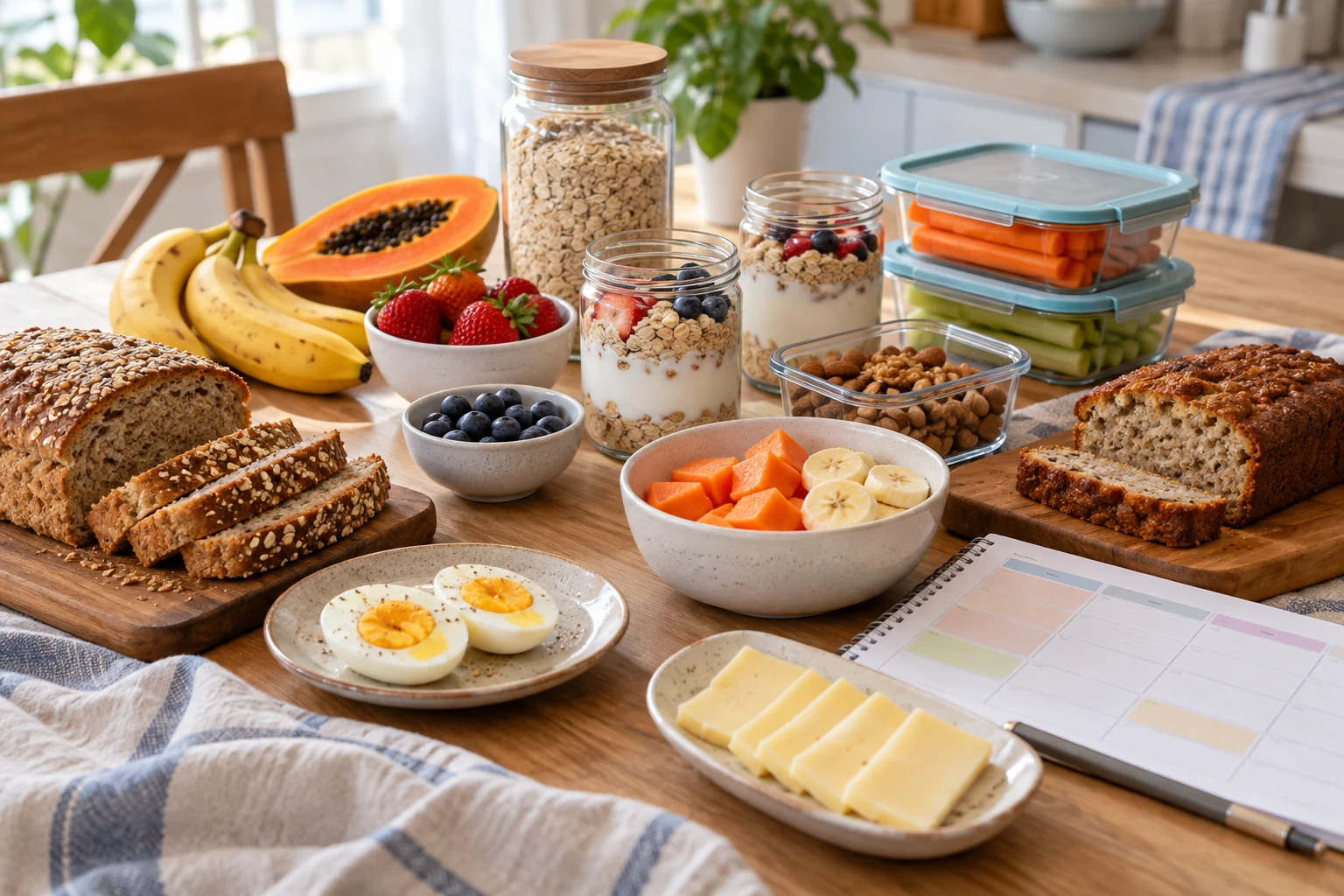
A well chosen base sustains various assemblies. Grain-beak can form salad with cucumber and herbs, accompany grilled vegetables or become a paste. Lentil can be served warm and then enter a fresh bowl. Rice can accompany a dish made on time, while couscous or short dough offer another texture on a mounted meal. Choose at most two bases for the week. Many options increase pots, containers and leftovers. Combine a known base with another that accepts different temperature and completions. O limited number of bases creates organization without imposing repetition, because vegetables, sauce and main component can change. Prepare main fonts in versatile formats. Chicken in strips, boiled eggs, fish prepared in the day, cheese or vegetable alternative may enter into dish, sandwich or salad. Note which items tolerate storage and which should be made close to consumption. Do not apply the same deadline to different ingredients. Keep perishable sauces and main components under proper cooling. If a cold recipe takes eggs, dairy, meat or fish, redouble the weather and temperature planning. On hot days, the bench should not become a waiting space while other tasks are completed. Before storing, associate each portion with a use. Write “third: bowl with lentil” or “fourth: chicken with couscous”, not just the name of the ingredient. One component with marked destination Gets into the flow of the week and it's no longer an anonymous leftover.
Distribute a model week with varied assemblies
On the first day, combine freshly cooked base, grilled main component and salad mounted on time. In the second, use chilled grain or legume with cucumber, tomato, herbs and separate sauce. On the third, prepare a quick pan dish with vegetables and a portion of the base. In the room, mount sandwich, wrap or bowl with the remaining components. Book for the end of the sequence only ingredients that maintain quality and have a safe history. Delicate leaves and cut fruit come in early; whole items can be left for later. An already validated frozen meal may work as a reserve when the heat or schedule interrupts the plan. Don't depend on a salad prepared many days earlier. Toggle textures and temperatures. A cold bowl can receive warm grilled vegetable; a frying pan dish can get fresh herbs later; a neutral base changes with citrus sauce or vinaigrette. O contrast mounted on the plate creates a feeling of variety even when part of the ingredients repeats themselves. For out-of-home meals, apply the guidelines for transportation, separation and heating meals. In summer, confirm refrigerator at destination, use suitable thermal structure when applicable and do not leave pots in car or common backpack waiting for eating time. The fifth or sixth meal may be for review. Observe what is still in proper condition and set up a coherent combination, without joining everything indiscriminately. If the storage history is unknown, do not use it. A planned review meal reduces waste without turning security into betting.
Include hydration in planning without promises or stiffness
Make the water visible and accessible during the day. Bottle, jar and cups in routine places can function as a reminder, provided they remain clean and with safe water. Individual need varies according to person, activity, environment and health conditions; therefore, a single number does not serve as a rule for all. Fruit, vegetables and other preparations contain water and may take part in meals, but should not be presented as automatic substitutes for water. Iamspe often guides drinking water on hot days and highlights that water-rich foods can contribute to the hydration routine. See institutional guidelines on food and hydration in heat. Distribute opportunities to drink water around existing habits: when starting work, next to the break, after commuting or near meals. Aromatizing with fruits or herbs may be a preference, not an obligation. Avoid turning sugary, alcoholic or high caffeine drinks into a major hydration strategy. Also plan the origin of water and ice when you are away from home. In tours or displacements, take proper container or identify reliable points. Safe water is part of the menu as much as food. If there is specific medical guidance on liquids, it should prevail over general tips. Use planning to remember, not to overcontrol. Observe warmth, activity and personal signs, adjust availability and seek professional evaluation in the face of particular symptoms or needs. A hydration integrated into the routine It's more sustainable than a meta disconnected from the day.
Reinforce cooling, cooling and heat transport
Hot days require extra attention to the time between preparation and cooling. Do not leave pots, salads or perishable ingredients waiting indefinitely on the bench. Separate portions, use appropriate containers and follow sanitary guidance to cool and store each preparation. Looks and smells do not confirm security. Organize the fridge before preparation. Make room, check temperature and avoid blocking circulation with hot or very large containers. Keep ready foods protected and separated from raw items. Tag content and date, keeping priority usage components in a visible location. In transport, sealed container prevents leakage, but does not control temperature alone. Use appropriate thermal bag and soft drinks when needed and transfer the food to refrigeration as soon as you arrive. A continuous conservation chain should not be interrupted because the meal will be consumed cold. Serve only the expected amount and keep the rest protected. At long meetings or meals, do not leave perishable platters exposed to heat for long periods. Prefer minor replacements by keeping the reservation in proper condition. This practice preserves quality and reduces disposal of large volumes. When reheating a component, remove only the portion that will be consumed. Avoid repeated heating cycles and new cooling. If the menu usually generates leftovers, reduce the next production. The quantity correction begins in planning, not in indefinitely prolonging conservation.
Review purchases, acceptance and effort before next week
At the end of the week, register what remained texture, what was consumed early and what required too much work. The base yielded? Were the leaves bought too much? Did the separate sauce help? Did the quick plate really fit on time? Short responses form a repertoire of its own for the next heat period. Rate each component as repeat, adjust or remove. Adjusting can mean buying fewer leaves, cooking only one base, cutting tomatoes on time, or changing the early preparation protein for an option made on the day. Withdraw indicates incompatibility with the current routine, not failure. Compare the list with what's left in the pantry and the fridge. Closed ingredients can enter the next plane; delicate products need immediate decision based on condition and safety. Don't buy again out of habit. A revision before new list prevents duplicity and directs substitutions. Next week, change only one group: base, vegetables, main component or sauce. Maintaining part of the structure allows us to understand which change has improved variety, cost, or practicality. Changing everything at the same time produces newness, but not learning. To begin with, choose four meals, two bases at most, vegetables with clear destinations, a short cooking and two finishings. Organize water and conservation next to the menu. After the first cycle, adjust quantities and order. An efficient summer menu makes the kitchen simpler without relying on an endless collection of cold recipes.
Adapt the plan to the space and preferences of the house
Observe the ability of the refrigerator before setting quantities. A small shelf does not contain many platters, jars and high pots without damaging the organization. Measure containers, stack only what is safe and preserve space for circulation. Planning within the real structure prevents preparing portions that cannot be properly preserved. Consider also how each person prefers temperature and texture. Some like cold grains; others prefer warm base with fresh vegetables. Children, the elderly and people with specific needs may require cutting, consistency or conservation adjustments. When safe, use the same components in different assemblies instead of creating completely separate menus. Have a quick conference before serving: is there base, main component, vegetables and finishing? Does the portion match hunger and the agenda? Has the food remained properly preserved? This one. check before assembly reduces excesses and helps correct the plan while there are still alternatives available.
Shopping list
Mark the products you already put in the cart.
Community
Comments
Create an account or do login for favorite and leave your comment.
Loading comments...