

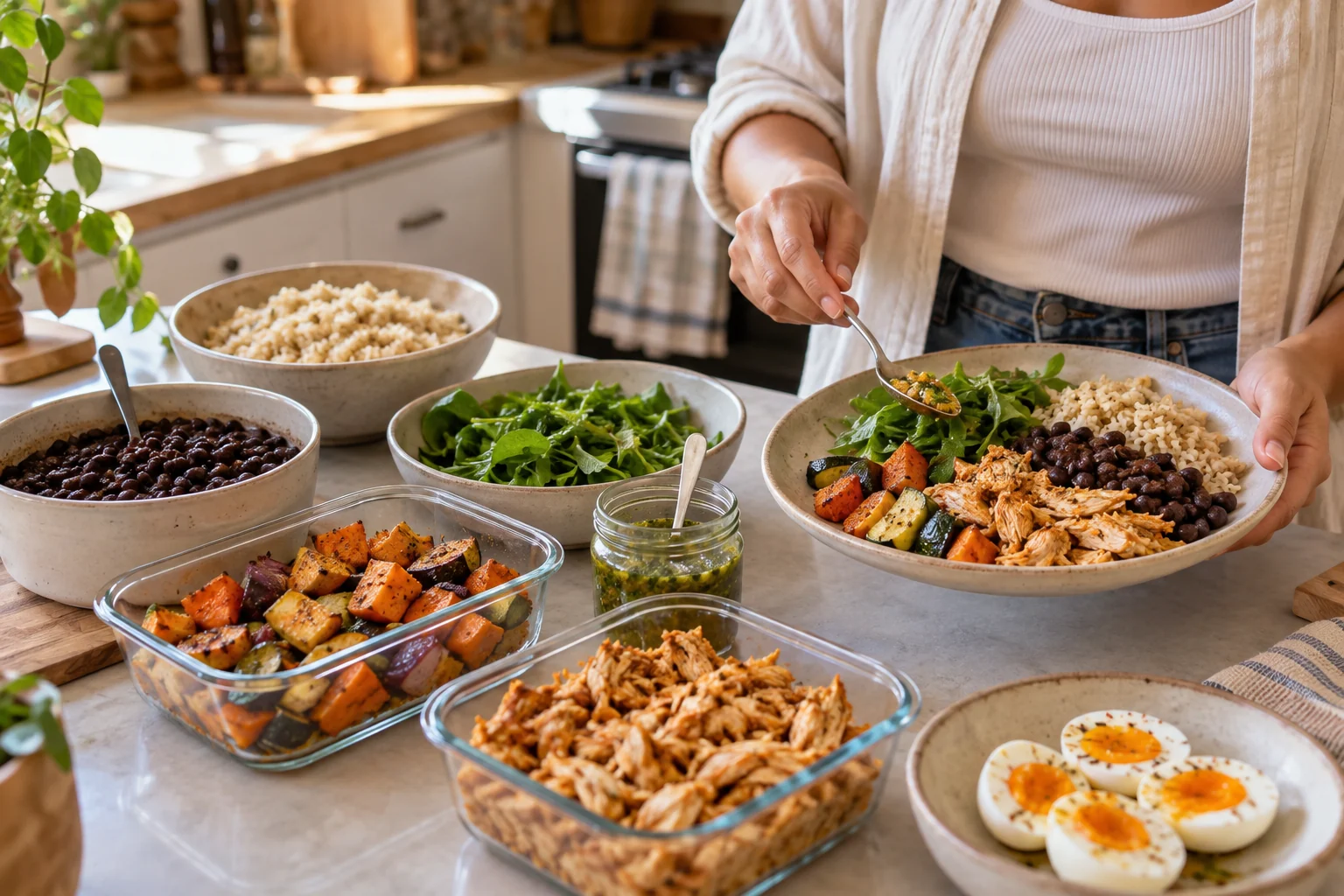
Simple menu to cook only a few times a week
Organize two preparation blocks, combine versatile components and set up different meals without having to cook everything from scratch every day.
How to organize
Cooking next week it is simpler when the menu uses versatile components, two short blocks of preparation and defined destinations for each ingredient.
In this guide
- Cooking for the week begins by the time available - Choose components with more than one destination - What? Set up a model menu with two cooking sessions - Organize the first block without turning the day into a marathon - What? Use the second block to review and complete - Combine the components without serving the same meal - Keep, identify and heat with responsibility - What? Make a shopping list connected to the menu - Review the method before repeating next week - Shopping list
Cooking for the week begins by the time available
Cooking next week It doesn't have to mean preparing fifteen equal lunches in one afternoon. The most flexible method is to decide how many times the kitchen will actually be used and what tasks need to be ready at every moment. For many homes, two short blocks work better than a long session: one at the beginning of the week and the other when fresh ingredients start asking for use. Before choosing recipes, book the days with face-to-face work, appointments, meals and tight schedules. Just count the lunches and dinners that will really happen at home. This conference avoids producing five portions for a night when no one will be present and helps scale ingredients, containers and storage space. Separate the planning into three levels. There are ready meals, which need only heating; ready components such as rice, beans, roasted vegetables or shredded chicken; and quick finishings made on the day, such as an omelet, salad or pasta. A difference between preparing and finishing prevents everything from being cooked too early and preserves variety of texture and flavor. Start with four or five meals, not the whole week. Choose preparations that the house already knows and share ingredients. When the method is working, expand the number of combinations. The goal is to reduce decisions and repeated work, without turning the menu into a rigid obligation. Also make a capacity bill, not just appetite. A refrigerator full of large containers makes it difficult to visualize what needs to be consumed, while too small portions multiply pots and dishes. Choose sizes that match a home meal and make room for fresh food, drinks and shopping that will arrive during the week. The plan needs to work inside the available kitchen. Include a margin for change. If five dinners are scheduled at home, cook components for four and keep a simple pantry or freezer alternative. This one. adjustment margin avoids excess when an invitation appears and offers solution when the day gets more rushed. Useful planning accepts unforeseen events; it does not require the agenda to obey the menu.
Choose components with more than one destination
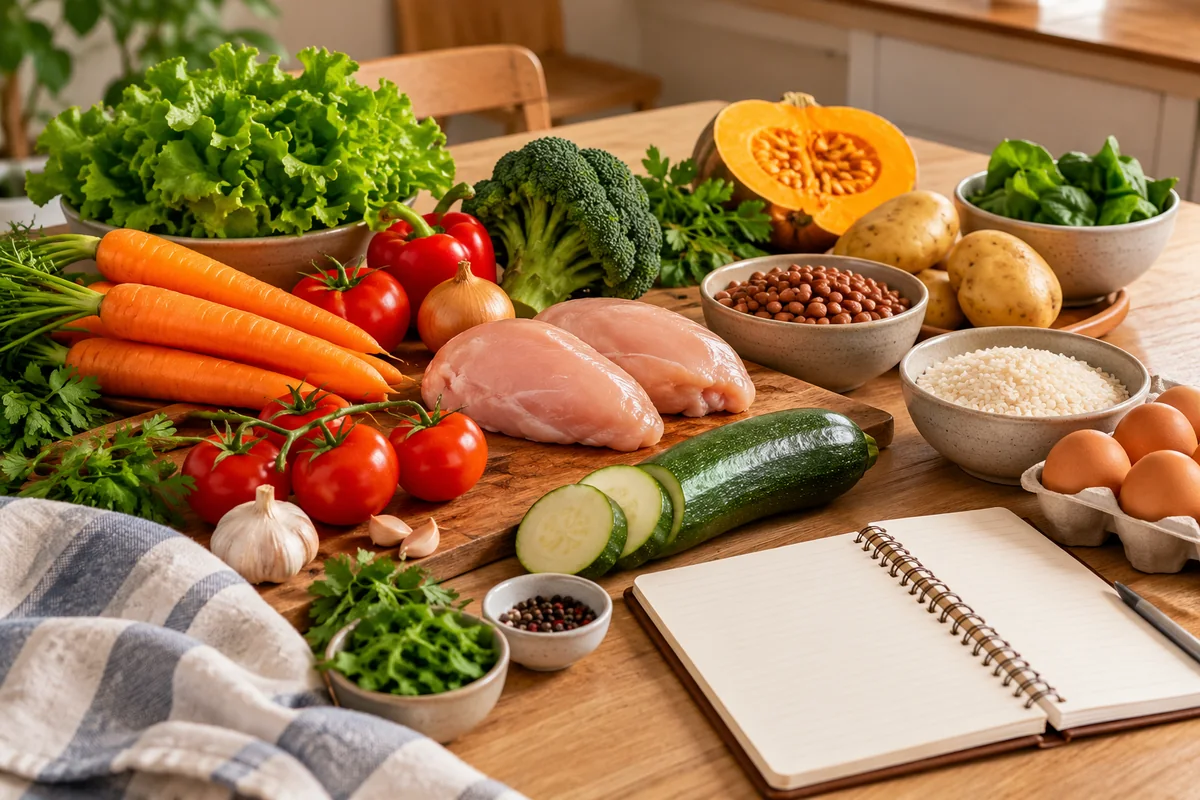
A component only deserves space in advance preparation when it has a defined destination. Rice can accompany beans, enter a bowl with vegetables or become oven rice. Roast vegetables can accompany a protein, complete a mass or form the filling of an omelet. Shredded chicken can appear on the plate, the sandwich or the sauce. Use the rule one preparation, two or three uses. Before increasing the pan, write down where that amount will be used. This avoids forgotten containers and reduces the feeling of repeating exactly the same meal. The variety comes from the combination, seasoning and finishing, not from the obligation to cook a whole new dish every day. Choose a base of cereal or tuber, a legume, one or two sources of protein, two vegetables and a simple sauce. It is not necessary to prepare all these elements at once. The planning of meals with rice, beans and varied accompaniments shows how a family base can receive different accompaniments during the week. Avoid ingredients that have only one function and depend on a long recipe. If a product requires exclusive preparation, use it at a planned meal and buy the corresponding amount. A versatility with defined destination It's more important than hoarding options in the fridge.
Set up a model menu with two cooking sessions
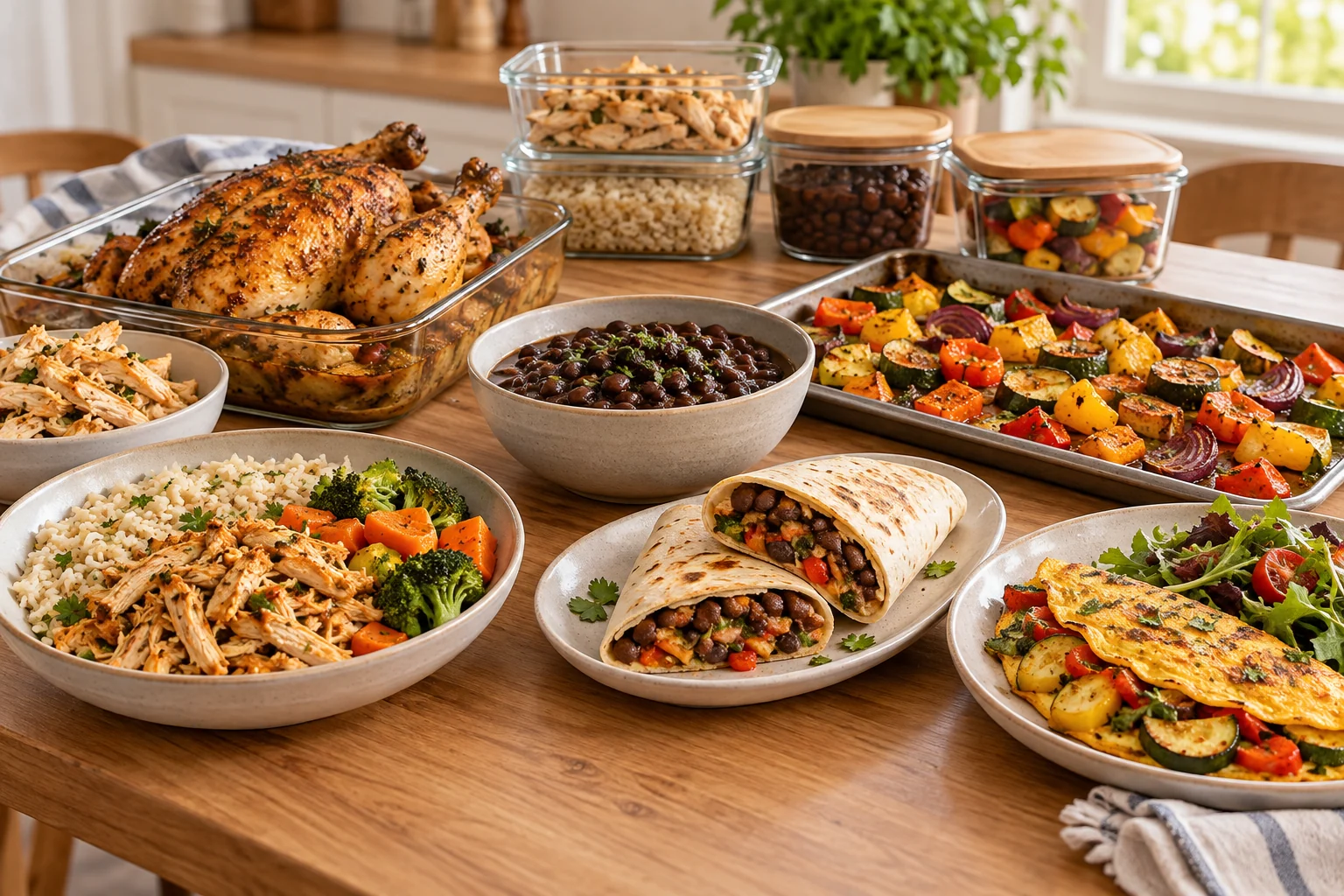
In the first block, prepare rice, beans, a vegetable baking machine and a versatile protein. Part can be consumed that day; the rest receive clear destinations. In the second block, make a soup or pan dish, cook another base and use the vegetables that need priority. So the middle of the week does not just depend on what was prepared several days earlier. A simple example can begin with rice, beans, shredded chicken and roasted pumpkin. At the next meal, the chicken enters a pasta with tomato sauce, while the pumpkin accompanies leaves and eggs. Another night he uses rice, beans and vegetables with a different finish. The second block prepares lentils, vegetable soup and a new portion of rice or couscous. Distribute effort: a pot meal, two assemblies, an on-the-spot preparation and a frozen portion. This one. alternate effort week keeps working when a commitment changes. Mounting can take the place of the longest dish, and the frozen portion serves as a reserve without forcing the fresh ingredients to leave. The menu does not need to indicate fixed days. Use labels such as “consumer first”, “fast assembly” and “freezer”. Order follows validity, schedule and appetite. This flexibility is especially useful for families with different times and reduces the need to produce separate dishes.
Organize the first block without turning the day into a marathon
Start with the organized kitchen, available containers and a short list of tasks. Put first in the fire or in the oven which takes the most time. While a pot cooks, wash the vegetables, prepare the sauce and separate the portions. Grouping tasks by the equipment avoids connecting everything at the same time and reduces the amount of utensils in circulation. Set a limit for the block. Two productive hours can be more sustainable than an entire afternoon that leaves tiredness and accumulated dishes. A minimum preparation of greater impact usually includes a pan, a baking pan, a base and an assembly item. If there is energy and space, add another task; otherwise, close with the recovered kitchen. Do not wash, cut or automatically cook everything that has come from the market. Some foods keep better whole, and others need to be consumed first. Prepare what really shortens the planned meals. Leaves can be cleaned and dried when they will be used soon; vegetables destined at the end of the week can remain whole according to their conservation needs. When finished, write the destinations on the containers or on a visible list. “Chicken: pasta and sandwich” communicates better than just a date. “Legumes: accompaniment and omelet” recalls that the preparation has two functions. This small step avoids opening the fridge and deciding everything from scratch again.
Use the second block to review and complete
The second preparation does not repeat the first. It begins with a review of the refrigerator: what has been consumed, what needs to be used and which meals are still unsolved. From this, cook only what is necessary. A base can be restored, while planned leftovers have seen another assembly. If there are left roasted vegetables, turn part into soup, sauce or stuffing. If there is rice and beans, finish eggs, fish, chicken or a vegetable alternative on time. If a protein ran out before expected, adjust the combination without opening several new ingredients. A mid-week review keeps the menu connected to actual consumption. This session is also the time to check frozen portions. The content on frozen meals to make the week lighter helps to choose suitable preparations and organize the freezer. Use freezing as a planned reservation, not as an automatic destination for any leftovers. Keep the second block smaller than the first. A soup pan, a new base and the completion of a perishable ingredient may suffice. If the week has changed, reduce the plan. Preparing less is better than cooking out of obligation and losing food.
Combine the components without serving the same meal
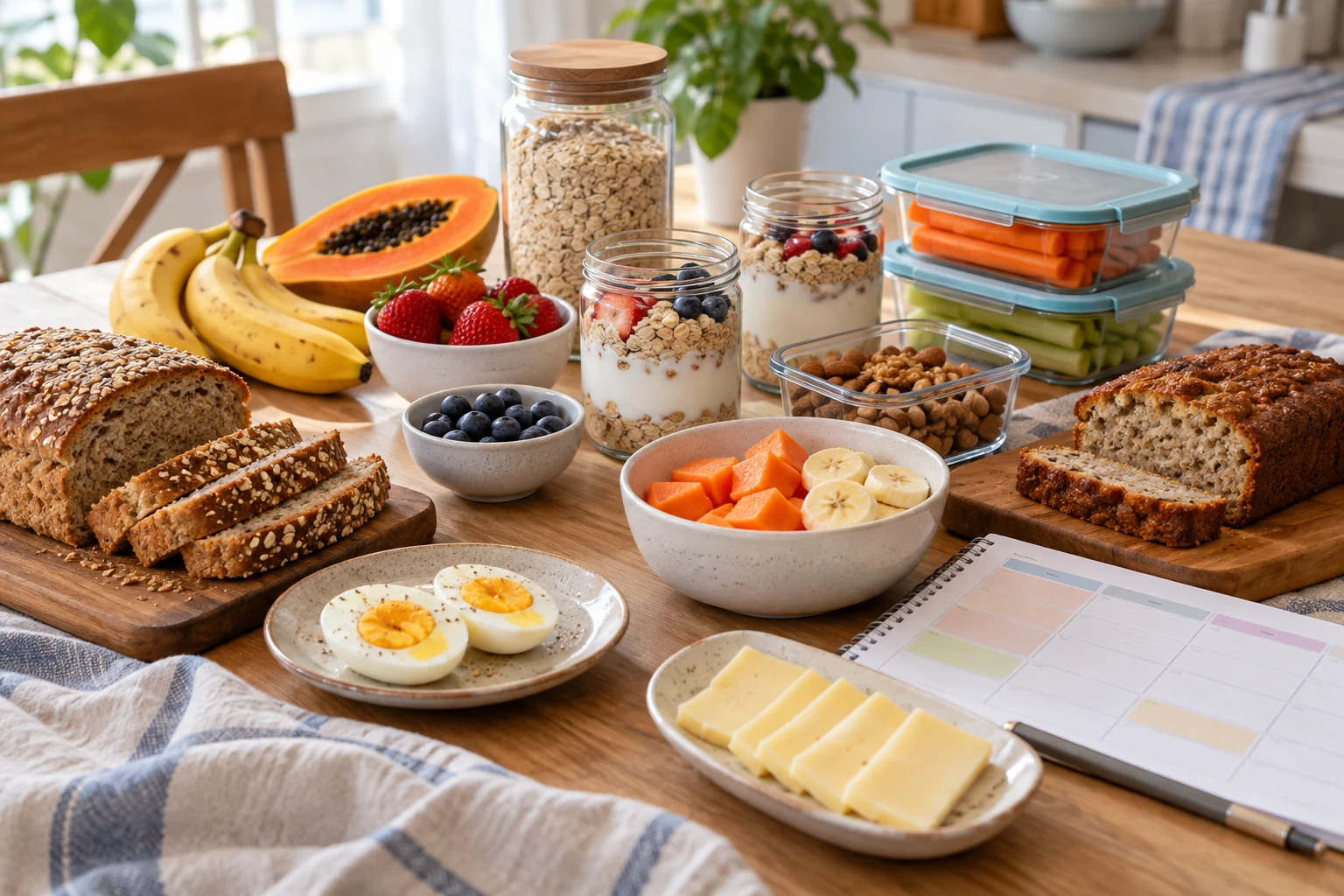
The same base can produce different dishes when changing assembly. Rice and beans can receive roasted vegetables and chicken in one day, eggs and salad in another. Cuscous can accompany a pan preparation or become a quick meal with tomatoes and eggs. Pasta can use vegetable sauce, shredded chicken or lentil. Create a simple table based on, protein or legume, plant and finishing. Choose an option from each column. The method avoids closed recipes and shows how many combinations already exist. An herb, a sauce, lemon, seeds or cheese used by the house alters aroma and texture without requiring extensive new purchase. Book something fresh to finish. Leaves, tomatoes, fruit, herbs or a vegetable prepared in the day help balance the experience of early meals. The menu with season ingredients can guide choices that vary throughout the year and fit better in the local offer. Do not mount all dishes in advance when components are better kept separate. Keeping sauce, leaves and crispy items aside allows you to adapt quantities and avoid unpleasant textures. A assembly made near consumption maintains flexibility without returning all work to daily routine.
Keep, identify and heat with responsibility
Planning only works when storage is safe and compatible with the space of the house. Before increasing quantities, check refrigerator, freezer and containers. Divide preparations into useful portions, identify content and date and keep raw food separate from those already ready for consumption. Avoid leaving large pans on the bench for long periods. Organize cooling and storage according to food type and follow applicable conservation guidance. Appearance and smell do not guarantee safety when a preparation has been out of proper temperature or has an uncertain history. Create an area of consume first in the fridge. Place open containers, more delicate vegetables and preparations for the next few days. End-of-week products are either identified or frozen when appropriate. This order reduces losses and prevents opening something new before using what is already ready. Heat only the required portion and avoid repeated heating and cooling cycles. When a meal is not used on the scheduled day, decide your new destination. Planning improves the organization, but does not automatically increase food conservation time. Use labels that anyone in the house can understand. In addition to the date, register the name and purpose: “Tuesday and Thursday rice”, “mass sauce” or “sandwich chicken”. Transparent containers help, but do not replace identification when there are similar preparations. A list on the refrigerator door can indicate what is ready, what is frozen and what should be finished. Separate foods that lose texture when stored together. Leaves, sauces, pharofas and crispy items look better in different containers from the hot base. Preparations with wet parts can be assembled near consumption. This one. separation by function it is not precious: it prevents a planned meal from being discarded because it has lost the expected texture. When there is doubt about conservation, do not improvise deadlines. Consider the most sensitive ingredient in the preparation and the real cooling, storage, and transport conditions. To bring food to work, use a tightly closed container and proper structure to maintain temperature. If the history of a portion is unclear, the responsible choice is not to consume it.
Review the method before repeating next week
At the end of the week, observe which preparations reduced work and which created new tasks. See what's left, which portions were insufficient, and which component appeared too often. Five minutes of review produces better information than automatically repeating the same menu. Register the real time of the two blocks, including organization and dishes. If the first preparation got heavy, remove a task. If the second block did not happen, plan a smaller alternative or increase the participation of the freezer. A Kitchen routine needs to fit in the scheduleNot competing with her. Keep a small list of combinations approved by the house. The following week, choose some known and test only one change. Changing everything makes it difficult to identify what worked. Gradual adjustments help to improve quantities, variety and order of consumption without creating a difficult to maintain system. To start, choose five meals, two bases, two sources of protein or legumes, two vegetables and a frozen solution. Distribute the work in two moments and leave the destinations visible. Cooking less often does not depend on perfection; it depends on useful components, organized storage and decisions made before the most run days. Turn notes into concrete decisions. If there is always rice left, reduce the measure of the next purchase or plan a specific use. If the vegetables end early, increase only the most consumed. If an assembly never happens, remove it from the plan instead of buying the same ingredients again. The review serves to adjust quantities, not to evaluate the week as success or failure. Note also the distribution of work among the people of the house. One person can choose combinations, another check the stock and another store or identify the containers. Even when only someone cooks, small tasks can be shared. A visible division of steps reduces dependence on a single person and facilitates repeating the method. Create a minimum plan for exceptional weeks. It can gather a frozen base, a ready legume, eggs, fast-prepared vegetables, fruit and a simple pantry option. This set does not replace the usual menu, but prevents the organization from disappearing when there is no time for two complete blocks. The next week, resume the normal model without trying to make up for everything at once.
Shopping list
Mark the products you already put in the cart.
Community
Comments
Create an account or do login for favorite and leave your comment.
Loading comments...