

Planning meals with rice, beans and varied accompaniments
Organize meals with rice, beans and varied accompaniments using reusable bases, a practical sequence and an adjustable shopping list.
Meal planning: how to organize in routine
Meal planning it is the central subject of this guide, organized to facilitate decisions of preparation, routine and shopping. Suggestions about food planning can be adapted to the preferences, budget and needs of each home.
Start with the schedule and what already exists at home
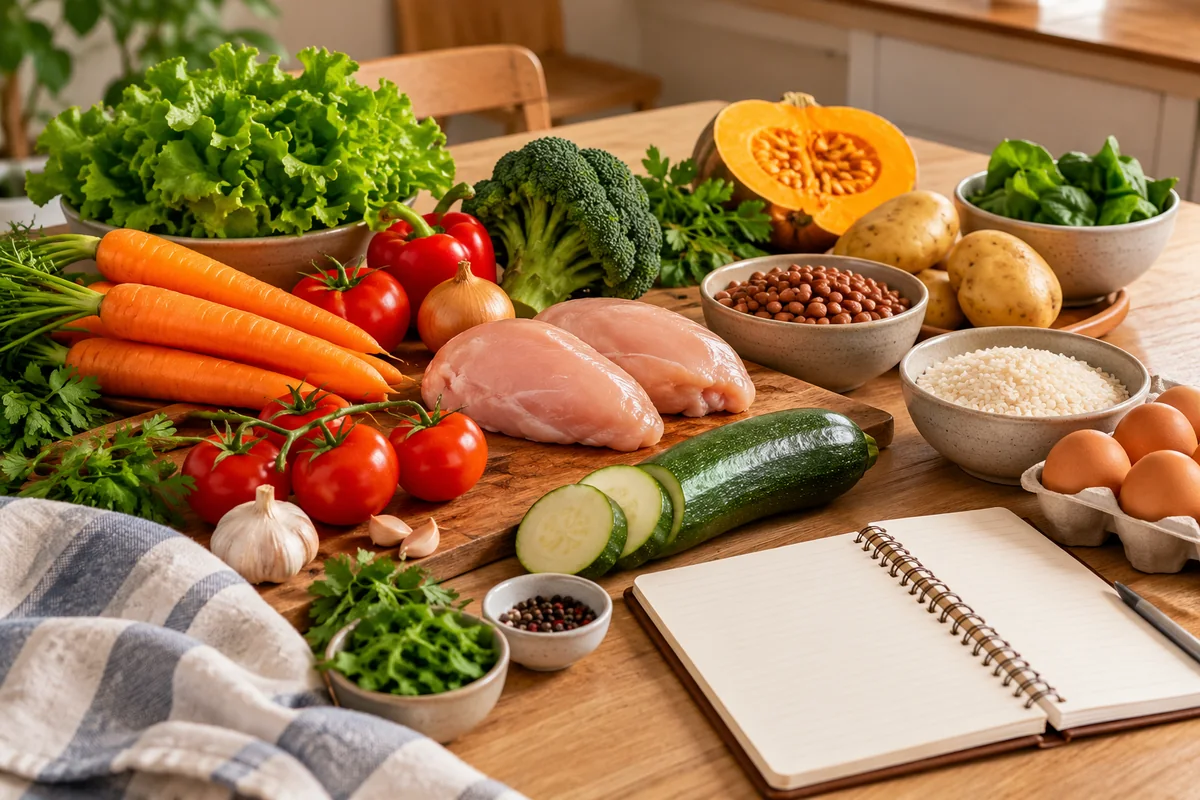
Planning meals with rice and beans does not mean repeating the same dish every day. The first step is to count how many lunches and dinners will actually take place at home, who will eat and on which days there will be little time. A week with two lunches off needs a different purchase from another in which all meals will be prepared. Marking this reality before choosing the accompaniments reduces excess and avoids depending on an impossible menu to fulfill. Also make a quick inventory of the pantry, fridge and freezer. Rice, dry or frozen beans, eggs, vegetables, leaves, meats, seasonings and useful leftovers should enter the account before any new item. This one. schedule and stock map connects planning and purchase: each acquired ingredient needs to have an expected function, even if it can change meals during the week. On a sheet, distribute only the days and main times. Set up a quiet meal, take-out meal and quick meal. No need to fill each space with a different recipe. Book a night to enjoy remaining components and maintain a wild combination, such as frozen rice and beans with a fast-prepared vegetable. Free space protects the plan when a commitment changes. Add a note on equipment. A meal taken to a place without a refrigerator or microwave needs another solution; a house with a small oven may not be able to bake several trays at the same time. Checking pans, containers and form of transport avoids choosing preparations incompatible with what will be available. This simple detail turns a beautiful idea into an executable plan. If this is the first attempt, plan four or five combinations and observe the result. Quantity, preference and appetite vary between homes and people, so examples should not become mandatory portions. Specific needs, allergies or restrictions require adaptations and, where necessary, professional evaluation. The goal here is to organize culinary decisions, not prescribe an individual diet.
Use rice and beans as a modular base
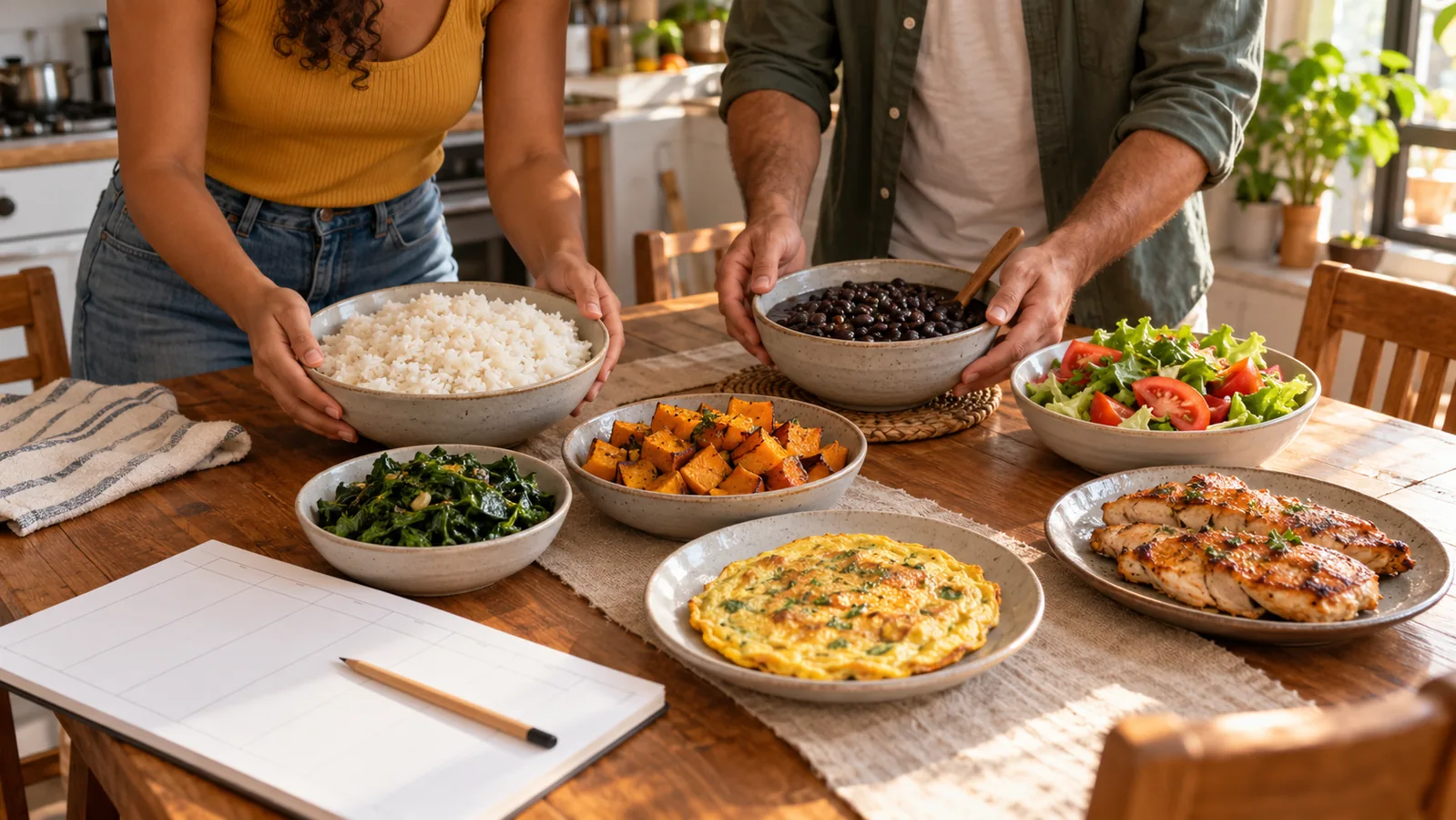
Rice and beans can function as a stable base while accompaniments change color, texture and preparation mode. Instead of cooking five complete and independent dishes, prepare components that talk to each other. White or whole rice, carioca beans, black or other legumes used by the house can accompany roasted vegetables in one day, salad and egg in another, chicken or fish in another, according to preferences and availability. This one. reusable Brazilian base reduces the number of decisions without eliminating variety. The Food Guide for the Brazilian Population recognizes the frequent presence of the combination of rice and beans in the country's meals and advises to value natural or minimally processed foods and culinary preparations. The reference helps to contextualize planning, but does not define a universal quantity or replace individual orientation. Cook the bases according to the observed consumption and the space available to store. If the beans yield more than will be used in the next few days, separate appropriate portions for freezing. If the rice usually remains, lower the next pot before adding new recipes to try to consume it. To extend the use of the same ingredients, see the economical weekly menu with versatile combinations. The modular base also allows for exchanges. If the planned beans were not ready, another leguminous already cooked can occupy the function. If the rice is gone, use another regular cereal from the house, without turning the replacement into a nutritional rule. Planning should facilitate routine, do not create dependence on a specific ingredient or force to keep order written when circumstances change.
Varie accompaniments by function, color and texture
A practical way to choose accompaniments is to think about culinary functions. Separate a roasting vegetable, a sauteing vegetable, a raw option and a quick preparation with egg, meat, fish or vegetable alternative according to the choices of the house. Pumpkin, carrot and potato work well baked; cabbage, cabbage and zucchini can be sauteed; tomato, cucumber and leaves help form simple salads. You don't have to buy all these options the same week. Choose three or four vegetables that may appear in more ways than one. The carrot can be roasted, grated or sautéed; the cabbage can become salad or sauté; the pumpkin can accompany the dish, enter a puree or form a soup. This one. follow-up rotation produces variety without opening a shopping list for each recipe. Simple spices, acidity and finishing also change the result. Think of contrast. Soft rice and beans combine with a still firm vegetable or a fresh salad. A drier roast can receive a separate simple sauce. Delicate leaves should take priority in the first few days, while roots, cabbage and frozen options without sauce can stay for later. Organizing order for conservation time is more useful than attaching each food to a fixed date. Avoid buying accompaniments just because they seem varied on paper. If no one likes a particular vegetable, it doesn't improve the plan. Consider acceptance, preparation time, price, and enjoyment. Two well-used options are better than six ingredients that lose quality. In the weekly review, record which preparations were consumed, which took too long and which may reappear with another seasoning or shape.
Mount five flexible combinations for the week
An example of sequence can begin with rice, beans, roasted pumpkin and kale. On the second day, keep rice and beans, exchange the cabbage for tomato salad and cucumber and include omelet if eggs are part of the diet. In the third, combine the bases with grilled chicken or alternative chosen by the house and roasted carrot. In the bedroom, use rice, beans, sauteed cabbage and leftover vegetables. In the fifth, turn remaining components into a bowl, scrambled or filled with salad. This one. adaptive weekly sequence It's not a mandatory menu. Days can change places, components can be omitted and a meal can be repeated when this is convenient. The variety is in the combination, not in the requirement of cooking something new. If Tuesday stays race, use the fastest mount and make the preparation longer for a day with space. For dinners, do not necessarily create another complete menu. A smaller portion of the bases can accompany soup, salad, omelet or vegetables. Rice and beans can also be reserved for lunch while dinner uses another known assembly. The important thing is to predict destination for the most perishable ingredients and avoid two meals depending on the same item in insufficient quantity. If there is only one person in the house, reduce the number of simultaneous preparations and alter freezing and reuse. The content about meals of the week for those living alone helps organize smaller packages and destinations for the leftovers. In larger houses, leave separate accompaniments for each person to assemble the dish as preference and need.
Organize the preparation in a realistic sequence
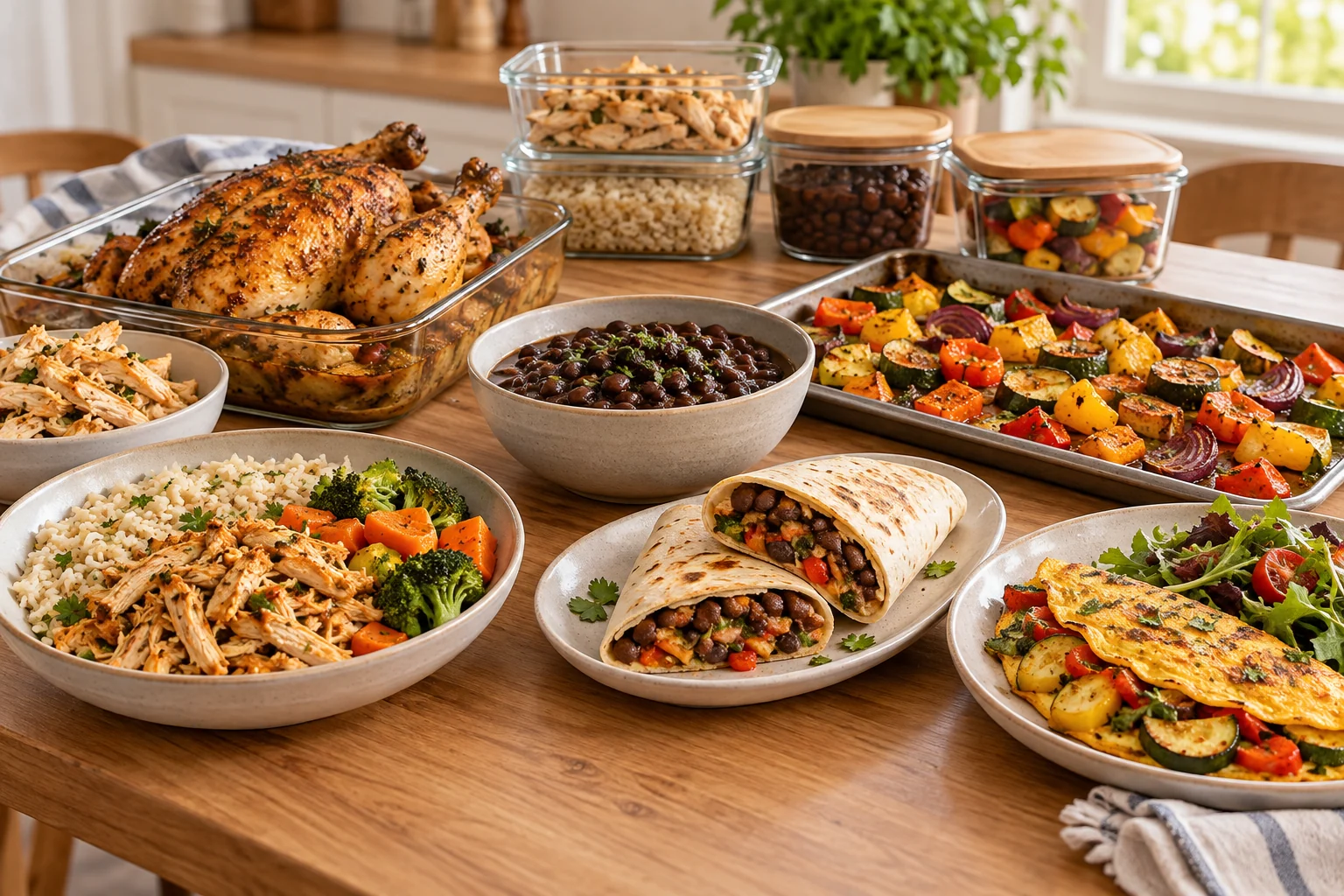
Start with the item that takes the longest. If the beans are still dry, let them soak and cook as they choose. While he cooks, heat the oven, cut the vegetables and start the rice. Then prepare a saute and sanitize the foods that will be consumed raw according to the health guidelines and the product used. Working in parallel reduces waiting, but each step must remain safe and manageable. This one. coordinated step preparation It doesn't require all the lunches. Rice and beans can be portioned; roasted vegetables are separated; leaves, sauces and finishings come only close to consumption. Separate components preserves texture and leaves room to change the combination. For those who take the meal, the guide of homemade lunches with organized preparation details transport and assembly decisions. Before cooking, check containers and space in the refrigerator and freezer. Identify what will be used first and what will be frozen. Do not rely solely on smell or appearance to decide whether a food is safe; follow applicable health guidelines and discard when in doubt. Cool and store properly, avoiding leaving ready preparations forgotten on the bench. If the time is short, prepare only rice, beans and a vegetable baking machine. The salad can be mounted in the day, and a protein or alternative can be made in a few minutes. Distributing tasks between two moments is more sustainable than trying to complete extensive production and abandoning the method the following week. The plan must fit in the available time and in the actual kitchen equipment.
Create shortcuts for days out of plan
No week happens exactly as it was written. So keep two emergency combinations compatible with the house. Rice and beans already portioned can accompany a frozen vegetable without sauce and an egg, when appropriate. Another option is to use leftover vegetables in a scramble, soup or stuffing. The shortcut should use foods that people actually consume, not products bought just for an imaginary situation. One joke plan of few steps prevents a change from disorganizing every following day. If a lunch has been cancelled, prioritize the most sensitive items, freeze whatever can be stored in this way and move only what is needed. Do not automatically push each meal into the next day as this can create excess and leave perishable without destination. Shortcuts can also be ingredients that eliminate one step: already cooked beans, simple frozen vegetables, naked tomatoes, previously sanitized leaves or a frozen homemade portion. Read labels and choose according to routine and budget. Convenience is valuable when it reduces waste and makes preparation possible; it does not need to master all meals. Keep the reserve small and rotating. Two frozen portions and a quick-prepared vegetable already offer margin. Identify dates, put forward what should be used first and include these items in the weekly review. A large and forgotten stock is not security: it is money stopped and risk of loss.
Review quantities without turning estimates into rules
At the end of the week, observe what was missing, what was left and what changed its destination. If the beans have yielded for more meals, reduce the next pot or freeze smaller portions. If the leaves are over early, just increase this item. If the pumpkin has become soup instead of accompaniment, the change shows versatility and can be incorporated into the next plane. This one. Consumer-based review It's more reliable than copying quantities from another family. Appetite, age, routine, meals away from home and preferences change the use. Register practical measures that make sense to you, such as a pan, a package or a number of usual portions, without presenting this as a universal standard. Small successive corrections bring the purchase closer to reality. Note the disposal of edible parts and open packaging. Stells used in saute, ripe vegetables intended for soup and small frozen portions can gain function when this is suitable and safe. Already an open sauce or a forgotten leaf shows that it lacked priority. Taking note of the reason for the remainder helps distinguish over-purchase, rejection of preparation and simple change of schedule. Evaluate the work as well. A follow-up can be tasty and still require more time than the week allows. In this case, book it for quieter occasions or simplify the preparation. Keep the combinations that worked and test only one novelty at a time. Changing everything prevents finding out which decision has improved or hampered planning. Before the following list, classify each component as repeat, adjust or remove. First make adjustments to the most expensive and perishable items, for waste weighs more. Then check out long-lasting grains and spices. The review closes the cycle and turns a static menu into a method that learns from routine.
Maintain variety without increasing complexity
Variety does not require a new ingredient at each meal. It can come from cutting, stitching, temperature and seasoning. Roasted carrot and grated carrot offer different experiences; sauteed cabbage and cabbage salad change texture; rice and beans can accompany a hot dish or a bowl with fresh elements. Choosing two seasoning lines for the week already prevents everything from having the same profile. Use lemon, garlic, onion, herbs, paprika or cumin as the habits of the house and taste before correcting. Separate sauces and finishes allow individual adjustments and preserve the saved components. A low complexity variety appears when the same bases form different assemblies, not when the kitchen accumulates tasks. If more people take part in meals, leave some of the components neutral and offer extra supplements. This facilitates meeting preferences without cooking parallel menus. If a person does not consume a particular ingredient, plan a safe and known exchange rather than improvise later. Restrictions and clinical needs need professional guidance compatible with each case. Finally, accept useful repetitions. Eating rice and beans in more than one day does not mean a lack of planning when the accompaniments, assembly and schedule were considered. A successful plan is one that reduces decisions, uses what was bought, respects the routine and can be adjusted without waste. The list and menu should serve the house; they should not become a rigid obligation.
Shopping list
Mark the products you already put in the cart.
Community
Comments
Create an account or do login for favorite and leave your comment.
Loading comments...