

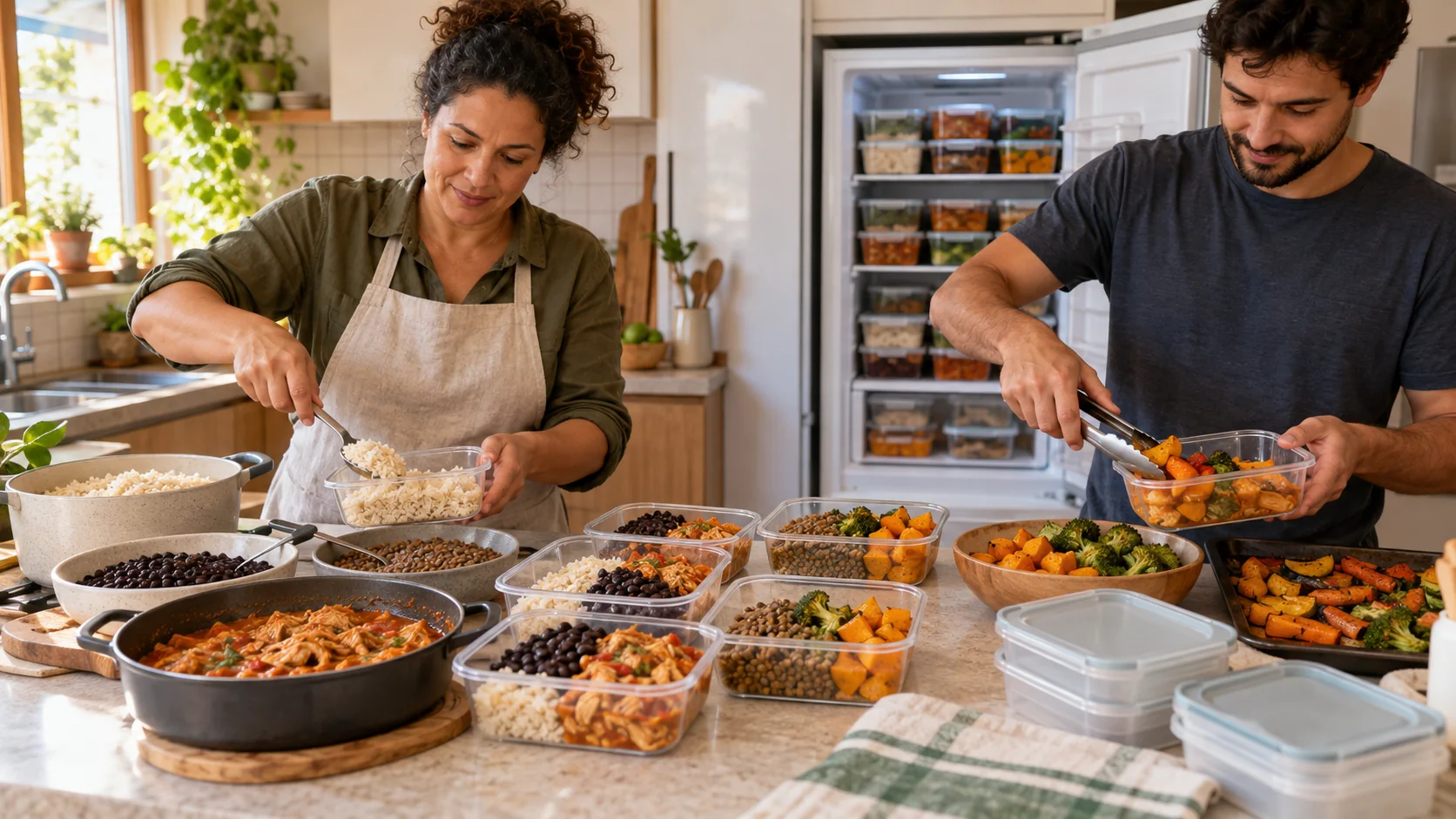
Frozen meals to make the week lighter
Organize homemade meals that can be frozen, with practical combinations, identified portions and a safe flow from preparation to reheating.
Meals to freeze: how to organize in routine
Meals for freezing it is the central subject of this guide, organized to facilitate decisions of preparation, routine and shopping. Suggestions about frozen meals can be adapted to the preferences, budget and needs of each home.
Plan the freezer before choosing the menu
Before deciding what to cook, observe the available space, the amount of containers and how many meals really need to be ready. A small freezer does not contain extensive production, and preparing twenty portions without destination can exchange daily running for accumulated waste. Count the lunches and dinners that will be made at home, the days when someone will bring food and the times when there will be time to cook something fresh. Start with a short cycle, like four or six portions, and increase only when you know how much the house consumes. This one. real freezer capacity should guide the menu, the size of the pans and the purchase. Leave room for air to circulate between containers and avoid blocking vents or stacking still hot packages. See the equipment manual when there is doubt about capacity, organization and temperature. Make a simple inventory of what is already frozen. Register name, date and quantity, putting the oldest items ahead. If there are already beans, sauce and shredded chicken, the new preparation can complement this stock instead of repeating it. The goal is not to fill the freezer, but to build a small reserve that is used and renewed. Also set the size of the portions. Individual containers work for different times; family portions can be suitable when everyone eats together. Separate components, such as beans, sauce and cooked meat, offer more combinations than complete identical dishes. Choose containers suitable for food, compatible with freezing and the heating method that will be used. Finally, leave an area free to cool and accommodate production without mixing new containers with unmarked packages. This preparation avoids improvisation when the pots are ready and allows freezing to be part of the routine, not just the end of a tiring day.
Choose preparations that return well to the dish
Not every preparation keeps the same texture after frozen and heated. Wet and cooked dishes are usually more predictable: beans, lentils, soups, broths, tomato sauce, ground meat with sauce, shredded chicken, stews and roasted or cooked vegetables can integrate the planning. The choice should consider the taste of the family, the equipment available and the way to serve. Set up a list of three groups: complete preparations, components and fresh items that will be added in the day. A little hide or soup can come out ready; rice, beans and sauce can be separated; leaves, fresh herbs and salads come only close to consumption. This one. behavior selection after freezing reduces the chance to open a container with excess water, separate sauce or vegetable without the expected texture. Preparations with raw leaves, cucumber, raw tomato, fries and some creams may lose quality. This does not mean that all use is prohibited, but that it is worth testing a small portion before producing in quantity. Sauces and fillings may be frozen separately from pasta, bread or crispy finishing. Thus, each part receives the treatment that best preserves its culinary result. Prefer known recipes in the first round. Freeze is not the best time to test several new dishes at the same time, because it will be difficult to separate a revenue problem from a storage or reheating problem. Choose two preparations already approved by the house and a versatile component. In the next round, change only one option. Consider allergies, restrictions, and cross contact when sharing utensils and containers. Identify the specific portions clearly and seek professional guidance when food adaptation requires individual evaluation. The frozen menu organizes the kitchen; it does not prescribe portions or replace adequate care for health needs.
Mount varied combinations with few bases
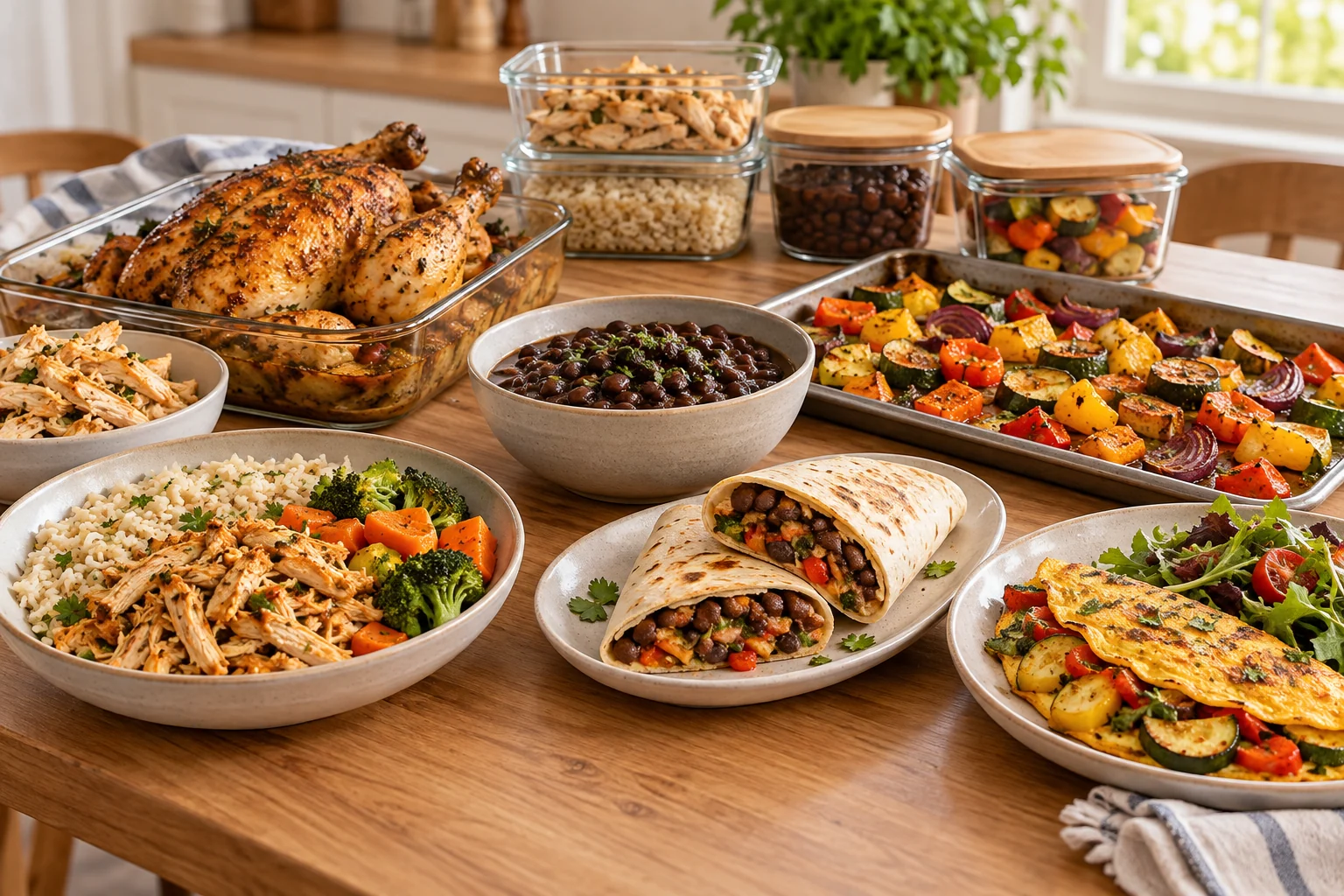
A practical week does not require five meals without any common ingredient. Choose two bases, two main preparations and three plants that can form different combinations. Rice and beans can accompany chicken with sauce and carrot in one day, lentil and pumpkin in another, or ground meat and broccoli in another assembly. The variety comes from the combination and finishing, not the number of pans. Use a table with columns for base, legume, main preparation, vegetable and fresh complement. This one. Freezing combinations matrix shows how many meals can appear without mounting everything in advance. To deepen this logic, consult the planning of meals with rice, beans and varied accompaniments. Separate components help when the family has different times or preferences. One person combines rice, beans and chicken; another one uses rice, lentils and vegetables; a third one adds salad prepared on the day. Keep very striking seasonings and delicate finishings apart when this broadens the possibilities without generating additional work. Plan at least one joker portion, such as tomato sauce, beans or shredded chicken. The joker can complete a pasta, a bowl, a soup or a filling. It must have probable destination and clear label; it is not an item to remain forgotten months. If the week changes, use first what has been thawed and rearrange the remaining combinations. Avoid promising a fixed amount of meals from a pot. Income varies according to revenue, portion size and follow-up. Register how many containers each preparation yielded in your home. After two or three rounds, these data will be more useful than a generic account and will allow you to buy more accurately.
Cook in a sequence that saves moves
Organize the preparation for duration and equipment. Start with the items with longer pot or oven time, then proceed to saute, sauces and portioning. While the beans cook, bake pumpkin and carrot; while the sauce reduces, separate containers and labels. Working in parallel can decrease the wait as long as each step remains safe and easy to follow. Group common cuts and seasonings. Onion and garlic can be prepared at once and distributed among recipes, keeping separate utensils when there is raw and ready food. Use clean boards, knives and surfaces and avoid liquid raw meat coming into contact with finished preparations. Hygiene and organization must continue even when the goal is to buy time. This one. preparation sequence by dependence reduces repeated trips to the sink and closet. Leave an area for unused ingredients, another for ready preparations and a third for clean containers. Do not mount portions while the bench is occupied by raw packaging or utensils that still need to be cleaned. Cook vegetables thinking of later reheating. In some recipes, a slightly firmer point helps prevent them from getting too soft afterwards. Already soaked and sauces should have enough moisture to heat evenly, without depending on excess fat or salt. Do a small amount test before standardizing the method. Those who prepare meals to take need to consider transportation, refrigeration and heating equipment in the destination. The guide of homemade lunches to work with organized preparation deepens these decisions. In this plan, freeze only portions that can remain under proper control until consumption.
Cool, portion and identify without shortcuts
The passage from the pan to the freezer needs to be planned. Divide large volumes into smaller and shallow containers suitable for food to favor a more uniform cooling. Do not leave ready forgotten preparations on the bench and do not use freezing to try to recover food that remained in inadequate condition. If there's doubt about security, discard it. Health guidance must come from official and applicable sources. The Virtual Health Library of the Ministry of Health reports that frozen foods should be thawed under refrigeration below 5 °C or microwave oven, which thawed items should not be cooled and that reheating needs to be completed. These references guide domestic flow, but the equipment manual and local recommendations should also be observed. Use resistant labels with preparation name, preparation date and quantity. If there is a portion intended for a person with specific restriction, record it unequivocally. A label that guides the next step may also include the planned form of use, such as “mass sauce” or “beans for Wednesday”. Leave free space in the container as prepared and guided by the manufacturer, especially in liquid contents that can expand. Close properly, check if the lid is intact and clean the outside before storing. Do not reuse packaging that is not made for freezing or that is deformed, cracked or without sealing. Organize the new portions behind the older ones and update the inventory. A frame on the freezer door or a list on your phone avoids opening multiple packages to discover the contents. Identification should simplify future decisions, not create a system too laborious to be maintained.
Separate elements that lose texture or freshness
A frozen meal may be more pleasant when not everything enters the same container. Leaves, fresh herbs, raw tomatoes, cold sauces and crispy elements can be added when serving. Farofa, seeds, toast and some cheeses can also be separated according to the recipe. This division prevents steam and moisture from transforming all parts into the same texture. Sauces may be frozen in smaller containers and combined with the base afterwards. In a mass, for example, storing the separate sauce allows adjusting the amount during heating. In a bowl with rice, beans and vegetables, a fresh complement prepared in the day creates contrast without requiring a new complete meal. This one. two-step mounting It also facilitates adaptations. The frozen part solves what takes more time; the fresh part enters in a few minutes. Instead of freezing salad next to the dish, wash and prepare only the amount that will be consumed as appropriate. Instead of mixing all the parsley into the sauce, book part to finish. Observe how each food reacts in your equipment. The same dish can respond differently according to microwave power, container material and portion size. Note when it was necessary to add some water, stir in the middle of the process or heat in stages. These notes turn a trial into a method. Do not use texture as a single safety indicator. A meal may seem normal and still have been stored improperly. Similarly, small cooking changes after freezing do not automatically mean risk. Consider preparation history, time, temperature, packaging integrity and official guidance; discard when it is not possible to confirm the appropriate conditions.
Create a rotation that prevents forgetfulness
Organize the freezer so that using is easier than hoarding. Separate one area for complete meals, another for components and another for raw items or existing industrialized products. Keep ready foods protected and separated from items that may cause contamination. If the space is small, open boxes or simple partitions can help without blocking air circulation. Adopt the logic “first entering, first leaving”, respecting dates, conditions and guidelines of each preparation. Place the older portions in front and do not add a new batch of the same dish without deciding the destination of the previous one. This one. visible rotation of portions prevents the freezer from becoming an unused file. Have a short conference before the shopping list. If there are two servings of soup, beans and sauce, the week may need only fresh accompaniments. The inventory reduces duplicate purchases and helps to choose the next preparation. For families with different schedules, the flexible menu for varied routines shows how to connect stock and presence at each meal. Book a day of use, not just a day of production. An organized “freezer” night can consume the oldest portions and release containers. If a dish has not been chosen twice, consider whether the problem is taste, shape, amount or lack of visibility. Don't keep producing something the house avoids. In case of power outage, misclosed door or equipment failure, do not only decide on appearance. Check manufacturer guidance and health surveillance and discard when safety cannot be confirmed. Maintaining an appropriate thermometer, where possible, helps to monitor the operation, but does not replace responsible assessment in the face of an occurrence.
Disconnect and reheat with a defined flow
Plan your consumption the night before. Transfer the chosen portion to the refrigerator, keeping it protected and in a position to avoid leaks on other foods. When using the microwave is appropriate, follow the instructions of the equipment and container. Do not let the portion thaw for hours on the bench or use running water as a shortcut. When reheating, distribute the food in the container, pause to stir when needed and check if the center is also hot. Dense preparations can heat unevenly. A continuous chain from freezer to dish Depends on time and temperature, not only is the surface dropping steam. Consume the portion after the process and avoid repeated heating and cooling cycles. The official orientation consulted recommends not to refreeze foods that have already been thawed. It therefore freezes in quantities compatible with consumption. A large container removed to serve only one person creates leftovers that need new decision; smaller portions reduce this problem and make use more predictable. If the meal will be transported, keep the proper conditions throughout the journey and at destination. Use intact container, thermal bag when applicable and refrigeration available. Do not assume that a frozen portion will remain safe for many hours without temperature control just because the cold day began. Register in the first batch which dishes heated uniformly and which required adjustment. Perhaps the rice needs additional moisture, the stew works better separately or a particular vegetable should come in fresh. These observations help improve the next round without creating universal rules for different foods, equipment and homes.
Test a small week and adjust the system
A first experiment can have six portions: two of rice, beans, chicken with sauce and carrot; two of rice, lentils, ground meat and pumpkin; and two of vegetable soup with beans or another known combination. Fresh leaves, herbs and supplements stay out of the freezer. Adjust the ingredients according to preferences, availability, allergies and individual guidelines. Distribute portions between the most busy days and keep room to cook or reuse fresh food. The freezer should ease specific decisions, not determine all food. This one. pilot week with simple record allows to evaluate preparation time, occupied space, acceptance, texture and quantity without compromising a large purchase. In the end, answer five questions: how many portions were used; which portions were forgotten; which preparation returned best to the dish; how long the preparation required; and which containers worked. Reduce what is left, repeat what solved the routine and change only one variable at a time. If the preparation occupied all day, divide into two smaller blocks. Cook beans and sauce at one time; bake vegetables and mount portions at another. If there is no variety, freeze separate components instead of complete dishes. If there has been confusion, simplify labels and organize by rows corresponding to the order of consumption. The best system is not the most crowded freezer or the menu with more recipes. It is the one where portions are identified, used in correct rotation and combined with fresh food without unsafe improvisation. With a small cycle, a list linked to stock and weekly review, freezing meals can make rundays more predictable without turning the kitchen into a production line.
Shopping list
Mark the products you already put in the cart.
Community
Comments
Create an account or do login for favorite and leave your comment.
Loading comments...