

Meals to carry that remain tasty after heated
Choose preparations that tolerate transportation and heating, separate delicate components and mount practical marmalitas without losing texture and flavor.
Plan meals to take from the place of consumption
Meals to take They work better when planning starts at destination. Before choosing the menu, confirm whether there will be refrigerator, freezer, microwave, oven or just a space to eat. Also check the displacement time, the possibility of using thermal bag and how long the food will remain out of proper cooling. Excellent home preparation can be a bad choice when it depends on nonexistent equipment. Make a short list of real conditions. Is there any place to store the lunch as soon as you arrive? Does the container fit into the available equipment? Is there time to thaw or heat in stages? Is it possible to wash the pot later? These responses define food format, size, and combination with more precision than a generic list of dishes. Separate meals into three groups. The first brings together preparations that will be fully heated. The second combines a hot and cold part, kept separate until consumption. The third includes cold meals planned not to depend on heating. A format choice before recipe avoids putting salad, sauce and crispy items in the same rice or stew container. Start with two or three days, not with extensive production. Observe which foods arrived with good texture, which containers sealed properly, and how long the heating required. Then zoom in. The goal is not to fill the freezer; it is to build a reliable routine, compatible with transport, storage and break time. Consider also the way between the refrigerator and the place of consumption. Transportation on foot, bus, bicycle or car imposes movements, exposure to heat and different weight limits. A high pot can turn inside the bag; several small containers can be difficult to accommodate. Test the loaded bag before the first day and adjust the amount to the actual path. Combine the portion size with the range available. If the break is short, a meal that requires several mounting steps may not work. If the microwave is shared, portions that heat predictablely avoid queues and rushes. A pause logistics should guide the menu as much as preference and availability of ingredients.
Choose preparations that tolerate transportation and reheating
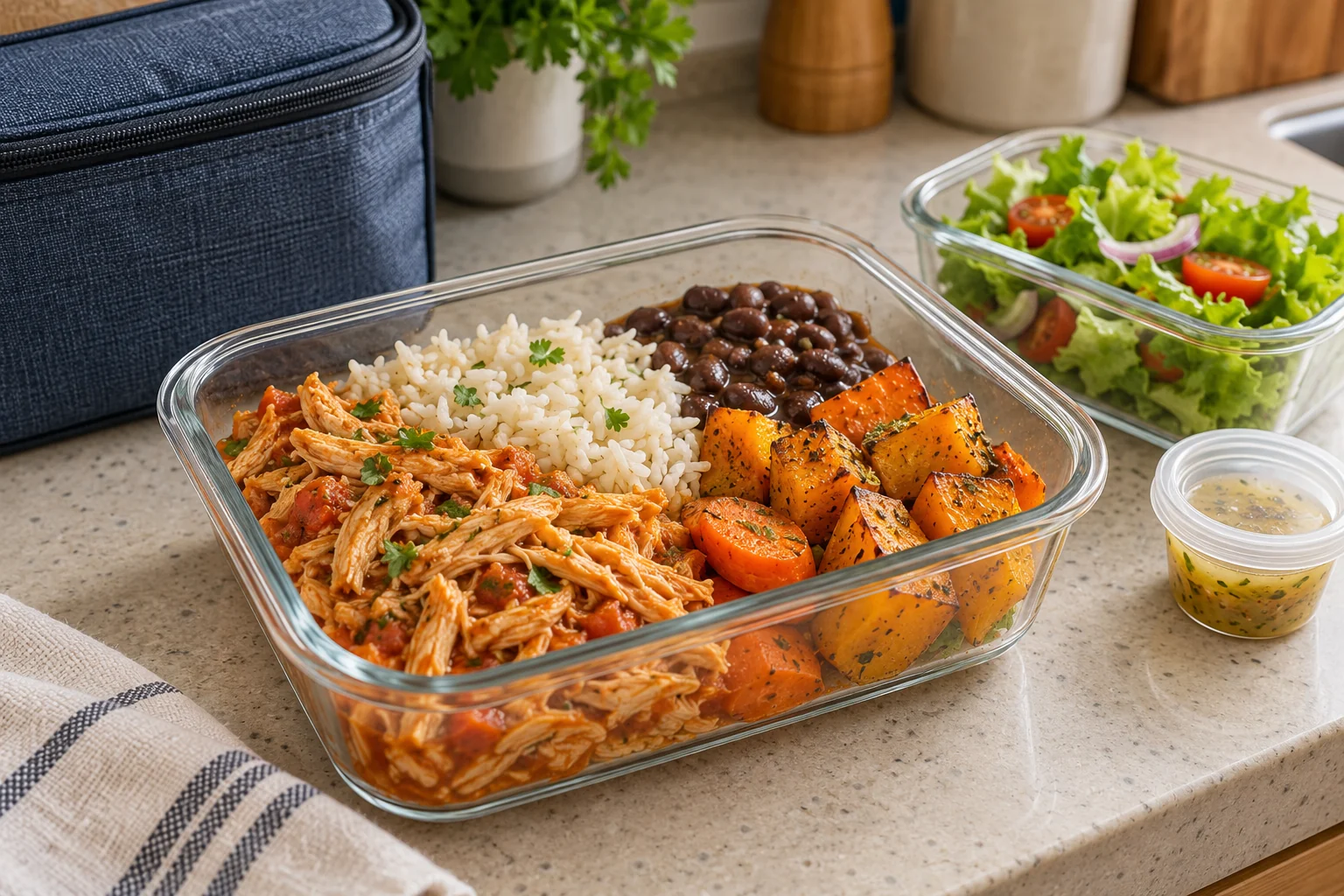
Dishes with some moisture usually adapt better to heating than very thin cuts, fried or dried components. Swallowed meats, frayed meats with sauce, beans, lentils, cooked vegetables, well-stocked rice and pan preparations allow to redistribute heat and moisture. This does not mean covering everything with sauce, but preventing each element from relying on crocance or exact spot to get pleasant. Observe the structure of the meal. A base, a moist preparation and a vegetable that supports heating form a predictable set. Rice, beans, shredded chicken and roasted pumpkin are an example. Cuscous, lentil, pot meat and carrot form another. Use known combinations before testing delicate dishes. A marmit that heats equally reduces the risk of one part getting dry while another remains cold. Very thin meats and small pieces may lose moisture when heated for too long. Prefer cuts and methods that keep broth or sauce and adjust portion size. Pasta can remain pleasant when the sauce is enough and the cooking does not start excessively soft. Roast vegetables should maintain some firmness, because they will still receive heat. The planning of works with practical combinations helps to distribute bases and accompaniments. For this menu, apply an additional filter: ask how each item reacts to cooling, transportation and second heating. A quality after route It matters as much as the taste at the time of preparation. Avoid choosing a meal just because it freezes. The complete test includes thawing, container distribution and heating in the available equipment. A puree can maintain good texture, but require proper sauce or accompaniment; a vegetable can freeze without sanitary problem and still lose the desired consistency. Register quality and practicality separately. Think also of the aroma in the shared environment. Very intense preparations can be pleasant at home and inconvenient in a small cup. Closed container during transport reduces leaks, but heating releases smell. A living together at the meal site is a legitimate criterion for choosing spices, fish, sauces and finishing methods.
Control moisture without turning everything into dry food
A lunch can lose quality due to lack or excess liquid. Dry preparations dry in heating; very fluid sauces migrate to rice, pasta and vegetables, leaving everything with the same texture. Balance is in using enough moisture to protect the main component and separate what should remain firm. Full-bodied sauces adhere better to shredded meats, meatballs, vegetables and pasta. Broths can be transported in their own container, with proven sealing, and added near consumption. Beans can occupy a separate compartment or stand next to the rice, according to the pot and preference. A humidity with defined destination avoids both leaks and heating of a dry dish. Do not use the sauce to hide a preparation already past the point. Cook rice, pasta and vegetables considering that there will be new heating. Very soft components tend to lose structure. When possible, remove the portion intended for the lunch before finishing the meal served at home, preserving a slightly firmer texture. Before repeating a combination, test with a portion. Refresh, transport under the same conditions and heat as you would at work. Note whether water has appeared in the container, whether the sauce has become concentrated or whether any component has dried up. Small adjustments in the amount of liquid, cut or separation solve more than changing the entire menu.
Separate cold, fresh and crispy components
Leaves, raw tomatoes, fruits, cold sauces, seeds and crispy supplements should not automatically accompany the hot items in the same compartment. Steam, moisture and heating change texture and taste. Use a second pot or divisions that really prevent contact between food during transport. Take the salad seasoning in a small and well sealed container. Mix only when it's time to eat. Leaves need to be properly sanitized, dried and kept under compatible refrigeration. Cut tomatoes and other moist items can be separated until assembly. A finalisation at the time of consumption creates contrast without requiring a new meal. Seeds, farofa, herbs, grated cheese or other usual complement can transform a heated base, but only work when they arrive with the intended texture. Transport small portions and avoid improvised packaging that can open. If the environment does not offer refrigeration, choose only components appropriate to the conditions available and do not assume that a common bag replaces temperature control. Set up a simple logic: main pot for heating, cold pot for accompanying and small finish container when needed. If three packages are inconvenient, reduce the elements. A practical marquee with two well-cared components is better than a complex assembly that hinders transportation, storage and cleaning.
Mount varied combinations with a marquee matrix
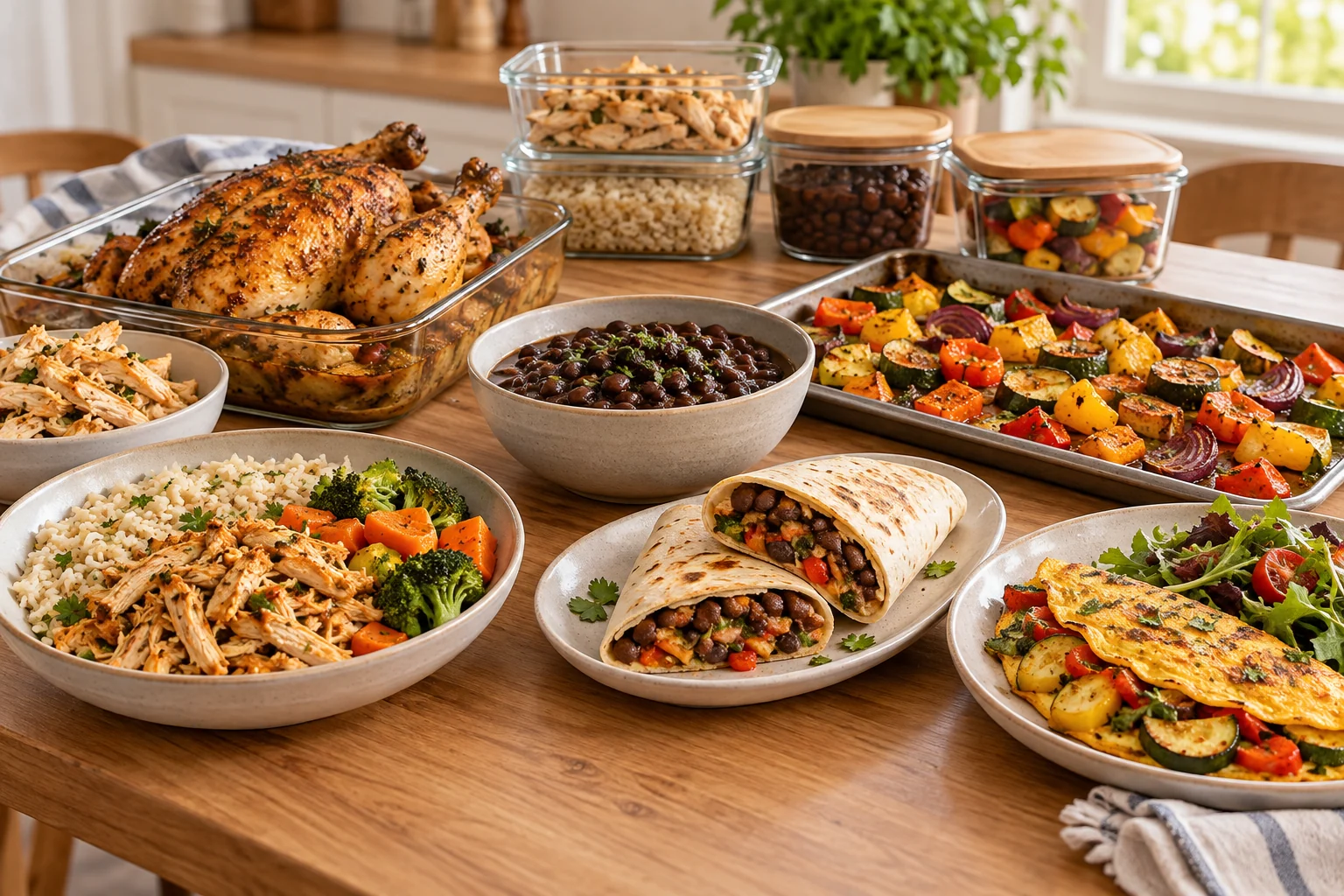
Instead of choosing five independent recipes, mount a matrix with four columns: base, wet preparation, vegetable and finishing. Each line forms a meal, but the components can change position. Rice can accompany beans and chicken, then lentils and vegetables. Pot meat may appear with mashed potatoes in one day and rice in another. A first set can gather rice, beans, chicken shredded to the sauce and pumpkin. The second uses couscous, lentils, meatballs and carrots. The third combines pasta with full-bodied sauce, ground meat and broccoli maintained with some firmness. The room has mashed potatoes, vegetable stew and a main fountain chosen by the house. Each set receives leaves or other cold component separately. Distribute more delicate preparations in the first days and book frozen or more stable items for later, as appropriate conservation guidelines. The content on Frozen meals to organize the week can guide the choice of what really combines with freezer and planned thawing. Do not repeat the same seasoning in all components. A neutral base can receive tomato sauce in one meal, herbs and lemon in another, or a broth prepared by the house. A transportable combinations matrix reduces work without turning five days into copies of the same dish. Register which combinations arrived best to form a repertoire of their own. Add a column of logistic restrictions. Mark “two pots”, “freeze before”, “heat and stir” or “consumer cold”. This information prevents you from choosing in a hurry a luncheon incompatible with the day. In a morning with small backpack, prioritize the combination of a pot; in a location with refrigerator and more time, use separate mounting. Set also a reserve meal. It should use known components, occupy little space and require few steps. It may be a previously validated frozen portion or a simple combination of base, legume and vegetable. A reserve really tested avoids replacing lunch with any option when a commitment interrupts the planned preparation.
Prepare, cool and portion with organization
Organize the preparation in the cooking order. Start with what takes the longest, use a co-ordinate oven and pans and get the containers ready. When finished, divide into portions compatible with consumption and heating equipment. Very deep containers can hinder the uniform distribution of heat; very large portions require more manipulation. Do not leave ready preparations forgotten on the bench. Cool and store according to sanitary guidelines applicable to food type. Identify name, date and destination. Appearance and smell do not confirm safety when the temperature history is unknown. A organization starts before closing the lid. If a part will be frozen, set this right after preparation instead of waiting several days. Separate useful portions and plan the passage to refrigeration when early thawing is appropriate. Avoid repeated cycles of thawing, heating and cooling. Heat only the amount that will be consumed. The method of cook only a few times a week helps to divide the work into two blocks. For meals carried, use the second block to review containers, replace fresh components and correct combinations that did not maintain good texture.
Transport and store according to actual conditions
Closed container prevents leaking, but does not control the temperature alone. For long routes or hot days, use suitable thermal solution and coolant elements when applicable. When arriving, transfer the meal to the refrigerator or freezer available, following the recommended conditions for food. Do not leave the lunch in a car, common backpack or warm atmosphere waiting for lunchtime. Test the seal with water before entrusting a sauce to the container. Check cover, rubber, locks and compatibility with heating. Glass and plastic can work when the product is suitable for use, is intact and follows the manufacturer's instructions. Remove elements that cannot go to the microwave and do not heat closed containers improperly. Keep the thermal bag clean and separate used utensils from still closed containers. Cold and hot items need their own planning; do not mix temperatures waiting for one to compensate the other. A kitchen conservation chain to destination is part of the menu, not an optional step after the food is ready. When the site does not offer safe cooling or proper possibility to maintain temperature, review the meal. Choose an option compatible with the situation or provide appropriate thermal structure. Do not use generic deadlines as collateral: ingredients, preparation, temperature and route change risk. In case of doubt about conservation, do not consume.
Heat in steps to preserve texture and distribute heat
Before heating, remove salad, cold sauce and supplements. Check that the container can be used in the equipment. Distribute the components without compressing and, when possible, create space for circular heat. Very compact preparations can heat the edges and remain cold in the center. Use short steps, stirring or reorganizing the food between them when this is possible and appropriate. Sauces and beans can be redistributed; rice can receive the moisture provided by the menu; larger pieces need attention to the center. The goal is to get uniform heating without excessive timeNot just make the surface too hot. If the dish contains components with different needs, heat them separately. A firm vegetable may need less time than a frozen preparation. A dough with sauce can be mixed in the middle of the process, while cold accompaniment enters only later. Adjust the sequence to the available equipment and container orientations. Eat after proper heating and avoid storing again a portion that has gone through several cycles. If the amount is usually left, reduce the next lunch. The revision of the portion improves texture, reduces waste and simplifies heating. Create a little routine for shared equipment. Clean any splashes, use proper protection without sealing the container improperly and make the space ready for the next person. Take a cloth or paper when the site does not offer enough material. Organization reduces haste and prevents waste from other meals from contaminating the outside of the pot. Note the result before adding more time. If only one region is cold, mix or reposition; if the food has dried, review the preparation and the amount of sauce next time. A correction starts on the following menu, not in repeatedly heat the same portion until completely lose texture and moisture.
Review the lunches and improve next week
At the end of each day, quickly record what worked. Has the meat remained moist? Did the rice heat even? Did the salad get firm? The pot leaked? Did the heating time fit in the break? This information is more useful than indefinitely following a list of recipes recommended by others. Rate each combination as repeat, adjust or withdraw. Adjusting can mean more sauce, less cooked vegetables, smaller container, separate cold component or reduced portion. Withdrawing does not represent failure; it merely indicates that that preparation does not match your path, equipment, or preference after heating. Set up a repertoire of six to eight reliable combinations and vary one element at a time. When testing a new dish, keep base and logistics already known. A gradual improvement of the luncheon allows to identify the effect of each change and avoid a whole week of preparations that do not work in the destination. To begin with, choose three meals, confirm where they will be stored, separate cold items, use tested containers and prepare a small portion of each combination. Lighten, store and heat in real condition. The following week, keep what came right and correct only what is needed. Meals to take are better when the menu considers the whole trip, not just the pot.
Shopping list
Mark the products you already put in the cart.
Community
Comments
Create an account or do login for favorite and leave your comment.
Loading comments...