

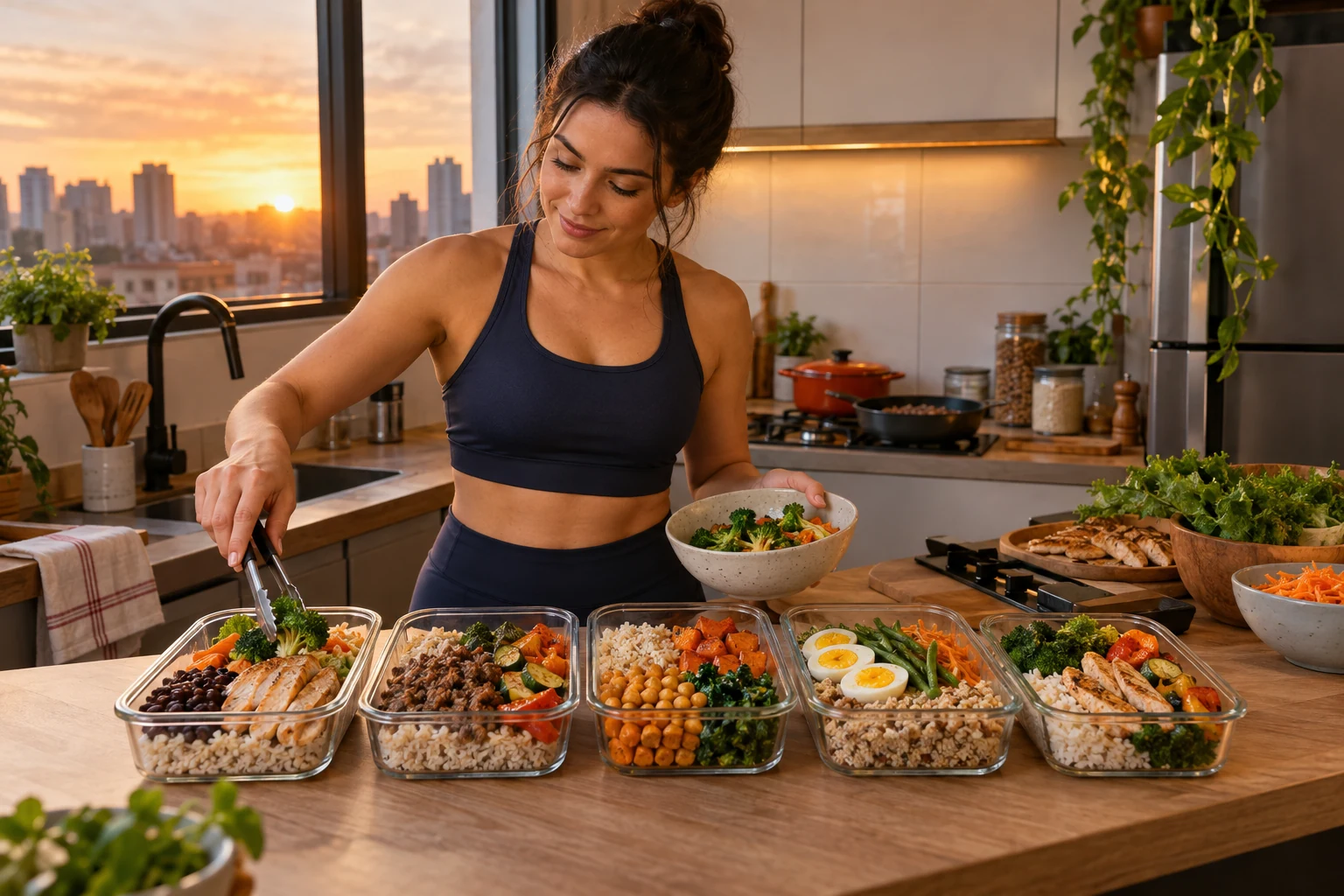
Five protein lunches to organize the week
This planning brings together five lunches next week, with accessible ingredients, explained preparation and a unique shopping list. The quantities are culinary references and should be adjusted to the consumption of the house. These lunches were planned to facilitate preparation without imposing a rigid menu.
How to organize the lunches in routine
As marmites with protein this planning was designed for those who wish to decide meals before the most run days. The menu combines chicken, ground meat, fish, eggs and chickpeas with rice, beans, pasta, cassava and vegetables. The first step is to check how many meals will actually be made at home or taken elsewhere. Then check refrigerator, freezer and pantry to remove from the list everything that is already available. The five suggestions do not form an individual prescription. They function as culinary references to help buy, cook, store and transport food in an organized way. Part sizes vary according to appetite, routine, and number of people. If there are food restrictions, allergies or specific needs, adapt the ingredients with professional guidance. The practical goal is to reduce improvisation, take advantage of ingredients in more than one preparation and keep a purchase linked to what will be cooked.
How to vary meals without increasing the purchase too much
The simplest method is to repeat some bases and change spices, proteins and vegetables. Rice, onions, garlic, tomatoes and carrots appear in more than one preparation, while each lunch keeps a combination of its own. Chicken is used grilled at first option and shredded in the farm sauce. The zucchini accompanies the ground meat, but it can also enter the pasta when there is leftover. Before buying, choose which vegetables are best looking and priced in your region. Broccoli can be replaced by cauliflower; pods can give way to carrots or pumpkins; cassava can be replaced by ordinary potatoes. These changes change flavor, texture and yield, so adjust the preparation instead of seeking exact equivalences. One planned purchase for five lunches must have a destination set for each perishable. If a meal leaves the schedule, freeze the corresponding portion or rearrange the menu before the ingredients lose quality.
How to interpret list quantities
The list considers a unit of each lunch and uses approximate household measurements. Chicken, meat and fish appear in buying weights because cuts and yield change after cooking. Rice, beans, noodles and legumes can be sold in larger packages than the amount required for this week; cook only what will be used and store the rest according to the label. For a house with two people, multiply only the chosen recipes, observing the size of meals. It is not necessary to automatically fold seasonings, oil or pantry items. The same goes for vegetables: small and large units yield different quantities. Use the relationship as a starting point and register what is left after the first execution. This information allows correcting the next purchase based on actual consumption. The best measure is not the most accurate on paper, but the one that avoids lack during preparation and reduces surplus without defined use.
A preparation order that reduces the accumulation of tasks
Start by washing your hands, sanitizing the countertop and separating raw food and ready food utensils. Place beans and chickpeas to cook when using dry versions. Meanwhile, bake sweet potato, pumpkin, carrot and other vegetables in one or two roasters. Cook rice and cassava in separate pots. Prepare the chicken by reserving one part to grill and another to cook and shred. Then make the ground meat. The fish can be prepared last or closer to the day it will be consumed. Cook the eggs and the pods near the end. It's not necessary to end everything at the same time. A small kitchen can work better with two steps on different days. Clean boards, knives and surfaces after contact with raw meat. Also plan space to cool the containers, because producing many portions without cooling capacity makes the process unpractical.
How to cool and store the lunches
Divide the preparations into smaller containers so that they lose heat more quickly and do not leave food cooked for long periods on the bench. Identify each pot with name and date. Keep only the portions scheduled for the first days in the refrigerator and freeze those intended for the end of the week when necessary. Anvisa advises you to store cold food below 5 °C and reduce the interval between preparation and consumption. The deadline depends on the ingredient, handling and actual stability of the refrigerator; do not use the limit as justification to store a preparation that has a dubious odor, appearance or preservation. When thawing, do so under refrigeration or use the microwave when the food is heated immediately. Avoid thawing over the sink. Cold sauces, leaves and complements that lose texture can be stored separately. Containers should be suitable for food and compatible with the equipment used for reheating.
Transportation and reheating outside the house
When the lunch is taken to work or study, confirm that there will be a refrigerator and suitable place for heating. Use a well-closed container and thermal bag with reusable ice during the journey. When you arrive, transfer the meal to the refrigerator instead of leaving it on the table or in the car. In reheating, distribute the food in the container and stir in the middle of the process when possible, so that the center also becomes warm. Fish, eggs, meat, chicken and moist preparations require special attention to the off-cooling time. Bring cold leaves and sauces into separate pots. If there is no reliable cooling in the destination, choose another meal or prepare a suitable solution for that day. The organization of the luncheon includes the path between the kitchen and consumption; it does not end when the pot is closed. Writing down which recipes keep the best texture after heating helps to adjust the menu for the following weeks.
How to control the cost of the week
Compare the price per kilo or unit and observe how much of each package will actually be used. An offer is only useful when there is space to store and a plan to consume. Chicken and eggs usually allow different combinations; fish and meat can be chosen according to availability and budget. Legumes such as beans, lentils and chickpeas expand the menu without requiring special products. If a vegetable is expensive, replace it with another that works in the same type of preparation, considering oven time, water quantity and texture. Check out rice, beans, pasta, oil, herbs and spices before placing them in the cart. Register the value of the main items to compare future purchases. The total cost of the five lunches depends on region, brands, cuts and packaging sizes, so a fixed estimate would quickly be outdated. The most reliable control part of the revised list, the price found and the effective use of the ingredients.
Practical replacements to adapt the menu
The five combinations can be adapted without turning the list into a whole new relation. Chicken can be used in cubes, strips or shredded. Grinded meat may be exchanged for well seasoned lentil or other preparation chosen by the house. The fish can be replaced by well cooked omelet, grilled tofu or another option with legume. White or whole rice enters as preferred and available time. Mandioca can give way to potatoes; pasta can receive zucchini, carrots or spinach. Do not treat these changes as exact equivalences: yield, flavor and composition vary. Also adjust the amount of liquid, cooking time and space in the container. If someone in the house does not consume a certain ingredient, make the exchange before purchase, not during preparation. Thus, each item remains linked to a defined recipe and to shopping list remains usable.
Common errors while preparing multiple lunches
A frequent mistake is to cook for many days without enough room in the refrigerator or freezer. Another is closing containers while they still accumulate too much steam, damaging texture and making cooling difficult. It is also risky to use the same board and knife for raw meats and ready food without hygiene. Very cooked vegetables may lose texture after frozen and heated; leave them a little firmer when that is the destination. Avoid copying quantities of other people without observing the consumption of the house. If a meal is cancelled, freeze or rearrange before the ingredients spoil. Eggs should be completely cooked when transported, and perishable preparations should not remain for hours at room temperature. Repeating bases makes the week easier, but seasonings and vegetables may vary to keep meals enjoyable. Planning needs to fit in time, budget, space and equipment available.
Final review before going to market
Go through each recipe and confirm that all unique ingredients are on the list. Then open cabinets, fridge and freezer and mark what already exists. Check validity, quantity and conditions of rice, beans, noodles, peas, chickpeas, oil, spices and frozen items. Confirm that there are five suitable containers and room for portions. Organize the purchase by sectors: dried, vegetables, meat, eggs and chilled. Leave cold items for the end of the course. If a replacement is required by price or availability, also change the corresponding recipe. Before paying, read the cart last and remove products without a destination. The review answers three questions: in which it will be used, how much will be needed and where it will be stored. This simple control reduces duplicate purchases and makes preparation more predictable.
Organize the purchase atAnota na Lista
NoAnota na Lista, gather the ingredients of the five preparations, eliminate repetitions and mark what is already available at home. Chicken, tomato, onion, garlic and herbs appear in more than one lunch and should be added only once. During purchase, follow the cart and register prices to compare main items in other weeks. After preparation, note which quantities were sufficient, which vegetables remained and which recipes kept good texture. This revision creates its own reference for the next list. To expand planning, see also the list of snacks for the week and meals that remain tasty after heated. Use only the contents that match the routine and avoid including ingredients without anticipated use.
Criteria used in this planning
The general guidelines for food selection were provided in the Food Guide for the Brazilian Population. The care of refrigeration, thawing, separation between raw and ready foods and reduction of time out of safe temperature follow Anvisa's materials. Recipes use common foods and approximate cooking measures. There is no individual calculation of energy, nutrients or sports needs. The final composition depends on the marks, cuts, portion sizes and replacements adopted. People with allergies, intolerances, restrictions or clinical needs should adapt the menu with professional follow-up. The content has educational and practical purpose: organizing recipes, purchases, preparation and storage. The full official sources appear at the end of the page for the reader to consult the recommendations directly.
Lunch and dinner menu
Grilled chicken with rice, beans and broccoli
Ingredients
- 120 to 150 g of raw chicken
- 1 portion of cooked rice
- 1/2 shell of baked beans
- Broccoli
- Garlic, lemon, paprika and herbs
Preparation
- Season the chicken and keep separate from ready food.
- Grid until the center is completely cooked.
- Heat rice and beans and cook broccoli in steam or in fast saute.
- Let the excess steam drop before mounting the container.
Prepare an additional portion of chicken for the fifth lunch only when there are adequate cooling and storage conditions.
Ground meat with sweet potatoes and zucchini
Ingredients
- 120 to 150 g of raw ground meat
- 1 small sweet potato
- 1/2 zucchini
- Tomatoes, onions and garlic
- Oil and herbs available
Preparation
- Cut the sweet potato into cubes and bake until soft.
- Sauce onion and garlic, add the meat and cook completely.
- Add tomato to form a short sauce.
- Sauce the zucchini quickly and mount after initial cooling.
Common potatoes, cassava or rice can replace sweet potatoes; adjust the preparation time and the list.
Beans with eggs, rice and vegetables
Ingredients
- 1/2 to 1 cup cooked chickpeas
- 2 eggs
- 1 portion of rice
- Carrot and pumpkin
- Lemon, onion and green smell
Preparation
- Cook the eggs until clear and yolk stand firm.
- Spill the chickpea and season with lemon, onion and green smell.
- Bake or cook carrot and pumpkin.
- Mount the rice and keep the eggs separate if you prefer to add them after heating.
If you use dry chickpeas, plan the sauce and cooking; for ready product, check the label, drain and rinse.
Roasted fish with manioc puree and pods
Ingredients
- 130 to 160 g of fish fillet
- Cooked manioc
- Fly
- Lemon, garlic and herbs
- Milk or olive oil as preferred
Preparation
- Season the fish and bake until it becomes opaque and break easily with the fork.
- Mash the still warm cassava with part of the cooking water, milk or olive oil.
- Cook the pods until soft, keeping some firmness.
- Cool, mount and schedule this lunch for the first days or freeze quickly.
Choose the fish according to availability and conservation. Disengelle under refrigeration, never over the sink.
Mac with shredded chicken, tomato and pea
Ingredients
- 1 portion of dry noodles
- 100 to 120 g of cooked and shredded chicken
- Tomatoes or tomato sauce
- 2 tablespoons of peas
- Onions, garlic and herbs
Preparation
- Cook the noodles until it's firm.
- Sauce onion and garlic and prepare a tomato sauce.
- Add the already cooked chicken and the pea.
- Mix with the noodles and set aside some separate sauce if you want to adjust to reheat.
The chicken can come from the same preparation as the first lunch. Divide the portions after cooking and cool properly.
Shopping list
Mark the products you already put in the cart.
Common questions
Can I freeze all five lunches?
Many cooked bases accept freezing, but eggs, very cooked vegetables and some sauces may change texture. Quickly freeze portions at the end of the week and identify containers.
Is it necessary to weigh all the ingredients?
Not to follow this culinary planning. Weights help in the purchase of meat and fish, while the other measures can be adjusted to household consumption.
Like taking the lunch to work?
Use closed container, reusable ice cooler and cooling at destination. Do not leave perishable food inside the car or on the table for hours.
How to adapt the list to two people?
Multiply only the recipes that will be prepared for two people and adjust vegetables and follow-up to real consumption. Spices and pantry items do not need to be automatically duplicated.

Community
Comments
Create an account or do login for favorite and leave your comment.
Loading comments...