

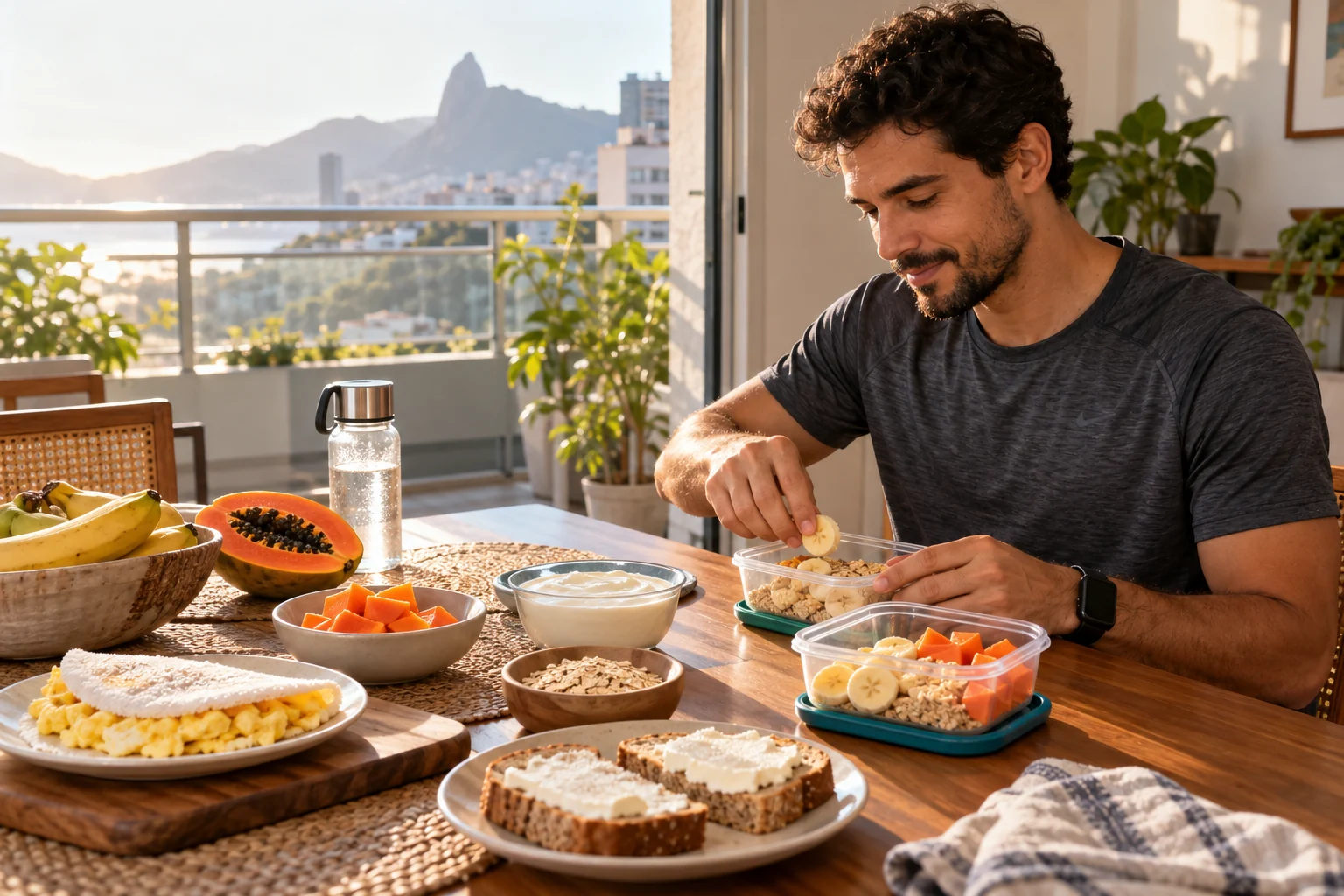
Snacks before training: seven simple options to organize
This guide brings together seven snacks before training with common ingredients, explained preparation and a unique shopping list. These snacks are culinary references and should be adjusted to hunger, routine and individual tolerance.
How to organize snacks in routine
Pre-training snacks it is the central subject of this guide, organized to facilitate decisions of preparation, routine and shopping. Suggestions about pre-training snacks can be adapted to the preferences, budget and needs of each home.
A practical snack, not a formula
Pre-training is the name given to the meal or snack made before physical activity. This does not mean that there is a mandatory prescription, a universal schedule or a food that can guarantee a specific physical result. The choice depends on what was consumed throughout the day, the interval to exercise, the duration and intensity of training, appetite and individual tolerance. This guide presents seven domestic preparations with fruits, cereals, eggs, milk and derivatives. These are culinary ideas for organizing shopping, not a sports prescription. Those with diabetes, kidney disease, allergies, intolerances, reflux, gastrointestinal condition or other clinical need need individual guidance. The same goes for athletes and people with specific goals. The objective is to replace improvised options that can be prepared in advance, safely transported and adjusted to the routine, without depending on products called pre-training or promises present in packaging and social networks.
How to choose an option before the activity
When choosing snacks, start with the real routine. If the last meal occurred recently, there may be no need for another snack. If there is hunger and a longer interval, a simple preparation may be convenient. The closer you get to training, the more important it is to consider portion size and personal tolerance. Some people feel comfortable with fruit and yogurt; others prefer bread, tapioca or couscous. Very bulky foods, fatty preparations or large amounts of fiber may cause discomfort in certain people, but this should not be transformed into a general prohibition. Test options on ordinary days, not before an unusual competition or training. Water must also be available without forcing volumes that cause discomfort. The scientific position on nutrient distribution recognizes that the size and time of the meal prior to exercise influence the nutritional context, but the needs change according to the type of activity and the person. For specific goals, seek nutritionist.

How to distribute the seven options
The snacks combine banana, papaya, oatmeal, yogurt, tapioca, bread, ricotta, sweet potato, couscous and eggs. You don't have to prepare them all in the same week. Choose two or three that match your schedule and repeat ingredients to avoid waste. The quantities are culinary references and can be adjusted. Those carrying yogurt, cheese or eggs need refrigerated transport. The pre-training name describes the time of use, does not transform the snack into a supplement or replace a full meal when it is needed.
How to adjust quantity without copying portions
To adjust the snacks, use the recipes measurements as a starting point and observe the interval from the previous meal, the size of the snack and the comfort during the activity. One may prefer only one fruit; another may choose bread, couscous or tapioca with filling. It is not necessary to repeat the same amount every day. Start with a known portion, register if there was hunger or discomfort and adjust on the next occasion. Avoid testing major changes before unusual activity. People with diabetes, kidney disease, allergies, intolerances or other clinical needs should receive individual guidance. The aim of this list is to organize ingredients and prepare, not prescribe calories, nutrients or mandatory schedules.
How to advance preparation without losing quality
Before you prepare your snacks, have a conference room and fridge. Oats, flocon, tapioca gum, cinnamon and oregano may already be available. Then define how many days really require lunch outside the house. Cook sweet potato and eggs in a small session, wash whole fruit and separate pots. Avoid cutting all fruits for the week as texture, appearance and safety depend on storage. Bread can be portioned and frozen when the packaging is larger than the intended consumption. Tapioca and couscous usually have better texture when prepared closer to use. Pancakes can be refrigerated for a short period or frozen individually. Identify containers with content and date. Do not mix hot foods with cold fruits or dairy products. The best routine is not to produce seven snacks at once, but to anticipate the steps that save time without damaging quality: check stock, cook bases, sanitize utensils, separate dry portions and plan cooling.

Transport and conservation of snacks
In snacks, yogurt, ricotta, white cheese, boiled eggs, cut fruit and stuffed sandwiches are perishable. Take them in a thermal bag with reusable ice and put them in a refrigerator as soon as you get to work, college or gym. Do not leave the pot inside the car, exposed to the sun or on the table for hours. Use intact, clean, food-friendly containers. Wash your hands before preparation and separate utensils that had contact with raw egg. Fruits should be cleaned before cutting. Observe the manufacturer’s validity and instructions on packed products. If the food has a change in smell, color, texture or packaging, do not try to make the most of it. Hot preparations should cool in a controlled way and go to refrigeration without staying at room temperature for a long time. Sports planning does not eliminate basic food safety rules. If there is no structure to conserve a perishable snack, choose an alternative compatible with the route and consume refrigerated foods at another time.

Is it necessary to use supplement or stimulant?
Nope. Supplements and stimulants are not required to perform a workout or set up a snack. Anvisa informs that supplements serve to complement the diet of healthy people and guides evaluation with qualified professionals, because the need depends on health, diet and physical practice. No supplement replaces a varied diet. If there is individual indication, read identification, ingredients, allergens, warnings, restrictions, and form of use. Products sold as pre-training can contain different substances and should not be used just because they appear in videos or because someone else consumes. This article does not recommend a dose of caffeine, powder, capsule or energy drink. Children, adolescents, pregnant women, lactating women, people sensitive to stimulants, with diseases or who use medicines require specific attention. Common foods should also not be treated as miraculous natural supplements. Banana, oats, bread, tapioca, couscous, eggs and dairy are culinary ingredients; their usefulness is to compose possible meals within an individual routine.
Common planning errors
The most common error is copying another person’s time and portion without considering the previous meal and tolerance itself. Another is to experience a very large combination before an important workout. It is also common to buy bars, drinks and powders without reading labels, while fruit and basic foods end up forgotten. Preparing perishable snacks and leaving them without cooling creates a safety problem that no sports goal justifies. Avoid using raw egg, milk outside the indicated temperature or cut fruits stored improvisedly. Do not turn specific foods into obligation: sweet potato is not indispensable, bread does not need to be eliminated and tapioca does not guarantee better training. Another blind spot is to call any snack light; one preparation can be comfortable for one person and cause discomfort in another. Record which choices worked, the interval used, and the level of hunger, without interpreting a single experiment as a scientific rule. Clinical adjustments or competition goals belong to professional care.
How to buy without creating waste
Choose first which snacks will actually come in the week and buy perishables according to this decision. Banana, papaya, yogurt, ricotta and cheese have different conservation rhythms. Mature fruit can be directed to pancake or breakfast, while bread can be frozen in portions. Oats, flocon, tapioca gum, cinnamon and oregano must be checked in the pantry before going to the market. Compare the price per unit or weight and avoid large packaging when there is no forecast of consumption. Separate containers, thermal bag and reusable ice next to the list. An efficient purchase connects each item to a defined preparation and leaves simple alternatives for when the routine changes. When buying snacks, relate each item to an already chosen preparation.
Organize the purchase atAnota na Lista
Choose the snacks that really match your workout days and exclude the rest from purchase. NoAnota na Lista, mark existing ingredients, a repeat items and organize the market path. A practical sequence is to buy dried first, then fruit, bread, eggs and chilled. Register yogurt, cheese, eggs and fruit prices to compare alternatives in future weeks. After testing the recipes, note which were easy to carry, which caused waste and which needed a smaller or larger portion. This review makes the next list more accurate without creating rigid rules. Also separate pots, thermal bag and reusable ice before the day of use. If the plan changes, redirect ripe fruit to pancakes or breakfast and freeze the bread when possible. The tool helps transform recipes into concrete actions of purchase and preparation; it does not replace nutritional evaluation nor defines what each person should consume before exercise. To continue planning, see also protein jams next week and meals that remain tasty after heated.
Criteria and limits of this planning
The general guidelines on food choices follow the Food Guide for the Brazilian Population, which recommends basing food on natural or minimally processed foods and culinary preparations. Information on labels and supplements was verified in Anvisa: list of ingredients, nutritional table, allergens, warnings and restrictions need to be observed, and supplement does not replace balanced and varied diet. The context of the moment and size of the meal before exercise considers the scientific position of the International Society of Sports Nutrition on nutrient distribution, without turning sports recommendations into individual prescription. This article does not calculate calories, carbohydrates, proteins, caffeine, or mandatory time before training. The seven recipes are culinary examples for healthy adults and should be adjusted to appetite, tolerance, routine and professional guidance when necessary. No snacks presented promise a specific physical result.
Lunch and dinner menu
Banana with oatmeal and natural yogurt
Ingredients
- 1 banana
- 2 to 3 tablespoons of oats
- 1 portion of natural yogurt
- Cinnamon, if you wish
Preparation
- Fatiate the banana in a clean pot.
- Add the yogurt and keep it cool.
- Mix the oatmeal near consumption to preserve the texture.
- Finish with cinnamon as you prefer.
Among the snacks planned, this option takes advantage of the sweet taste of ripe banana. If the volume is uncomfortable, reduce the portion and consider the rest of the day’s feeding.
Tapioca with scrambled egg
Ingredients
- Goma ready for tapioca
- 1 egg
- Green smell
- Optional tomato
Preparation
- Spread a thin layer of gum in the skillet.
- Cook until the dough unites.
- Prepare the egg until clear and yolk stand firm.
- Fill, let the excess steam out and store properly.
In tapioca snacks, pasta tends to lose softness over time. Prepare closer to consumption and keep the stuffing refrigerated.
Bread with ricotta and tomato
Ingredients
- 2 slices of bread
- Crushed ricotta
- Tomato in fine slices
- Oregano and little salt
Preparation
- Spread the ricotta over the bread.
- Dry the tomato with clean paper to reduce moisture.
- Season it with oregano and make the sandwich.
- Keep cool until consumption.
For these snacks, read the list of ingredients and the validity of the bread. The filling is perishable and requires thermal bag when there is no refrigerator on the route.
Mommy with yogurt and oatmeal
Ingredients
- 1 portion papaya
- 1 portion of natural yogurt
- 2 tablespoons of oats
Preparation
- Wash the fruit before cutting.
- Cut papaya into cubes with clean utensils.
- Keep fruit and yogurt cool.
- Add the oatmeal near consumption.
This option reuses ingredients from the first snacks. Buy a papaya compatible with the expected consumption to reduce leftovers.
Sweet potatoes cooked with white cheese
Ingredients
- 1 small sweet potato
- 1 portion of white cheese
- Paprika, herbs or cinnamon
Preparation
- Cook the potato until it's soft.
- Let it cool in a controlled way and cut into cubes or slices.
- Separate the cheese into a refrigerated container.
- Season at the time of consumption.
In these snacks, common potato, cassava or yam can replace the sweet potato. Adjust the cooking time and keep the cheese safe.
Cuscous with egg
Ingredients
- Maize flake
- Water and little salt
- 1 egg
- Optional green smell
Preparation
- Hydrate the flocon and wait a few minutes.
- Cook in the couscous tree.
- Prepare the egg until it's completely cooked.
- Mount in your own container and cool when necessary.
Among the organized snacks, the couscous can be prepared the night before and reheated evenly. Adjust the portion to the appetite and the range available.
Banana pancake with oatmeal
Ingredients
- 1 small banana
- 1 egg
- 2 tablespoons of oats
- Optional Cinnamon
Preparation
- Knead the banana.
- Mix with the egg and oatmeal.
- Cook small portions in non-stick pan.
- Turn when you're steady and cook the center completely.
For a change of snacks, the pancake can be refrigerated after cooling. It helps to enjoy mature banana and does not need sugar or protein powder.
Shopping list
Mark the products you already put in the cart.
Common questions
Is it mandatory to eat before every activity?
Nope. The need depends on the time of the previous meal, hunger, routine and individual tolerance. The guide offers options for the days when a snack makes sense.
How long before I eat my lunch?
There is no universal interval. Consider the size of the portion, the type of food, and comfort itself. Test on common days and seek professional guidance for specific goals.
Can I make the seven snacks at once?
That's not necessary. Forward bases like potatoes, eggs and pancakes, but prepare tapioca, couscous and cut fruits closer to use to preserve quality and safety.
Like transporting yogurt, cheese and eggs?
Use closed containers, reusable ice cooler and cooling at destination. Do not leave perishable food inside the car or on the table for hours.
Community
Comments
Create an account or do login for favorite and leave your comment.
Loading comments...