


Economic weekly menu with ingredients that yield different combinations
Organize an economical menu using few ingredients in different combinations, with less waste and a shorter shopping list.
How to organize
Setting up an economical weekly menu does not mean repeating the same dish every day or depending on a rigid list. The most efficient strategy is to choose few versatile ingredients, plan different uses for each one and buy only what is missing. Thus, rice, beans, chicken, eggs and vegetables can form varied meals without leaving forgotten packaging in the pantry or food losing quality in the refrigerator. The starting point is to think of combinations, not seven totally separate recipes. When each meal requires exclusive ingredients, the list grows, the preparation becomes complicated and the risk of waste increases. With a base of versatile ingredients, the week becomes simpler: roast chicken can appear shredded in another meal, vegetables can accompany rice, pasta or omelet and beans can be served whole or turned into broth.
Start with what already exists at home
Before deciding the menu, make a quick review of the pantry, fridge and freezer. Write down open foods, frozen portions and products with the nearest consumption period. This conference avoids duplicate purchases and helps choose which ingredients should first enter the planning. Separate inventory into four groups: bases, proteins, vegetables and supplements. Rice, noodles, flour and potatoes enter the bases; beans, lentils, eggs, chicken and other meats enter the second group; vegetables and fruits stay in the third; sauces, cheeses, herbs and seasonings complete the combinations. One revision of the pantry before purchase It usually reveals that part of the week is already referred.
Choose ingredients that change paper
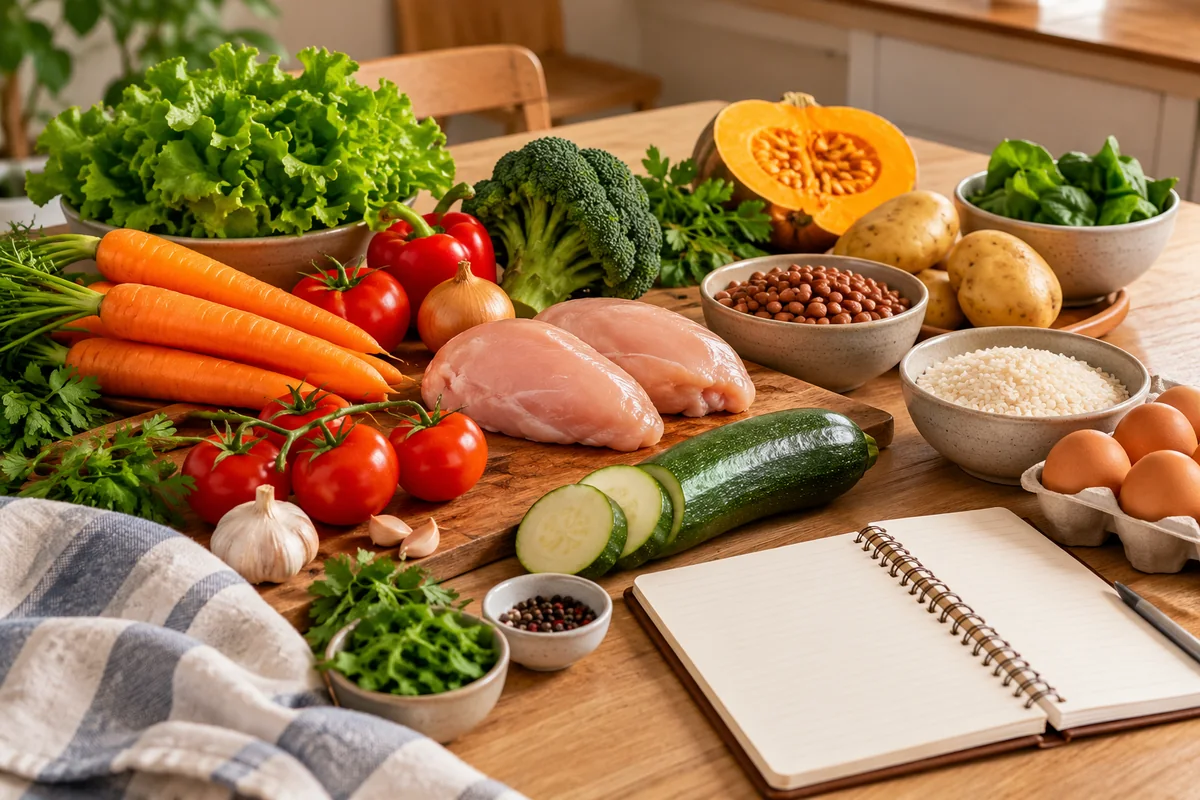
An economic ingredient is the one that will actually be consumed. Large packaging does not represent advantage when part of the content ends discarded. Prefer items that can participate in different preparations and that combine. Onions, carrots, tomatoes, zucchini and leaves, for example, may appear in roasts, sautes, sauces, soups and salads. To organize the variety, choose two bases, one legume, two protein options and three or four vegetables for the week. Add fruits and breakfast items according to the consumption of the house. This selection creates a flexible dining structureInstead of a closed sequence that loses its usefulness when a price changes or the routine comes out of the forecast.
Example of menu with different combinations
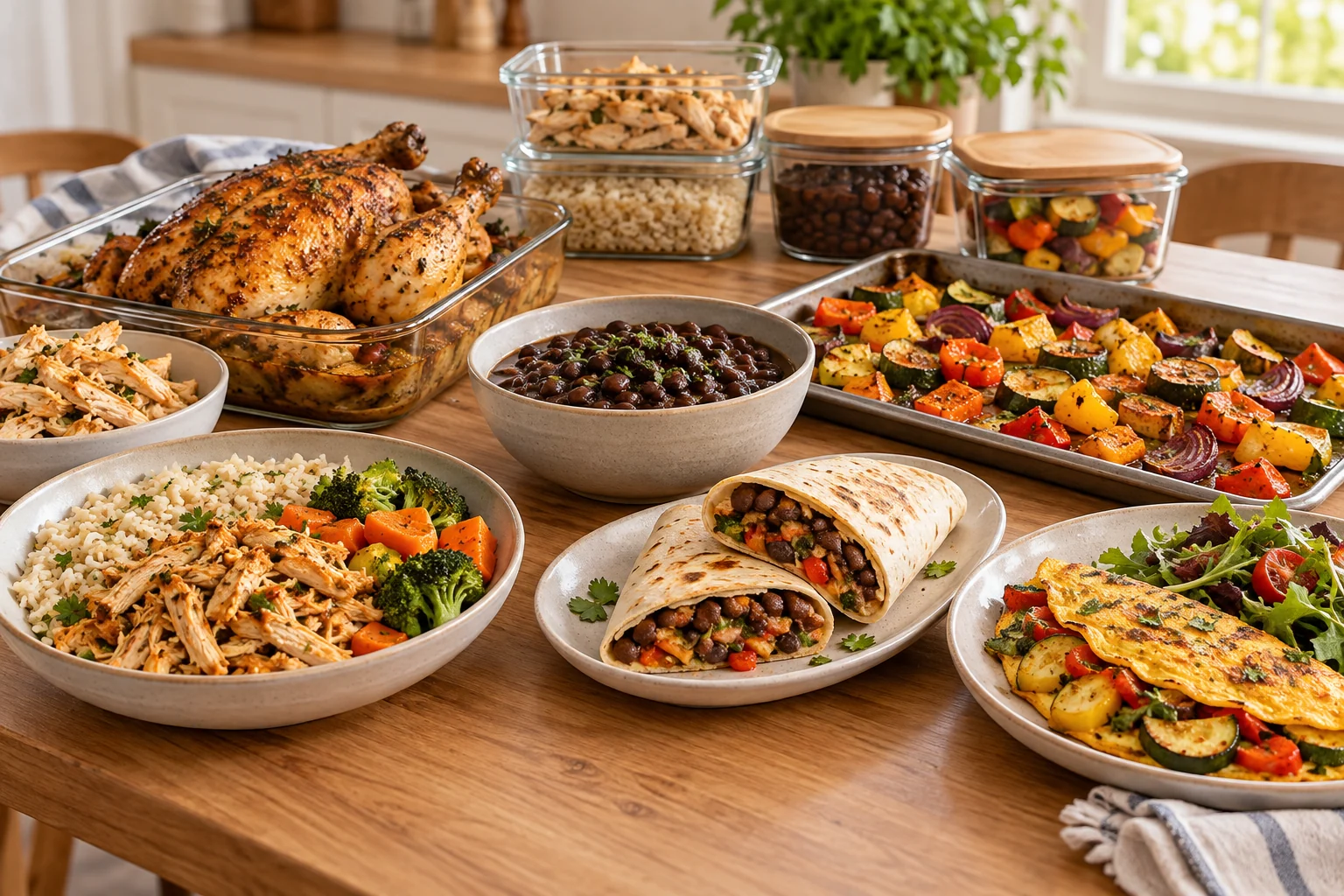
The example below uses rice, beans, chicken, eggs, noodles, carrots, zucchini, tomatoes, leaves and potatoes. The quantities should be adjusted to the number of people, the appetite of the family and the meals that will actually be made at home. - What? Monday: rice, beans, roasted chicken with potatoes and salad leaves. - What? Tuesday: pasta with tomato sauce, grated carrot and shredded chicken. - What? Wednesday: rice, beans and zucchini omelet with salad. - What? Thursday: rice with vegetables, chicken cubes and temperate leaves. - Friday: bean broth with potato, carrot and boiled egg. - What? Saturday: pasta with sauteed vegetables and simple omelet. - Sunday: chicken and vegetable roast, accompanied by bases that are still available. The logic is not to cook everything at once, but to take advantage of steps. The chicken can be prepared in sufficient quantity for two uses, provided it is cooled and stored properly. The carrot enters the roast, pasta and broth; the zucchini appears in the omelet and rice; the tomato becomes sauce and salad. This one. planned reuse maintains variety without depending on an extensive list.
Turn the menu into an objective list
After checking the stock, write down only what is missing. Organize the list by sectors — vegetable, protein, grocery, dairy, and household items — to reduce forgetfulness and avoid turning the market around. Also register an approximate amount compatible with the plan. If the available packaging is larger, decide where the surplus will be used or stored. Who prefers to start with a smaller script can use the shopping list for five simple dinners. To adjust portions, the weekly menu for two people offers another reference. Larger families can compare planning with Seven-day menu for four people.
Take two small preparation sessions
Concentrating all work in a single day can be exhausting and does not always go with the conservation of food. An alternative is to divide the preparation. At the beginning of the week, cook beans, prepare some of the rice, bake a portion of chicken and sanitize the vegetables that will be consumed first. In the middle of the week, renew the rice, prepare eggs or other protein and use the most delicate items. This one. divided preparation during the week reduces the feeling of repeated food and allows you to adapt the plan. Identify the containers with the date, quickly refresh the preparations and freeze what will not be consumed within an appropriate time. If there is doubt about the conservation of a food, safety must come before the economy.
Use replacements without dismounting the planning
A good menu needs to accept exchanges. If the zucchini is expensive, choose another vegetable that works in the saute and roast. If the chicken is not in good supply, evaluate eggs, pork, sardines or other options that match the predicted bases. Rice can alternate with potatoes, cassava, couscous or pasta, depending on the habits of the house. To avoid a new list with each replacement, change ingredients within the same cooking paper. One roasting vegetable replaces another roasting vegetable; one pan base replaces another pot base. This one. exchange for function in revenue keeps the menu coherent and makes it easy to enjoy local food and prices.
How to prevent the economy from becoming monotony
The same ingredients can gain different results with simple techniques and spices. Chicken can be roasted with herbs, shredded with tomato or prepared in cubes with vegetables. The carrot can be roasted, grated or cooked in broth. The beans can accompany the rice, thicken a soup or form a broth with vegetables. Varie also texture and temperature: a pot meal can be followed by salad, omelet or roast. Changing the shape of cutting, seasoning and accompanying helps create variety with few ingredients without buying special products for each day.
Adjust the plan to actual consumption
At the end of the week, observe what was left, what was missing and which preparations were easier. This review is worth more than following a perfect model on paper. If there is always rice left, reduce the amount prepared. If vegetables end early, increase purchase or book a frozen option. If you usually end up in order for food, plan for it the fastest meal. The best economic weekly menu is the one who follows the routine, accepts changes and transforms the same ingredients into really different meals. With checked stock, defined combinations and a short list, the purchase gains purpose and planning ceases to be an obligation to become a practical tool of the house.
Shopping list
Mark the products you already put in the cart.
Community
Comments
Create an account or do login for favorite and leave your comment.
Loading comments...