

Economic fitness pantry: how to organize meals for training routine
Set up a practical pantry for training routine with basic foods, flexible combinations and a planned purchase without expensive products or waste.
A useful pantry starts with routine, not fitness label
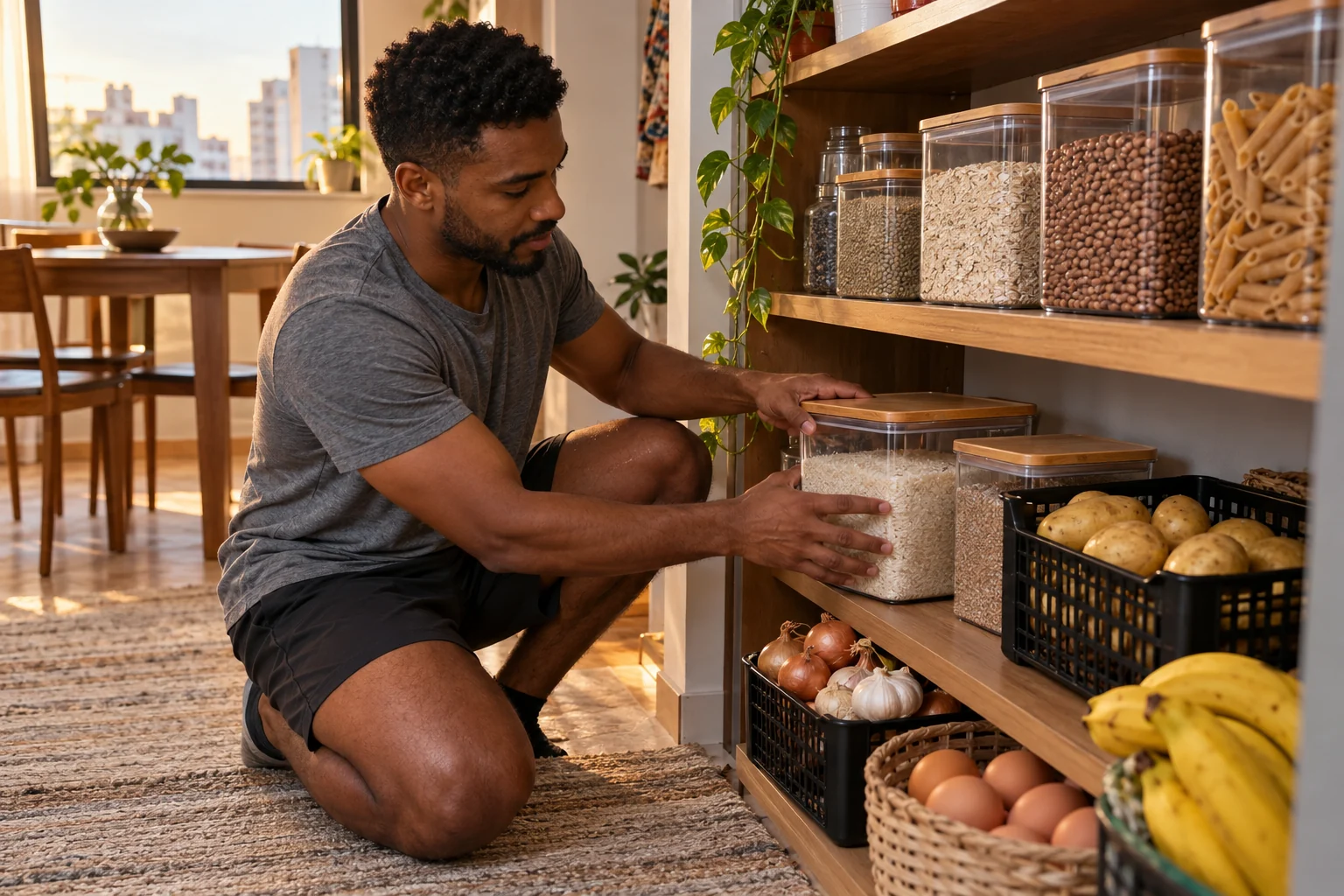
Mount one economic fitness pantry does not mean filling shelves with supplements, bars and expensive products. The starting point is to understand which meals actually take place at home, how long there is to cook and what ingredients the family already consumes. Rice, beans, oats, eggs, fruits, vegetables and proteins chosen according to budget can form a versatile base. The term fitness describes the context of those who train, not a mandatory category of food. This organization does not prescribe calories, protein or portions and does not promise hypertrophy, slimming, recovery or performance. People with diseases, allergies, intolerances or specific sports needs need individual evaluation. For the purchase to work, set simple meals, check the stock and make room for safe storage of dry, chilled and frozen.
Do an inventory before choosing what to buy
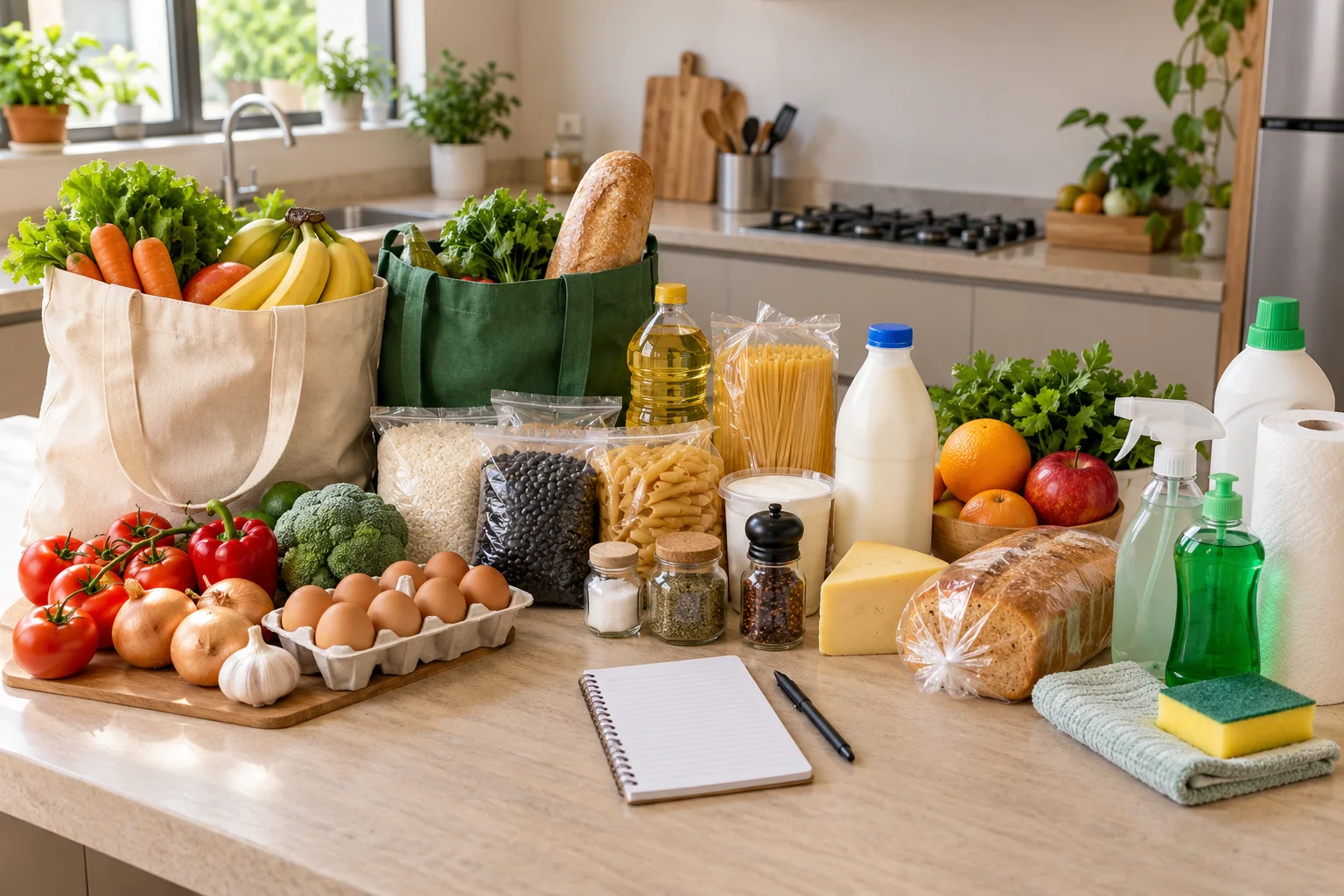
Open cabinets, fridge and freezer and write down what is closed, what needs to be consumed and what really is over. This inventory avoids repeated packages and helps the food planning from the royal house. Check validity, moisture signals, packaging integrity and storage conditions. Then mark how many breakfasts, lunches, dinners and snacks will be made at home. A person who works outside doesn't need the same amount as the person who cooks daily. A shopping list for gym should serve the complete routine, including days without training. Organize the items by use: meals bases, protein sources, fruits and vegetables, spices and quick options. If an ingredient does not participate in any planned preparation, it can probably wait for the next purchase.
Choose bases that take part in several meals
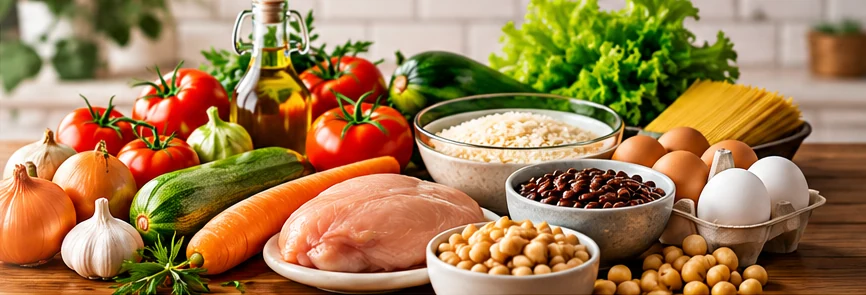
Rice, beans, lentils, oats, noodles, potatoes, manioc and corn flake are examples of ingredients that can enter different preparations. You don't have to buy them all at the same time. Select those that match the house habit and the available space. Among the food for those who train, there is no universally superior basis. Rice with beans can accompany chicken, eggs, meat or vegetables; oats combine with fruit, yogurt and pancakes; potatoes can be baked or cooked. The Food Guide for the Brazilian Population recommends a variety of natural or minimally processed foods and culinary preparations. In practice, this means setting up a pantry capable of becoming food instead of hoarding packages with sports claims and little defined use.
Affordable proteins without supplement
Eggs, beans, lentils, chickpeas, chicken, sardines, meat, milk, yoghurt, cheese and soy can participate in the week according to preference and budget. Choose few options and plan where each one will be used. Affordable proteins are those that fit the budget, can be stored and enter into recipes that the person really knows how to prepare. A larger package only represents savings when there is room to portion and freeze. Supplements are not automatic items from the pantry. Anvisa advises that they complement food and do not replace common foods. When there is professional indication, label, ingredients, warnings, restrictions and regularization need to be checked. This guide does not recommend a dose, make or schedule. The amount required varies and should not be copied from another person.
Turn ingredients into practical meals
A good pantry needs to make it easy practical mealsNot just look organized. Cook beans or lentils and freeze portions. Leave rice, pasta and oatmeal in dry and identified containers. Keep eggs, vegetables and dairy under the right conditions. With the same base, it is possible to prepare rice with beans and chicken, pasta with meat and vegetables, tomato omelet, couscous with eggs, lentil soup or oatmeal with banana and yogurt. Repeat ingredients, but vary seasonings and preparation methods. If the time is short, anticipate steps like cooking legumes, washing utensils and separating portions. Planning doesn't require cooking everything in a single day. Sharing the work can preserve quality, safety and willingness to maintain the routine.
Read the label and avoid paying just for the sport appeal
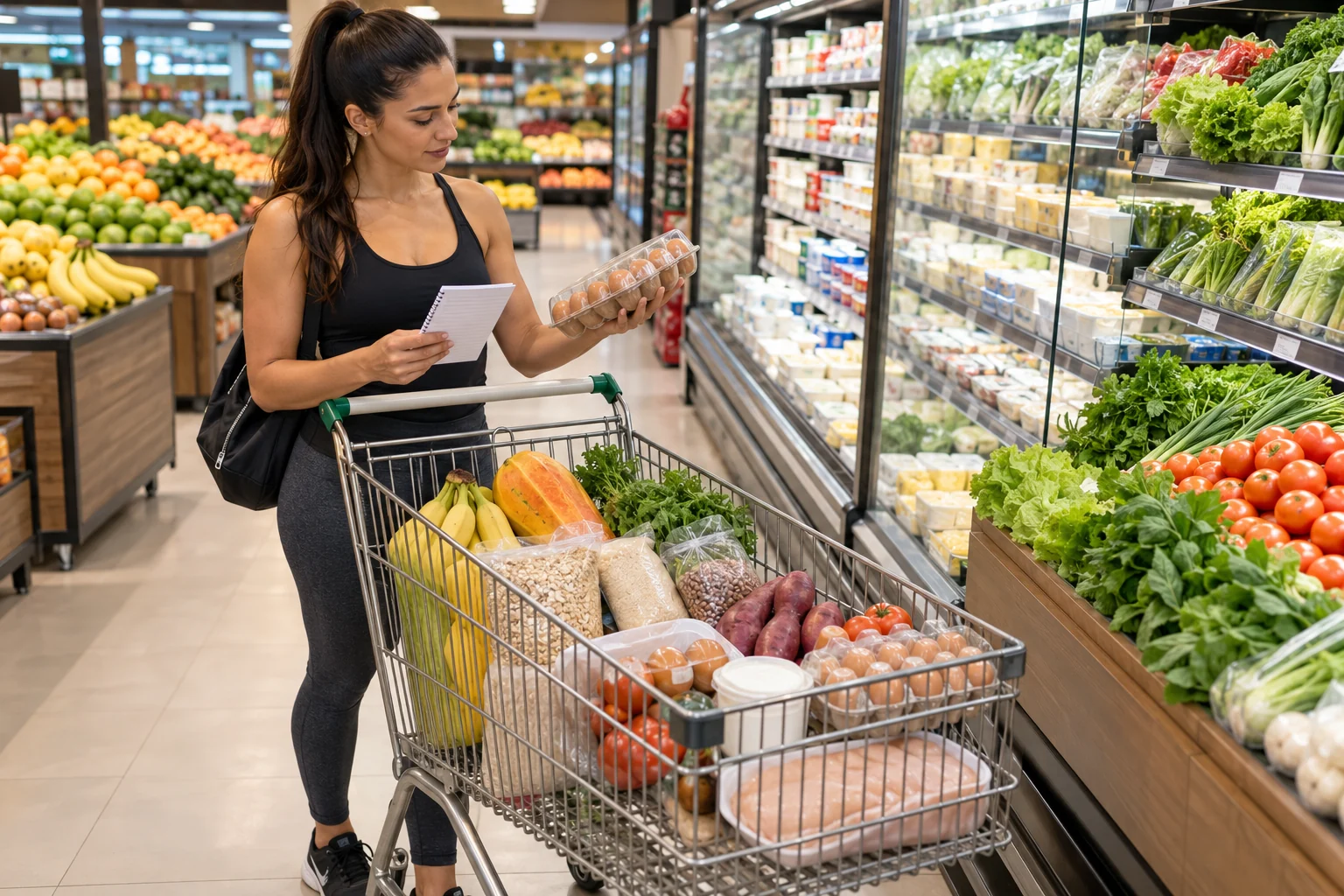
In packed foods, check out list of ingredients, nutritional table, allergens, validity, weight and conservation instructions. Anvisa establishes this information to support conscious choices. Expressions such as fit, protein or energy do not make a product necessary. Compare items of the same category and consider price per kilogram, income and chance of full consumption. A economical purchase for bodybuilding It's not the cheapest cashier if half the content wins. Simple oatmeal, bread, yogurt and sauces can vary widely between brands, so the label deserves attention. People with allergies or intolerance should review warnings on each purchase. Do not use packaging highlight as a nutritional prescription. The product needs to have function in routine and proper storage conditions.
Organize to reduce losses and store food
Practice purchases without waste first using open items and positioning products with close validity in front. Do not complete a container with new food on old remains without cleaning and checking conditions. Keep dry protected from heat, moisture and insects. Meat, eggs and dairy needs proper cooling. Prepared foods should be cooled and stored without remaining for hours on the bench. Anvisa advises you to keep refrigerated preparations below 5 °C and defrost under refrigeration or microwave when there is immediate cooking. Identify frozen portions with content and date. A organization of the pantry should make the use easier, do not hide excess stock in beautiful pots.
Build a list that improves each purchase
Use the interactive list as a starting point and remove everything that already exists at home. No Anota na Lista, group dry, hortifurti, proteins and refrigerated to walk the market without returning to the same corridors. Register prices and observe which items have ended, been left or discarded. In the following purchase, adjust only what actual consumption showed. If the budget tightens, preserve central ingredients of meals and reduce unused products. If an option is expensive, change the preparation before placing random substitutes in the cart. The ideal pantry is not the fullest: it is the one that allows cooking, reduces improvisation and respects space, money and routine. This history transforms a generic list into increasingly accurate home planning.
Consulted sources and limits of this content
The guidelines on food choices follow the Brazilian Population Food Guide, from the Ministry of Health, with priority for natural or minimally processed foods and culinary preparations. Information on labels, validity and storage was verified in official Anvisa materials. This text organizes domestic purchases and does not replace nutritionist, doctor or physical education professional. Quantities, energy needs, protein intake and use of supplements depend on the person, health and training. The checklist should be adapted to the number of residents, meals outside the home and storage capacity. No listed item guarantees sports result.
Shopping list
Mark the products you already put in the cart.
Community
Comments
Create an account or do login for favorite and leave your comment.
Loading comments...