

Meals of the week for those who live alone and want to avoid waste
Organize meals for a person with realistic amounts, versatile ingredients, preparation in stages and a shopping list that reduces leftovers.
Start with the meals that will really happen at home
Those who live alone do not have to plan fourteen different dishes to organize the week. Before choosing recipes, count how many lunches and dinners will be made at home, which days will have a meal at work and when there is a greater chance of ordering food. This portrait avoids buying for an idealized routine. One menu for those who live alone works best when it starts from five to seven main meals and leaves room for change. Also check what is already open in the pantry, fridge and freezer. A pack of rice, two servings of beans or vegetables near the point of use already reduce the purchase. Write down the stock first and then complete the list. If you need a wider base, see the economical weekly menu with versatile ingredients and adapt the combinations to the amount of a person.
Choose ingredients that change function
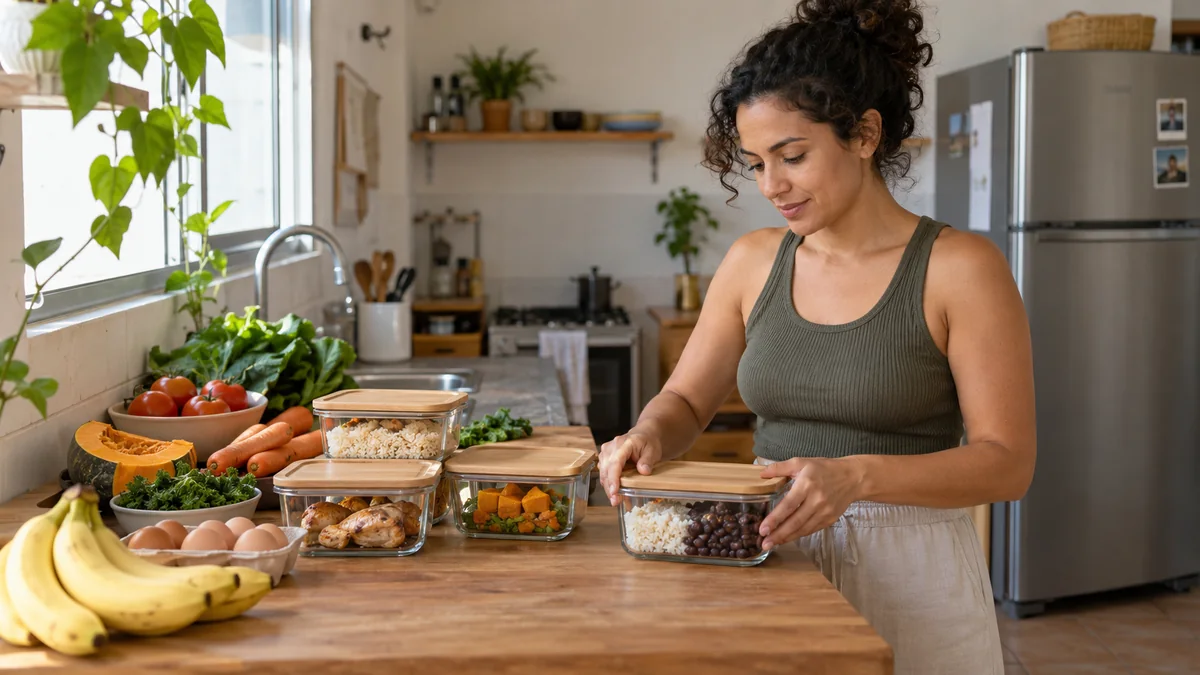
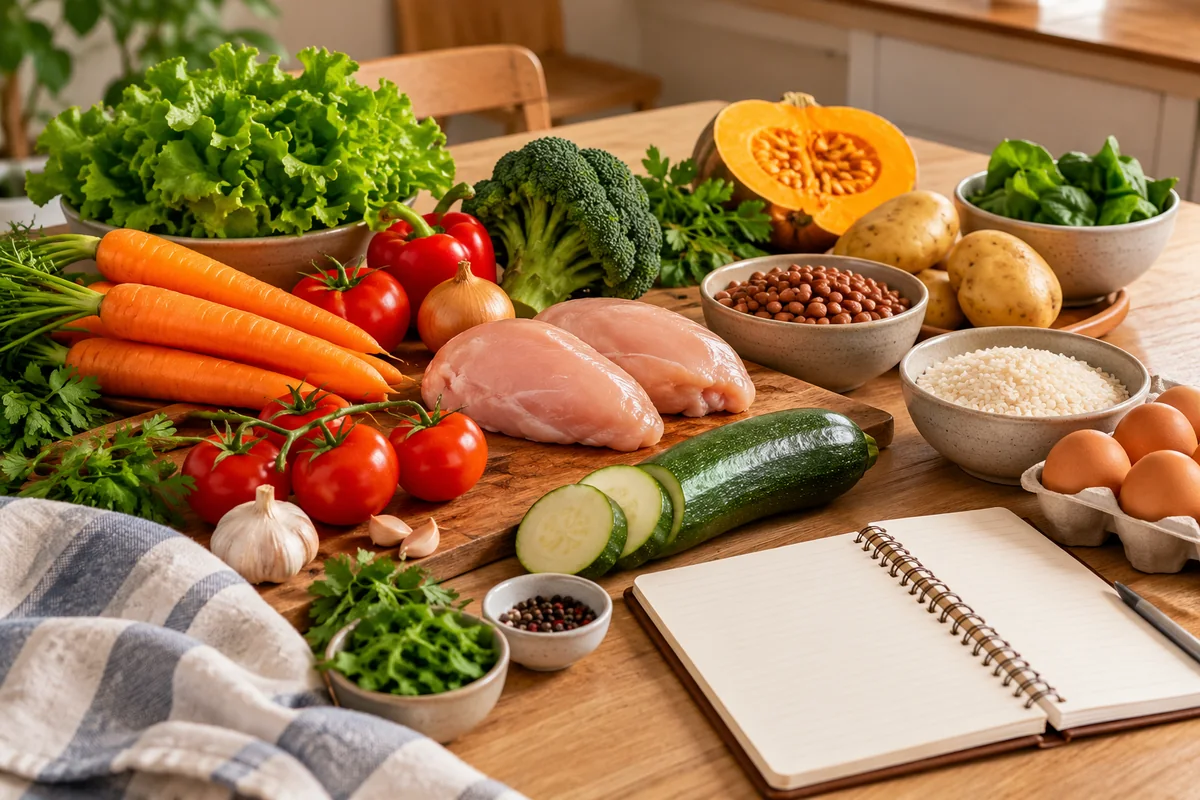
The problem is not repeating an ingredient, but repeating exactly the same dish. Rice, beans, eggs, chicken, pumpkin, carrot, tomato and leaves may form different preparations throughout the week. The roasted chicken becomes filled with a quick meal; the pumpkin can accompany rice and then thicken a soup; the tomato goes into salad, sauce or omelet. Use one small base of versatile ingredients: a cereal option, one legume, two proteins and three or four vegetables. Add fruits, bread, milk, or yogurt according to actual consumption. This selection is more useful than buying an exclusive item for each recipe. When a package is larger than the need, set before where the remaining part will be used or stored.
A possible week with seven main meals
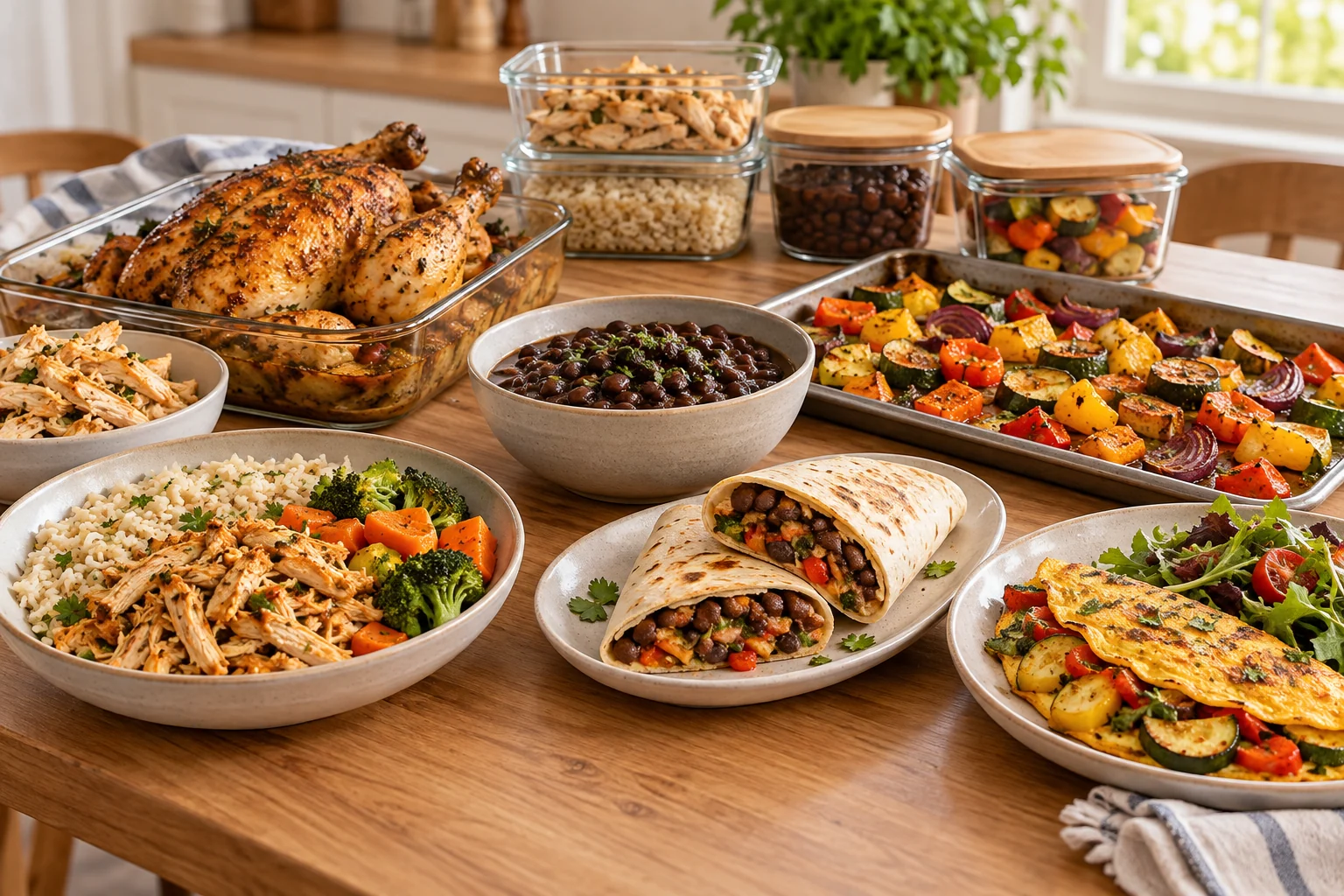
The example below is not a nutritional prescription. It shows how to distribute common ingredients in adjustable portions to a person. Complete the rest of the day according to your routine, preferences, and possible professional guidance. First meal: rice, beans, roast chicken and carrots. Second meal: Tomato omelet with leaves and bread. Third meal: pasta with tomato sauce and shredded chicken. Fourth meal: rice, beans and pumpkin baked with boiled egg. Fifth meal: Pumpkin soup, carrot and beans. Sixth meal: rice with vegetables and chicken cubes. Seventh meal: Omelette sandwich, tomato and leaves. Meals can change order. Use first leaves, ripe tomatoes and refrigerated preparations; leave dry items, eggs in storage and frozen portions for later days. This one. planned consumption order reduces the chance to find forgotten food by the end of the week.
Buy quantities compatible with one person
Buying the smallest package doesn't always mean paying less per unit, but buying the largest doesn't represent economy when part of it spoils. For the seven dishes of the example, start with moderate quantities: approximately two cups of raw rice for the preparations and some leftover pantry, two or three portions of beans already cooked, about 500 grams of chicken, six eggs and few vegetables of each type. Adjust according to appetite, food size and meals taken away from home. In the horticultural, prefer to buy per unit when possible. Choose two carrots, one piece of pumpkin compatible with recipes, four tomatoes at different stages of maturation and a small pack of leaves. For an even shorter script, compare with shopping list for five simple dinners. The goal is to build a purchase proportional to consumption, do not copy quantities without checking the routine.
Split the preparation into two short sessions
Preparing everything in a single day can tire and generate refrigerated food for too long. One alternative is to do two smaller sessions. In the first, cook beans, prepare a portion of the rice, bake pumpkin and carrot and cook the portion of chicken that will be used in the first days. Half a week, renew the rice, prepare eggs and cook another portion of chicken or use a previously frozen portion. This one. preparation in small steps allows us to observe what was actually consumed. Identify containers with the date, use appropriate packaging and quickly refresh the preparations. Do not leave perishable food waiting on the bench. If the conservation of a leftover is doubtful, discard it; saving does not mean taking risk.
Use the freezer as backup, not as storage
Separate raw meat into individual portions before freezing, avoiding defrosting an entire package to remove only one part. Sliced bread, baked beans and some pot preparations may also be frozen in smaller portions when the food and container are suitable. Write down the date and keep a simple list of what entered the freezer. Freeze does not improve a food that has already lost quality and does not eliminate the need for hygiene. Disengelle inside the refrigerator or following the safe instructions of the product. A individual portion identified makes it easy to choose only what is needed and reduces the pile of containers without destination.
Organize breakfast and snacks without over-increasing the purchase
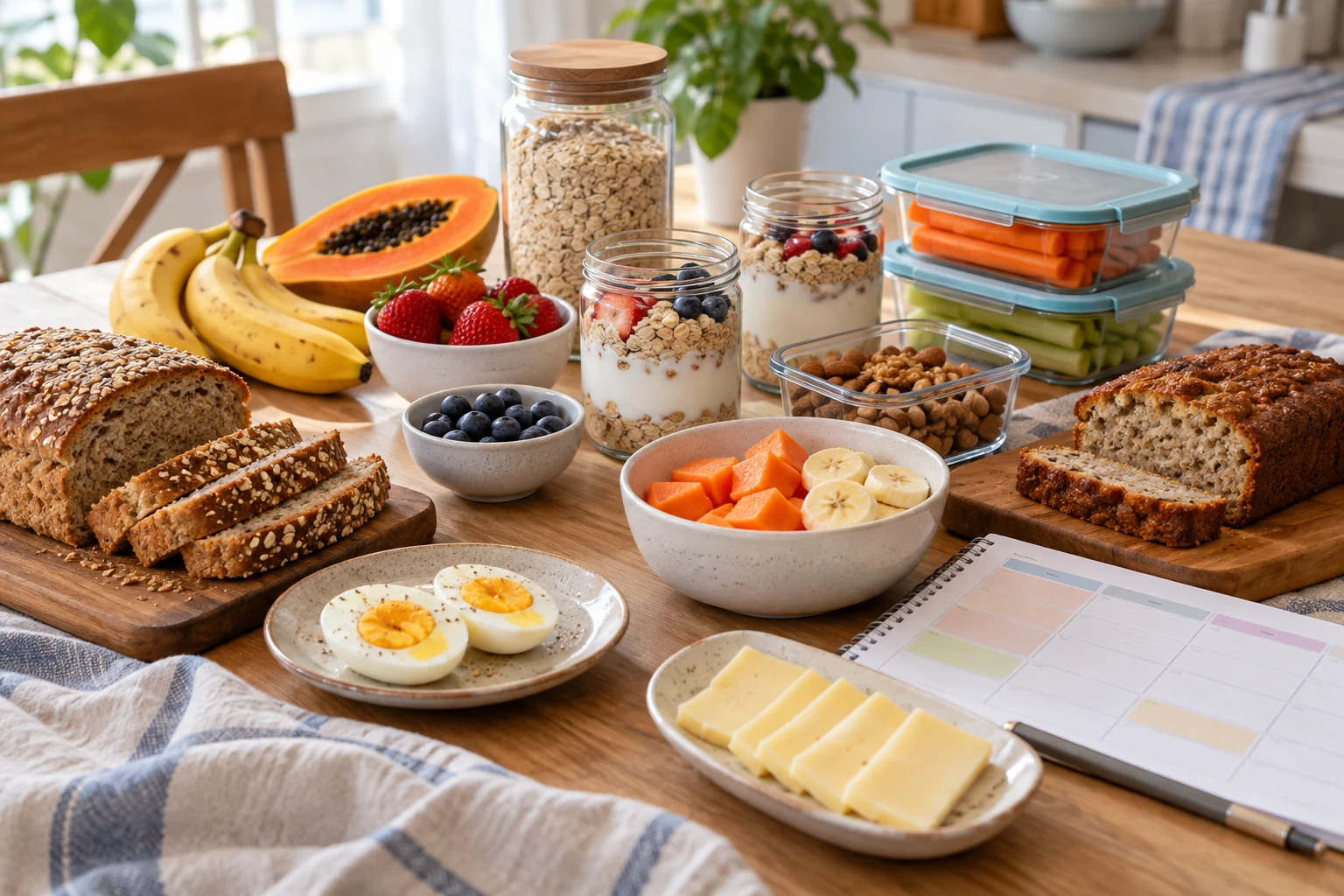
Fruit, bread, oatmeal, milk, yogurt and eggs can meet different times of the day, but they don't all have to come in the same week. Choose two fruits with different ripenings and one or two paths to breakfast. Those who prefer specific planning can use the shopping list for breakfast during the week as a reference and reduce the quantities. Avoid opening multiple perishable packages simultaneously. Finish a yogurt or a bread before starting matching options when this matches your routine. One lean and usable pantry is more advantageous than a large variety that loses validity.
Make a review before next purchase
At the end of the week, observe what ended, what remained and what preparation was difficult to fit. If tomatoes have matured quickly, buy less or choose greener part. If you missed a quick meal, keep eggs, bread or a frozen portion as an alternative. If there is rice left, reduce the next preparation instead of automatically repeating the amount. This one. review of actual consumption turns each week into information for the following. Living alone requires flexibility: visits, meals outside and changes of schedule change the plan. The best menu is not the most detailed, but the one that helps buy with purpose, cook possible portions and adapt ingredients before they are forgotten.
Shopping list
Mark the products you already put in the cart.
Community
Comments
Create an account or do login for favorite and leave your comment.
Loading comments...